Average metering is a fairly basic mode of metering whereby the
camera takes an overall reading of brightness across the image
space and sets exposure to suit the average level of brightness
across the picture.
Spot metering takes a specific spot in the centre of the image
(usually less than 5% of the total image area; in some cases it may
be as small as 1%) and sets metering according to the brightness at
that spot.
I'm taking a guess at Multi here, but it's probably sensing
brightness across multiple preset spots or zones across the image
and adjusting metering according to the brightness of those
zones.
Apart from the above, there are a few other forms of
metering.
Centre-weighted average metering is similar to average metering,
except that the exposure setting is influenced more by the centre
of the image than by the outer edges.
Partial metering is similar to spot metering but it utilises a
larger spot at the centre of the image, typically covering about
15% of the inage area.
Evaluative metering assesses the image, estimating the position
of images in the foreground, middle and background and attempting
to find a balance of correct exposure for all three.
So, what does this all mean?
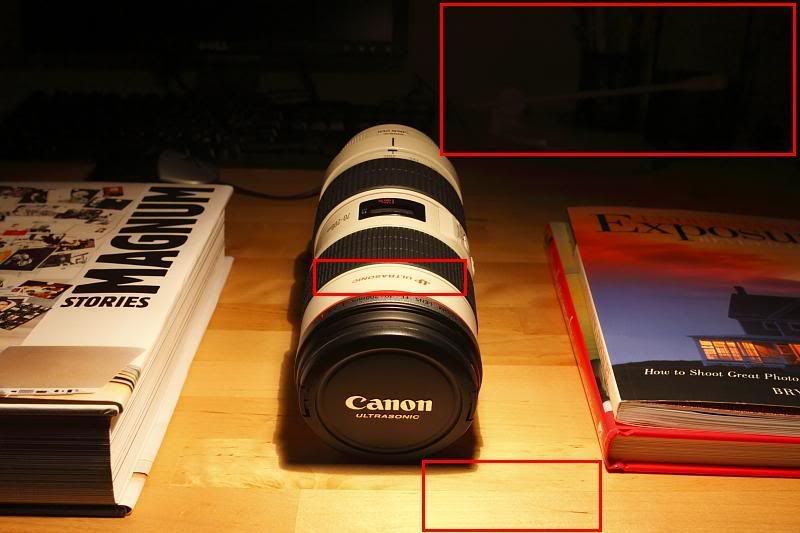
I've taken four identical shots, each using a different metering
mode. Now depending on your screen settings the differences
may be pretty subtle, but pay particular attention to the three
areas in red boxes indicating the foreground, middle and
background:
Here's the first shot, taken with evaluative metering:
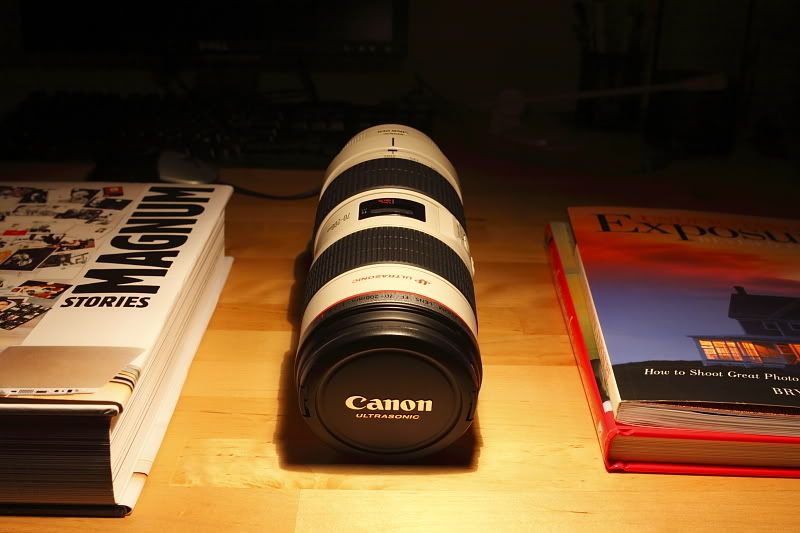
Overall, not too bad. The image is reasonably bright, and
you can see the microphone in the background. On the other
hand, the foreground is overexposed, so that the detail of the
table surface is whited out.
Let's try partial metering now; the exposure is pretty much set
according to the light surfaces of the lens:
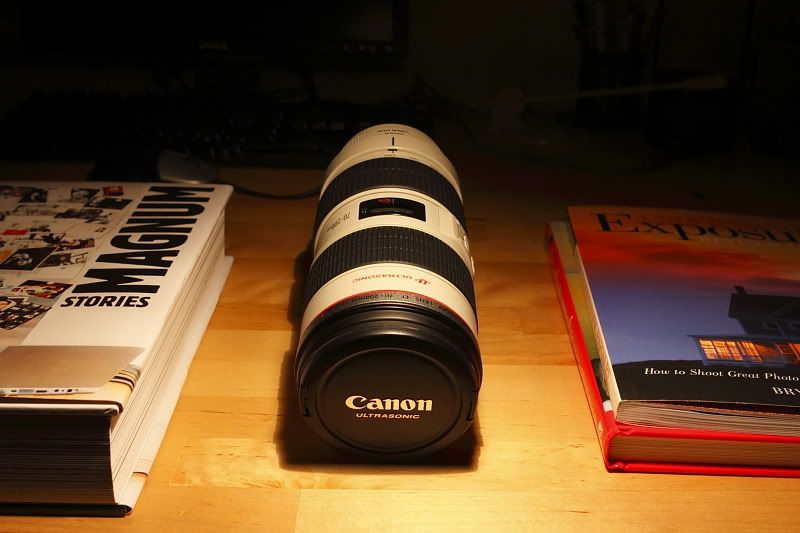
Now you can see thatthe wood grain in the foreground is more
visible, but the red word "Ultrasonic" on the top of the lens is
still a little whited out. Let's just expose on the word
"Ultrasonic" using spot metering:
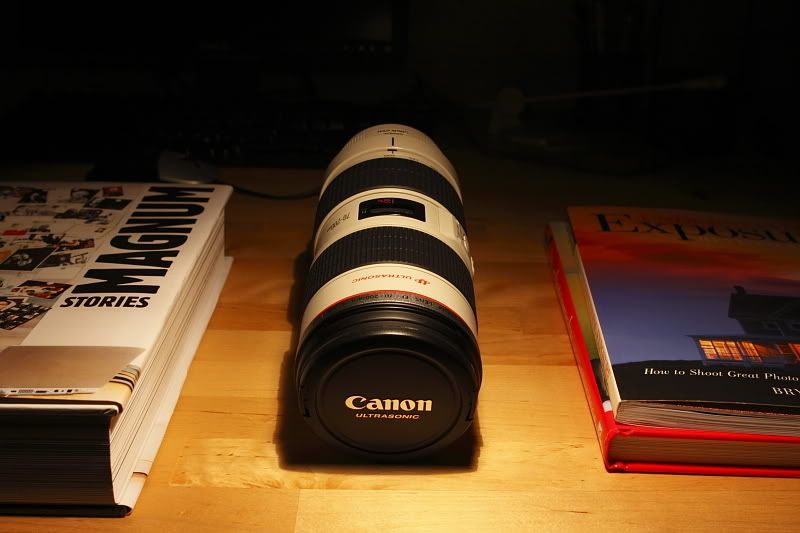
That's much better, but if you look at the background, going
from the spot-metering photo, to partial and then back to
evaluative, you'll see that the microphone in the back gets harder
to see as the "Ultrasonic" gets clearer.
Just for one more contrast, let's try centre-weighted
average:
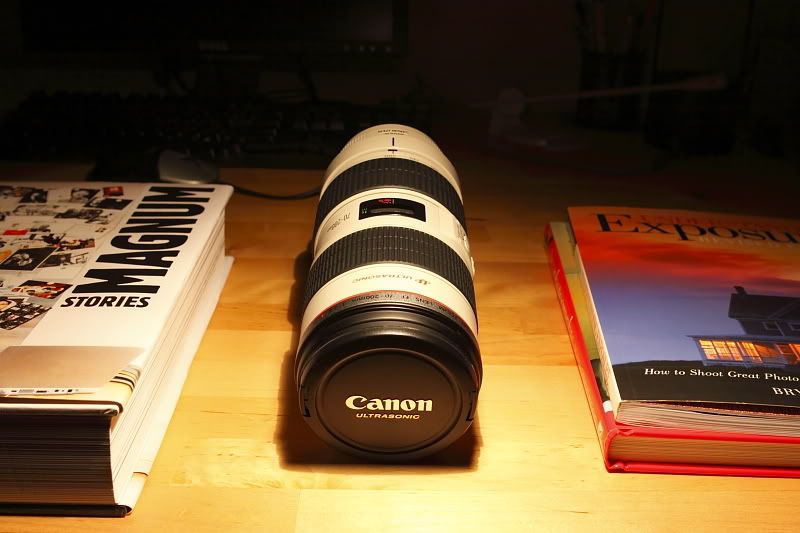
The background's great because the averaging algorithm has taken
it into account more than the other metering modes, but it's come
at the cost of detail in the middle and foreground.
So which is the best metering mode to use? It depends on
what you want to shoot and how you want the picture to turn
out, but if you're not sure what you're doing, use the
evaluative mode - it's the default on most automatic systems.
