Sunday, 29 November 2009, 1:39 pm | 455 views
Wing Lee Cheong / Canada
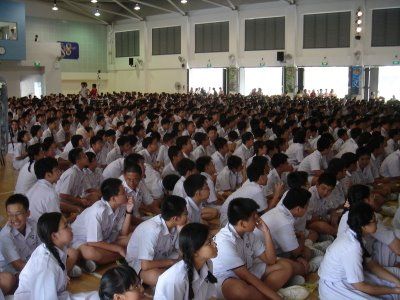 “Singapore’s ranked 1st in quality education system in the
world” – Global Competitiveness Report 2007–2008
“Singapore ranked one of the world’s best-performing school
systems” – McKinsey Report, published September 2007
“Singapore students ranked among the top in Mathematics and
Science” – Trends in International Mathematics and
Science Study (TIMSS) 2007
“Singapore ranked 4th among 45 education systems” – Progress in
International Reading Literacy Study (PIRLS) 2006
Those are very impressive achievements that one can be proud
of. Dr.Ng Eng Hen, the Education Minister of Singapore,
cited a 2007 survey by the Fraser Institute that shows 94 per cent
of Ontario students were dissatisfied with the Canadian public
school system. Dr.Kishore, dean of public policies of NUS proudly
claimed that educational leaders around the world are flocking to
Singapore to copy Singapore’s successful educational model. He said
that some North American schools are even using similar textbooks
in their schools.
Canada may not have a perfect education system but I seriously
doubt the reliability of the survey cited by Dr Ng. One has to
question the criteria and sample size used for the survey.
 Most Canadians are proud of their education system and will
not trade it for the aggressive streaming system of Singapore where
one’s future and career is based solely on academic results.
Studies have shown that passing standardized examinations with good
grades does not necessarily mean that one has a better knowledge of
the subject than another with lesser or failed grades. In most
cases, it simply shows that the person is better in the art of
taking examinations. There are controversies amongst Canadian
educationists if standardized examinations can accurately assess
students’ subject knowledge and the application of that knowledge.
Not knowing how to apply the knowledge is no knowledge at all.
In the pursuit of academic excellence, Singaporean parents force
their children to study long hours to make the grade. In the
fierce process, Singapore children are denied the joys of
childhood. This explains why Singapore children are more stressed
and tensed compared to Canadian children with their happy and
carefree outlook. Children of Singapore friends who visit me
in Canada tend to be more reserved and do not interact well. More
interestingly, almost all of them would bring their school work
during these visits. The parents made sure that their kids did
certain hours of studies everyday despite the fact that they were
on holidays. It is a strange trend amongst Singapore parents who
want to be one-up on others. It is a reflection of the typical
Singapore “kaisu” culture.
Life is a marathon, not a sprint
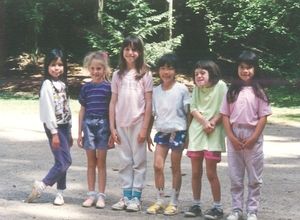 Canada is one of the few countries that do not have a
central or federal education ministry. All the thirteen provinces
and territories have their independent education ministries to
coordinate the national system through the Council of Education.
This system has worked well for the country. Canada’s literacy rate
is 99 per cent and placed at 19th in world standing, while
Singapore’s is 94.4 per cent and placed at
74th, according to UNESCO
in its 2007 annual report.
Canadians believe that life is a marathon and not a 100-meters
sprint. Children are encouraged at a young age to develop at their
own natural pace. There is no streaming. Mentally-challenged
children are put in the same class as the normal and gifted
children. Exceptions are made for severe mental cases. Under this
environment, Canadian kids learn to develop compassion towards the
less fortunate and realize that the world comprises different kinds
of people. Hence they grow to be less arrogant and less
prejudicial.
It is mandatory for students to do part-time jobs or perform
volunteer duties at seniors’ home and other charity organizations
in order to graduate from high schools. The students get marks for
doing charity or part-time jobs. It is not uncommon to see
volunteers in the hospital reception areas, families picking litter
on the streets, distributing food/clothing to the needy, volunteers
in senior homes, even the mentally and physically challenged are
taken care of by volunteers. While in Spore the handicapped are
considered an embarrassment and kept in the homes by their
families, here in Canada volunteers bring them out shopping and
they are encouraged to participate in recreational activities.
Canadians constitute less than 1 per cent of the world’s
population but provides 10 per cent of the world’s peacekeeping
forces in its selfless and unceremonious way. Volunteerism has
become second nature to Canadians.
Singapore – just study and get good grades
 This is in contrast with Singapore where an increasing
number of parents would have maids attend to every need of the
children. The maids carry the school bags, bring the drinks and
food. All the children need to do is to study and get good grades.
It has come to a point where many kids cannot do without maids. I
have friends whose kids would scream to their maids to do simple
chores like getting a drink. Few of these kids know how to make a
cup of tea let alone a simple meal for themselves.
Even our much respected figure of MM Lee, despite all the fine
education and good grades he had, did not know that one needs to
peel off the egg shell before a hard-boiled egg can be eaten.
(As related recently by his daughter in a Straits Times
article.)
It is a common practice for Canadian university students to take
a year or two off to travel the world and return to complete their
studies later. My daughter took a full year off to backpack in
Australia two years ago. With another classmate, they bought a used
car and drove all over Australia. Most of my friends in Singapore
thought I was crazy to let a young girl postpone her studies and
travel aimlessly for a year.
Perhaps to most Singaporeans, it was a complete waste of time
and money. My two other boys similarly backpacked in Africa, South
America, Asia and Europe during their summer holidays. They learned
more from their travels than from textbooks. Most importantly, they
enjoy their lives. It is difficult to reconcile how forcing our
children to go on a relentless paper chase can be the right thing
to do.
Canada may not compare well with the Singapore education system
in world rankings. Canadian students may not compete well in
mathematics and science tests against Singapore students. Despite
these, however, Canada has produced eighteen Nobel Prize winners,
44 Olympics medalists, with 9 Gold Medalists in the last three
games, plus hundreds of world-renowned entrepreneurs, artists,
musicians, writers, actors, singers, etc. By population ratio,
Singapore should produce at least three Nobel Prize winners and
scores of artists and writers, etc. Even Hong Kong and Taiwan each
managed to have one Nobel Prize winner, many Olympic medalists and
entrepreneurs.
Trade-off and compromise
The Canadian and the Singapore education systems are built on
different premises. Singapore trains its students to be 100 meters
sprinters for fast results to show the world whilst the Canadian
system train its students to be marathon runners for the long haul
in life. Canadian public education is free for all its citizens and
permanent residents - from kindergartens to high schools.
Tuition fees for most universities cost an average of C$6,000 per
year.
 The unscientific assumption by Singapore’s leaders
that if you are not good at passing examinations with good grades,
you are unlikely to make good for the rest of your lives, is
laughable. History has shown us that there are scores of high
achievers without degrees, i.e Bill Gates, Steve Jobs, Michael
Dell, Richard Branson, Walt Disney, Henry Ford, Frank Lloyd Wright,
etc.
History teaches us that we cannot get something for nothing. If
we push our children hard to be super human beings, we may push
most of them over the edge. There is always a trade-off and
compromise.
These children would grow up to be blinded by materialism and
money, potentially resulting in a lack of compassion, failed
marriages, poor social interaction skills, aggressive behaviors,
and so on. No one has managed to social engineer a super society.
There are already signs Singaporeans are stressed out before
retirement. If the people are pushed at an early age, they will
wear out at an early age. Few people can last being stressed for
their entire working lives.
Singapore may have a better education system (according to
certain rankings and studies) and the citizens may be contented and
proud of it. However, I still prefer the traditional Canadian
education system where we are taught to be human beings rather than
human machines. We may not be high in world rankings but we are
happy. That is what life is all about. All the millions of dollars
a year would not necessarily bring you genuine joy and
happiness.
We were born with nothing and we will leave with nothing.
—–
Cartoon by the author.
