Wednesday, 18 February 2009,
In light of
President Nathan’s press
conference where he explained why he approved the
government’s request to use the reserves, we re-publish former
President Ong Teng Cheong’s interview with AsiaWeek (10 March 2000)
where he revealed the obstacles he faced when he asked for the
copies of the government’s accounts on the reserves and
investments.
‘I Had a Job to Do’ Whether the government
liked it or not, says ex-president Ong
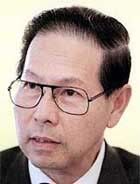 ONG Teng Cheong will go down
in history as Singapore’s first elected president. But for twenty
years before that, the Chinese-educated, foreign-trained architect
was a stalwart of the nation’s People’s Action Party government led
by its first PM Lee Kuan Yew. Ong, now 64, was minister of
communications, of culture, and of labor; he was also deputy PM,
secretary-general of the National Trades Union Congress, and
chairman of Lee’s PAP. By common consent, he was the man who kept
the Chinese ground loyal to the party; indeed, his command of the
language was such that Lee always asked Ong to accompany him
whenever he visited China. In the 1980s, Ong was one of the party’s
four senior ’second echelon’ leaders who were considered as
possible successors to Lee. It was Ong’s longtime friend, Goh Chok
Tong, who got the nod for the job. Ong, who was diagnosed as
suffering from lymphatic cancer in 1992, chose instead to run in
the first elections for the presidency the following
year.
He won — and soon became embroiled in a six-year long
festering dispute with his former colleagues in government over how
much information he should have in order to fulfil his role in
safeguarding Singapore’s prodigious financial reserves. The
altercation came to a head last year when Ong and his mentor Lee
and friend Goh clashed publicly and rancorously in a rare display
of disunity among PAP heavyweights. He decided not to run for
re-election as president — but not before he had spooked Goh’s men
by leaving the announcement until the last moment. He has now
returned to the private architecture firm he set up with his late
wife, Ling Siew May, and which is now run by one of his two sons.
His doctors have given him a clean bill of health after a
debilitating bout with lymphatic cancer — though he still wears a
cap to cover the baldness caused by chemotherapy treatment. Last
week, he gave his first in-depth interview about his presidency to
senior correspondent Roger Mitton in a nearly two-hour long talk.
Extended Excerpts:
It’s now six months since you stepped down. How do
you feel about your time as president?
I am satisfied with what I did. I hope it was all for the
best. I was elected to do a job. And I had to do that job whether
the government — or anyone else — liked it or not.
It seems that often they did not like it, but
let’s go back: How did you first get into
politics?
In the early 1970s, Lee Kuan Yew asked me for an interview
to get me involved to stand for election. I stood in 1972 and I won
and became a PAP backbencher. A year later, Lee asked me to take up
ministerial office but I turned it down because my younger brother
was dying of cancer. I had to assist him and to settle his affairs
after he died at the age of 25. Then Lee Kuan Yew approached me
again and this time I agreed to take up office. Lee is very
persuasive.
He must have been impressed to make you a minister
so quickly — you were a young architect with no experience
of politics.
Yes, I was not trained to become a minister or a
politician, but you learn on the job. Whenever I went to a new
ministry, I always asked myself basic questions: What is this job
all about? What am I supposed to do? That’s what I did in 1980, for
instance, when I became minister of labor, in addition to being
minister for communications. I went through all the legislation and
I decided that the trade unions should not just be designed to
organize and finance strikes, but instead should help improve the
workers’ social and economic wellbeing.
You became head of the NTUC and also remained a
cabinet minister — and Singapore remained strike
free.
Yes. But in January 1986 I did sanction a strike, the
first for about a decade. It was in the shipping industry where the
management was taking advantage of the workers. I did not even tell
the cabinet about santioning the strike. And some of them were
angry with me about that. The minister for trade and industry was
very angry, his officers were very upset. They had calls from
America, asking what happened to Singapore? — we are non-strike. I
said: if I were to inform the cabinet or the government they would
probably stop me from going ahead with the strike. It only lasted
two days. Then all the issues were settled. It showed that
management was just trying to pull a fast one. So I believe what I
did was right.
It marked a trend — that you have never been
afraid of doing something your ministerial colleagues might
disagree with?
No. If they don’t like it, I can always come back here to
my architecture firm.
Around this time you were discussing the
succession to PM Lee?
Lee Kuan Yew had been discussing this since about 1983. At
that time, the second echelon was Tony Tan, S. Dhanabalan, Goh Chok
Tong and myself.
Were you a candidate for the top
job?
I was considered as a member of the group. At that time,
we did not know who would be the successor to Lee. We finally made
the decision to pick Goh Chok Tong. He agreed on condition that I
agreed to be his number two. So I was the second DPM; he was the
first DPM. In 1988, Lee asked Goh to take over, but he was not
ready. He said: two more years. So two years later, he took the
job.
Lee did not agree with your decision to pick
Goh.
No, he did not disagree. He said he would leave it to us.
His own first choice was Tony Tan. Goh Chok Tong was his second
choice. I was his third choice because he said my English was not
good enough. He said Dhanabalan was not right because Singapore was
not ready for an Indian prime minister. That upset the Indian
community. There was quite a bit of adverse reaction to what he
said. But he speaks his mind. He is the only one who can get away
with it.
Personally, you felt Goh was the right
man?
Well, among the four of us, he was the youngest. Tony Tan
said no. I said no. And he sort of accepted being pushed into the
position, on condition that we stay on to assist him.
Soon after taking over, Goh called a snap election
in 1991 — but the PAP’s vote slipped and there was talk he would
quit.
Well, we did discuss about that. But he didn’t indicate
that he wanted to step down.
At that time, you were no. 2 in the executive
after PM Goh.
Yes. Well, no. 2, no. 3, doesn’t matter.
So why run for president?
The elected presidency was Lee Kuan Yew’s initiative. He
came out with the idea way back in ‘82, ‘83. After parliament
passed the measure in 1991, I considered it seriously. At that
time, after 20 years in politics, I was thinking of a way to ease
myself out, to exit the political arena. I wrote to the prime
minister twice to say that I’m prepared to go.
You saw the presidency as a way to do
that?
Yes, the unionists egged me on. They came to see me a
couple of times and they suggested that I take it on. I discussed
it with the prime minister, being old friends, and he gave me his
support.
The well-known oppositionist J.B. Jeyaretnam
wanted to run against you?
Yes, but he was not allowed to because he did not qualify
under the stringent criteria. Maybe too stringent.
You were glad Jeyaretnam could not
run?
No, it’s okay. I think it would have been more
fun.
Some of your colleagues did not think it was much
fun when your only opponent, a former accountant-general, Chua Kim
Yeoh, got so much support?
Yes, all of them were quite worried. Some ministers even
called me to say: Oh, we are worried about the outcome. At first,
we were quite confident about getting over 70 percent of the vote.
But there was a swing of support over to my opponent’s side,
especially in the educated class — civil servants and the Shenton
Way group. The issue was whether they wanted a PAP man as president
to check on a PAP government, or whether it would be better to have
a neutral independent like Chua. That’s why they voted against me
because I had the PAP government support. I would have been happier
without the PAP’s open support. I think I would have been better
off with just the unionists’ support and the Chinese-educated
heartlanders. Without them I would not have been
elected.
But you did win and you had to figure out how to
do this new job as Singapore’s first elected
president.
Yes. At the first opening of parliament after I was
elected, I was given a speech prepared by the government. I read
the speech carefully. Besides ceremonial functions, it said that
I’m supposed to safeguard the reserves and to help society become
more compassionate and gracious. So I decided that, well, if that
is what is said in the speech, then that’s going to be my job. And
I am going to do it. That’s what I tried to do. In fact, during the
six years I was president, I was very busy.
Doing what?
Well, I got involved in a lot of things. The Istana
presidential palace and other places had to be renovated. All this
had to be planned and these places got ready one by one, so that
ceremonial functions and other business could go on as usual. I had
to press the government to finalize the procedures for the
protection of the reserves. A lot of the teething problems and
misunderstandings were because there was a lack of clearcut
procedures ofwhat to do. Towards the end of my term, I pressed the
prime minister for a White Paper to be tabled in parliament that
would set out all the principles and procedures for the elected
president. Then I will announce my decision to step down. I want to
get the job done.
Initially, he did not want to do
that?
It’s not that he did not want to do that, but it had been
dragging for a long time. They produced a White Paper eventually,
tabled it in parliament last July, and that made the future
president’s job easier. We have already tested out many of the
procedures during my term, except for asking the president to
approve a draw on the past reserves during a deep economic crisis.
That was never done. It’s that part of procedure that was not
tested. How to do it?
It was this issue that caused the dispute between
you and the government?
Yes. But I don’t want to go into details and upset
everybody. The thing is that the elected president is supposed to
protect the reserves, but he was not told what these are until five
years later. From the day the Constitution was amended in 1991 to
provide for an elected president, he was supposed to fulfil that
role. My predecessor, Wee Kim Wee, although he was not elected, was
supposed to play that role during the last two years of his term.
But he did not actively check. So, when I came in in 1993, I asked
for all this information about the reserves. It took them three
years to give it to me.
The holdup was for administrative
reasons?
Either that or they did not think there was any urgency.
You see, if you ask me to protect the reserves, then you’ve got to
tell me what I’m supposed to protect. So I had to ask.
Why did they not want to tell
you?
I do not know. Don’t ask me, because I don’t have the
answer. I’ve been asking them. In fact, in 1996, exactly halfway
through my term, I wrote prime minister Goh a letter. At that time,
everybody was expecting a general election in December or January.
After the election, a new government would be sworn in. When that
happens, all the reserves, whether past or current, become past
reserves and are locked up on the changeover date. As president, I
have to safeguard them and they can only be drawn upon with my
permission. So I said to Mr Goh: It’s already halfway through my
term, but until today I still don’t know all these figures about
the reserves.
So the government had been stonewalling you, the
president, for three years?
Yes. What happened actually was, as you know, in
accounting, when you talk about reserves, it’s either cash reserves
or assets reserves. The cash side is straightforward: investment,
how many million dollars here and there, how much comes from the
investment boards and so on. That was straightforward — but still
we had to ask for it. For the assets, like properties and so on,
normally you say it’s worth $30 million or $100 million or
whatever. But they said it would take 56-man years to produce a
dollar-and-cents value of the immovable assets. So I discussed this
with the accountant-general and the auditor-general and we came to
a compromise. The government would not need to give me the
dollar-and-cents value, just give me a listing of all the
properties that the government owns.
They agreed?
Well, yes, they agreed, but they said there’s not the time
for it. It took them a few months to produce the list. But even
when they gave me the list, it was not complete.
It seems the Singapore government does not know
its own assets?
Yes. It’s complicated. It’s never been done before. And
for the assets of land, I can understand why. Every piece of land,
even a stretch of road, is probablysubdivided into many lots. There
are 50,000 to 60,000 lots and every one has a number. If you want
to value them all, it would take a long time. In the past, they
have just locked everything up and assumed it is all there. But if
I am to protect it, at least I want to know the list.
When they eventually gave you the list — the
incomplete list, did you have enough staff to do the checking and
other work?
No, I did not. I only had one administrative staffer and
two part-timers from the auditor-general’s office. For things like
approving the budget of statutory boards, the auditor-general’s
office would normally go through that for me. They are very good.
They check on everything. And they query and ask for
information.
For government financial policy matters that you
had a veto over, did you get all the details?
They finally came with an executive summary to say that
they had checked through all this, and that this is what they have,
this is how much they are going to spend, and that it won’t need
any draw from the reserves — or that there’s likely to be a draw.
There never was a draw during my time, but there were instances
where it was a bit dicey whether the budgets of one or two
statutory boards would require a draw. But finally we resolved
that.
Eventually then, with the list of properties and
the executive summaries, you were kept
informed?
I wouldn’t be able to say that. Even in my last year as
president, I was still not being informed about some ministerial
procedures. For example, in April last year, the government said it
would allow the sale of the Post Office Savings Bank POSB to DBS
Bank. In the past, when there was no elected president, they could
just proceed with this kind of thing. But when there is an elected
president you cannot, because the POSB is a statutory board whose
reserves are to be protected by the president. You cannot just
announce this without informing him. But I came to know of it from
the newspaper. That is not quite right. Not only that, but they
were even going to submit a bill to parliament for this sale and to
dissolve the POSB without first informing me.
What did you do?
My office went to tell them that this was the wrong
procedure. You’ve got to do this first, do that first, before you
can do this. It was question of principle and procedure. We had to
bring all this to their attention. That they cannot forget us. It’s
not that we are busybodies, but under the Constitution we have a
role to play and a responsibility. Sometimes in the newspaper I
came to know of things that I am responsible for, but if it had not
been reported in the newspaper I would not know about
it.
You must have been pretty angry that this was
still happening in your last year as president?
Yes, I was a bit grumpy. And maybe not to the liking of
the civil service. They did not like what I said. But I have to be
a watchdog all the time, you see. So this is where they are
supposed to help me to protect the reserves. And not for me to go
and watch out when they do right or wrong.
Under the Constitution, you have the right to all
the information available to the cabinet.
Yes. That’s right. And I sourced much information from the
cabinet papers. But they are not used to it. So I said: I
understand, it’s something new, and I know you don’t like my
interference and busybody checking up and so on. But under the
Constitution it is my job to do that.
Despite all this, it was widely believed that you
wanted to run again for a second six-year term as
president?
No, I’d been telling my friends since late 1998 that my
inclination was not to stand for re-election. But of course, life
is unpredictable. In March last year, I went to Stanford and my
American doctor confirmed that my cancer was in complete remission.
He is very experienced, a world authority on my sickness. So I was
fine after my treatment. I gave a complete report to the prime
minister and we discussed it. I told him that my inclination was
not to stand, but that I’d make the announcement later on. Then the
cabinet met and they decided that if I were to stand again, they
would not support me.
You had been given a clean bill of health, yet
your former colleagues would not support you. Did that annoy
you?
I told the prime minister over lunch: Well, I don’t need
your cabinet support. If I want to stand, whether I do or not, it
will be my personal decision. And I’ll make that decision nearer
the date of the presidential election — because I have another
checkup in June, July, and I want to know my latest position. Also
my wife was sick with cancer and we knew that if she died, it would
be difficult for me to stand without a first lady. She felt very
apologetic and that was another reason why my inclination was not
to stand. I hoped that if I stepped down I would have more time to
be with my wife, because her prognosis was not very
good.
By waiting until July to announce your decision,
were you ruffling the government for the way they had treated
you?
Maybe so. Maybe it was my miscalculation that my stated
inclination not to stand again had not been good enough for them.
But I had been telling that to all my friends. And I did not want
to tell people my wife was dying, either.
But the government worried that you might suddenly
decide to run again.
No, I made it very clear and I called a press conference
in July to tell everybody. But I believe some people were still
afraid that I might turn up on nomination day. Even friends asked
me if I might do that. How could they? I had given my word that I
would not stand.
A straw poll apparently indicated you would beat
the government’s candidate, S.R. Nathan, if you had
stood.
Yes. But I gave my word that I would not run. And I don’t
think it’s right. I’m a very old-fashioned man. Also, my wife
passed away in September. And I became more sceptical about all
these medical reports. Well, not sceptical, but certainly I find
life more unpredictable than I thought. Full of
uncertainties.
In the end you were happy to stand
down?
Yes, I’d been preparing for that psychologically since
late 1998. I was quite happy when the decision was made, happy to
return to private life to do the work that I enjoy.
How are your relations with PM Goh these
days?
They are okay. I just had lunch with him last week. I
can’t invite him now, so he invited me. When I was president, we
took turns to invite each other for lunch in the Istana.
Did Senior Minister Lee join
you?
No, we did that separately.
Lee spoke out against you last year. How are your
relations with
him now?
We’ve never quarrelled.
It’s said that your recalcitrance upset him and
your former colleagues, leaving you estranged and
bitter?
I would not call it recalcitrant. I mentioned some of the
problems — or many of the problems — that I faced. If they regard
that as an attack on the government and on the civil service, then
that is for them to interpret. The prime minister and I spoke at my
farewell reception. We agreed that we would say what we have to
say. I think it came out well. He said that my statements, and his
rebuttal in parliament, were probably a good thing. They showed the
transparency of the system. I stand by what I said.
http://theonlinecitizen.com/2009/02/president-ongs-interview-with-asiaweek-revisited/


