Wednesday, 28 February 2007, 1:39 am | 1,438 views
 By
Zyberzitizen
It’s been decades since we
were urged to “Speak Mandarin” by the government, instead of
speaking our dialects. I’ve never agreed with this policy. This is
because I find our dialects fascinating and beautiful. But more
than that, my dialect reflect my ‘origin’. It’s a bridge to where
my parents and my grandparents came from.
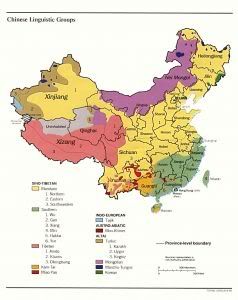
Teochew has a special
place in my heart. I remember when I was just a child, Dad would
tell us stories in this dialect. The many idioms and phrases and
folk songs which are peculiar to the Teochews always made me smile
– and even cry.
My
uncles are the ones who have really ‘mastered’ the language. Mom
calls theirs ‘Pure Teochew’, which to me can be quite indiscernible
because they are “so cheem”. But that is why it fascinates me.
There is a certain melody or flow to the language and sometimes you
do not really have to understand the words to get what is being
said.
It
is the same with the other dialects in our country – be it Hokkien,
Cantonese, Hakka, or Hainanese.
 The
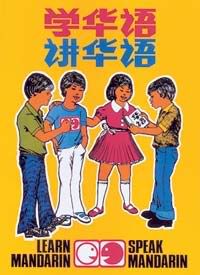
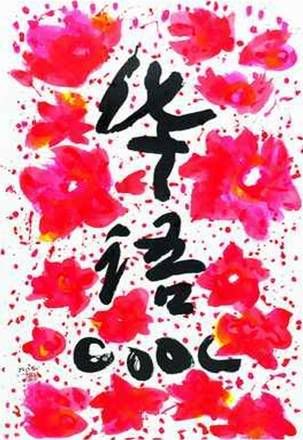
“speak Mandarin” campaign
The “Speak Mandarin”
campaign has sadly and unfortunately eroded the use of such
dialects – especially among younger Singaporeans. There seems to be
a lack of “rootedness” to their language. But is this
important?
With language (dialects)
comes your sense of identity, community, belongingness and
uniqueness. Indeed, belonging to a particular dialect group allows
you to keep in touch with its culture, customs and
traditions.
These are the things which
define who you are in the community.
And the dialect is the
conduit, if you like, of these customs, culture and traditions.
They are the oral history of a people. Such languages fill in the
missing parts of written history of our people. And history too
plays a part in rooting us, giving us a sense of
identity.
There is no doubt that
when you hear your own dialect being spoken, it is a markedly
different feeling than hearing mandarin or English being
spoken.
Separate dialects =
segregation?
The question of course is:
Does belonging to separate dialect groups prevent us from
assimilating into “One People, One Nation, One Singapore”, which
seems to be the government’s concern?
My
answer would be no. We are already different and diverse –
ethnically, culturally, individually. Also, we all have different
life experiences. What we should be doing is to celebrate our
diversity – whether it is language, or culture or traditions –
instead of trying to “keep it out of sight and out of mind” in the
hope that a “Speak Mandarin” campaign will create some sort of new
“unity” among our different set of people under a new “one
language”.
We
can be diverse and be united at the same
time.
Diversity is our strength
– and it should not be seen as a ‘weak link’. “Sameness” does not
necessarily mean “unity”. Indeed, “sameness” is uninspiring, it
does not add to the vitality or vibrancy of life. Thus, I have
always found it immensely regrettable that the government has
embarked on the purposeful but artificial promotion of “one common
language” – namely, Mandarin.And this has been done to
devastating effect, in my opinion. TV programmes, radio shows, even
Chinese cultural festivals are celebrated in mandarin instead of
the diverse indigenous languages we have here in
Singapore.
Mandarin’s economic
value
It
is argued that Mandarin is an economic necessity, in the same way
that SM Goh recently promoted the learning of Arabic. With a
booming China, Mandarin will no doubt
become a very important language for global trade and business in
the years to come.
But how many Singaporeans
will be doing business with China?
Sure, there
will be the businessmen who will need a decent capacity to speak
and understand the language if they’re doing business in
China
or with
China
businessmen.
But how about your
ordinary Singaporean? We are all not going to be doing business
with China or with
China
businessmen,
are we?
And is it a good thing to
substitute our dialects for something else because of economic
necessity?
There is a
place for dialects
Do not get
me wrong. I am not against the
learning of Mandarin in our schools but I am of the opinion that
Mandarin should not be artificially foisted on the general
population at large either. I do believe that there is room for
dialects in their various forms to be expressed and
celebrated.
For example, we could have
television programmes in the dialects of our people. This would,
first of all, allow our older Singaporeans to know fully what is
going on. Even my Mom has difficulty understanding the news in
mandarin. I would guess that most older folks have no inkling about
globalization.
Secondly, it would bring a
certain refreshing dynamism and vibrancy to what is heard, seen and
produced in many of our television channels. I have often wondered
how reflective our programmes are in representing our
diversity.
Thirdly, I would argue
that it would also bring an immediate sense of “Singaporean-ness”
to our people. There is nothing like hearing another of your
“kinsman” speaking the same language. Haven’t we all felt this when
we travel overseas and meet with fellow Singaporeans who speak the
same way or the same language we do? I was in Europe once and met a fellow
teochew Singaporean who was also there on holiday. Conversing with
him in our common dialect was indeed emotional. It brought back
feelings of kinship and identity which no amount of Singapore
Shares ever will.
And is this not what we
are trying to do – to create a sense of ‘rootedness’ for
Singaporeans? Surely there is no better
way to do this than by openly and proudly celebrating and allowing
the expression of our ethnic languages – and the culture,
traditions and customs that come with them as well?
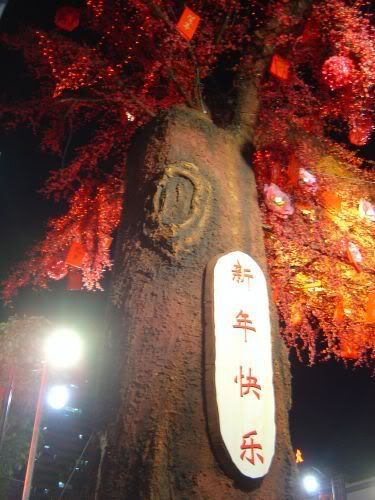
Chinese New Year 2007
There is a certain sense
of “lack” during this Chinese New Year as I observed my relatives
celebrate the New Year of the Pig or boar, if you like.
I am not sure if Singaporeans out there also felt the same way. A
lack of erm….authenticity, even festivity, about the New Year
celebration and its associated meaning.
Are we missing
something?
A
friend recently remarked to me that Chinese New Year is getting to
be rather ‘empty’ in Singapore.
“There is no meaning nowadays. Everyone is worried about keeping
their jobs, the GST, their children’s future, cost of living.
What’s so special about Chinese New year now? Kids even speak
either mandarin or English. What has happened to our dialects? The
traditions and customs? What is Chinese New Year going to be like
in the future with so many foreigners here? Even Chingay also must
have foreigners performing for us.”
I
can understand how he feels.
None of my younger nieces
and nephews greeted their grandmother in dialect. It was either in
Mandarin or English, which their grandma didn’t
understand.
Another friend, who was
doing her masters degree in London, expressed similar
feelings. “It was strange. I felt more Chinese in
London
than when I am
in Singapore.
Chinese New Year there seem to be more festive and meaningful than
it is in Singapore.
Even with just a small group of Chinese friends there, we felt more
kinship than we do when we’re back here.”
Being proud of our heritage
While we spend time,
effort and money in trying to integrate and assimilate our foreign
friends into our Singaporean society, we should perhaps also spend
equal or even greater amount of time, effort and money in making
sure that we have a Singaporean identity too. In fact we do have a
Singaporean identity. We just need to be proud of it and preserve
it and celebrate it.
And I would suggest that
we start with us being proud of who we are, where we came from and
the roots of our existence. Take pride in our heritage. Rootedness
begins with the sense of familiarity – of family, places, of
culture, tradition and customs, of kinship and brotherhood or
sisterhood. Rootedness is not borne out of the next spanking
shopping centre or an artificial language imported and enforced.
Rootedness certainly is not and will not be established with the
state giving out economic shares or “progress packages”. Or even
providing us with luxurious HDB flats.
Be
proud of our dialects – the dialects which our forefathers,
grandparents and parents were brought up in, the languages which
keeps them, even today, connected to each other. The dialects which
gives them a sense of identity, of kinship.
And I dream and hope for
the day when I hear – once again – the dialects of my forefathers
being proudly expressed once again – even on television
programmes.
Is
it a coincidence that our lack of identity coincides with the
erosion of our ethnic dialects?
Imagine this: Imagine our
schools teaching the young simple phrases of dialects which our
forefathers used when they toiled under the sun, with the sweat on
their backs in manual labour.
Now, isn’t that something
worth keeping and passing down to our next generation?
Update:
Students learn dialect to communicate with
elderly (May 6,
2007)