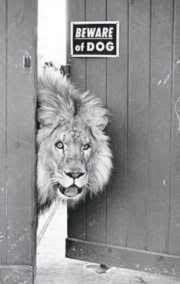
what can say abt the Down Under?
A history of cover-up
This is the third time that Kalejs has been given refuge in
Australia after deportation overseas. The first instance was in
1994, following his removal from the US. After a brief stay,
pressure from Jewish groups and anti-Nazi activists caused him to
flee to Canada, to be deported from there in 1997. In early 1998,
amid protests, Prime Minister Howard personally issued a statement
defending the government's decision to take no action against
Kalejs, on the grounds that a Federal Police review of his files
had failed to produce adequate evidence for a prosecution.
In fact, the only probe into Kalejs and other Nazi war criminals
living in Australia, conducted by the federal government's Special
Investigations Unit (SIU), was controversially shut down by the
previous Keating Labor government in 1992, with the support of
Howard's Liberal-National Party. At the time it had 57 cases
unresolved and had just applied to send investigators to Latvia to
obtain the testimony needed to prosecute another Nazi, Karlis
Ozols, one of Kalejs' associates. “The government pulled the pin,”
commented Robert Greenwood QC, who headed the SIU. According to the
SIU's official historian, Professor Konrad Kwiet, the SIU had
gathered “five or six volumes” of material against Kalejs.
just search this in Google
Australia + "nazi war criminals"
Are there war criminals in Australia?
Until a domestic law enforcement agency is given the resources
to investigate allegations of war criminals living in Australia it
is impossible to determine with any accuracy how many are living
within our borders. However, there are good reasons to believe that
significant numbers are living here. We already know that suspected
war criminals have slipped through Australian border checks. The
1986 Menzies Review of Nazi war criminals living in Australia
identified ‘very substantial gaps’ in Australia’s initial post-WWII
war crimes screening procedures. The SIU, established in response,
conducted 841 investigations and identified 27 cases where it ‘was
satisfied that the suspect had committed serious war crimes but was
not able to gather sufficient evidence for prosecution under the
War Crimes Act’. Some WWII suspects are still alive today.
Officials privately suggest that screening has been a problem at
other times since WWII.
In the public mind war criminals seem to be commonly associated
with greying men from WWII. However, as the Simon Wiesenthal Center
– an organisation dedicated to pursuing Nazi war criminals – points
out, Australia is probably now facing its final opportunity to take
successful legal action against suspected Nazi war criminals.
Modern war criminals are a far more significant problem for
Australia. It was reported in 2005 that people who had been denied
refugee protection on the basis of involvement in war crimes had
come from Afghanistan, Palestine, Sri Lanka, Nepal, Lebanon, Sierra
Leone, Bangladesh, Tibet, Nigeria, Chile, Iran, Iraq and India. 15
It is likely that Australia is also home to suspected war criminals
from the countries of the former Yugoslavia, as well as Cambodia,
and possibly Rwanda and East Timor among others.
The fact that other countries continue to request the
extradition of alleged war criminals from Australia – albeit in
small numbers – offers another reason for suspecting they are
living here.
Another reason for suspecting that a significant number of war
criminals are living in Australia comes from examining the
experience of a comparable country – Canada – that has dedicated
resources to addressing the problem of resident war criminals.
As Tanya Plibersek stated in a debate in parliament on crimes
against humanity:
‘Mr Deputy Speaker, you can imagine someone walking into a
community centre who spies across the room someone whom they
believe to be responsible for the deaths of their family
members...I am not saying for a moment that an accusation is all
that is required, but we at least owe it to the victims of these
crimes to examine their claims, and we owe it to ourselves as a
nation to be confident that we are not sheltering people here who
have committed such crimes.'
To read more about this, please see the entire briefing,
posted at the Lowy Institute (here).
sss