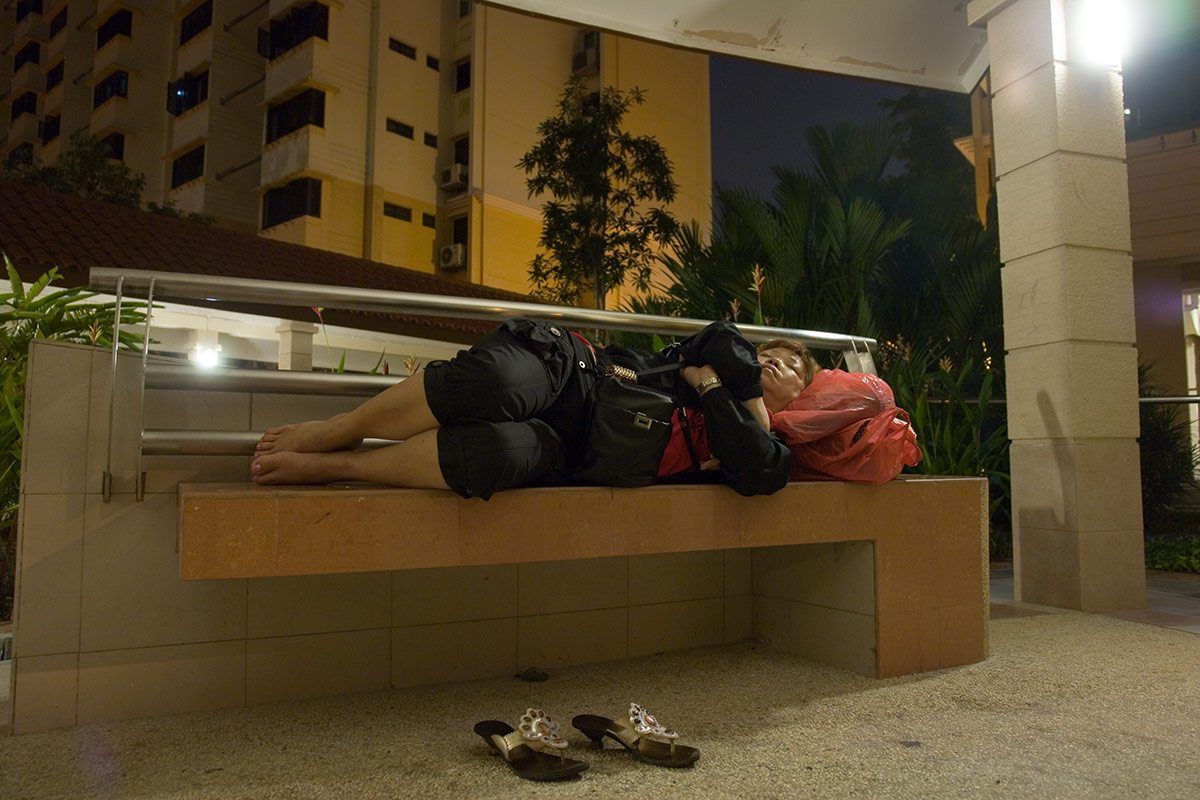
Meet Singapore's nomad families
by Braema Mathi, Senior Writer
For four years, the newly-weds lived on the beach.
From 2003 to 2007, they lived off their catch from the sea, did
odd jobs, and washed in public toilets.
At 16, Madam Siti (not her real name), a Primary 4 dropout,
married Mr Osman (not his real name), 25, despite parental
objections. They were ostracised by both their families.
They lived in a series of pitched tents at Changi, East Coast,
then Sembawang beach. When Madam Siti gave birth, her sister and
in-laws took them in for a few months before conflicts drove them
out to the beach.
This went on till last year.
Madam Siti, now 21, and Mr Osman, now 30, and their two children
aged two and five, showed up at the Ministry of Community
Development Youth and Sports' Thomson Road headquarters, asking for
help to end their nomadic existence.
With rising living costs and property prices, the number of
nomadic families is on the rise, according to nine family service
centres (FSCs) here. Each of the FSCs says it sees between 10 and
30 such cases each year.
Lakeside FSC counsellor Edwin Quek says: 'We are seeing more
cases. The families cannot cope with mortgage loans payments and
the cost of living.'
His centre has already received eight calls for help between
March and May this year from displaced families, up from one or two
cases earlier this year.
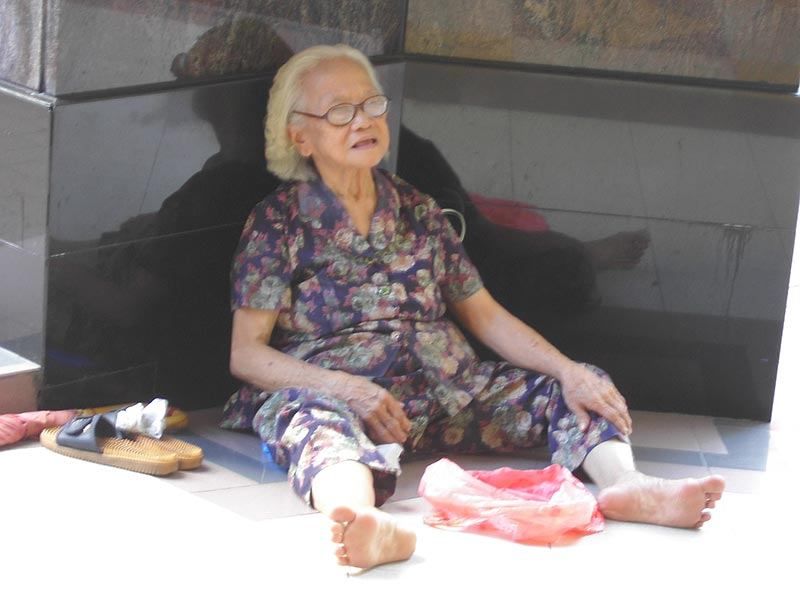
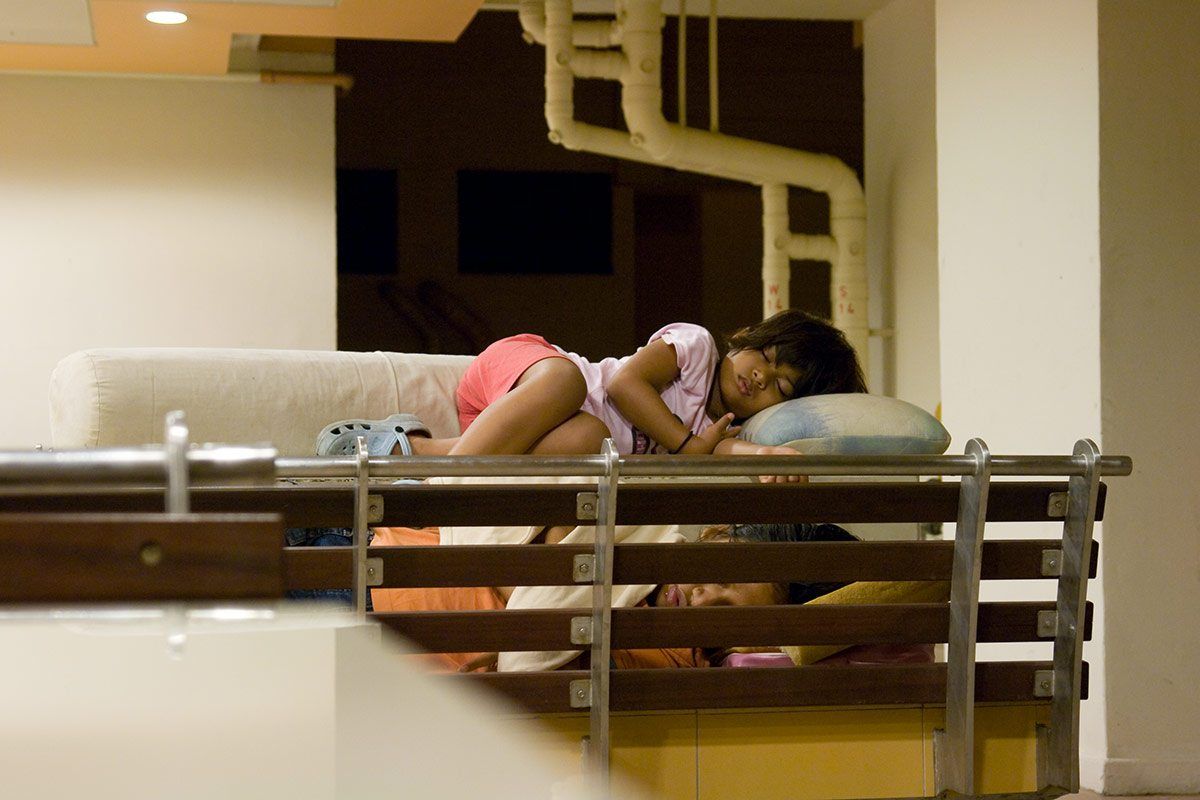
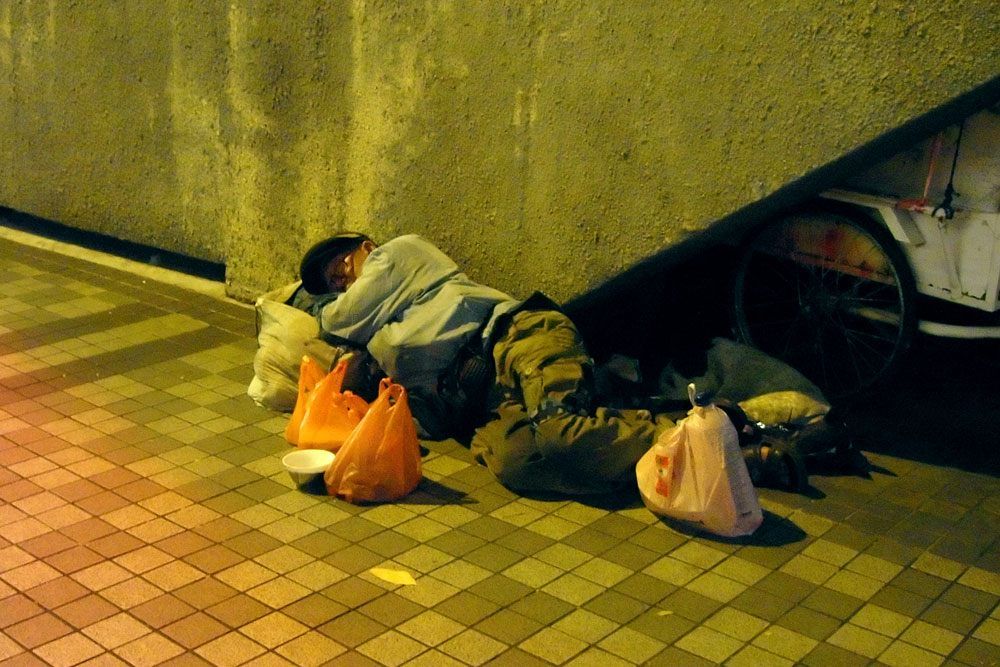
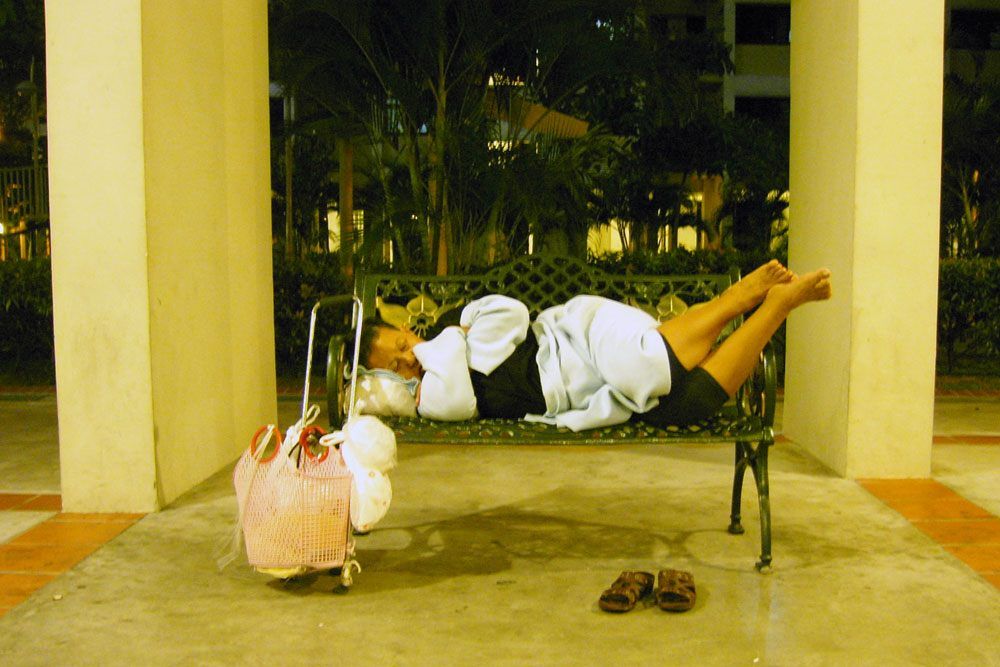
Social workers also say they see more families - with one FSC it
was one case a month - sleeping at void decks, often with children
in tow and showering in public toilets.
This goes on till they are allotted rental flats from the HDB or
till they can afford to rent or buy a unit in the open market.
But the wait for an HDB rental unit is now up to 15 months -
double the waiting time in 2006. The number of people applying for
heavily subsidised HDB rental flats has shot up by at least 30 per
cent in the past few months.
Now, there are 4,000 eligible applicants in the queue, waiting
for one- and two-room rental units. Depending on household income
and other factors, the rents are fixed between $26 and $205 a month
for a one-room flat and between $44 and $275 for a two-room unit, a
fraction of the market rates.
Fallible family network
According to social workers, most of these transient homeless
are divorcees and the down and out.
In some divorce cases, after the matrimonial homes are sold,
proceeds split between spouses and creditors paid off, there is
often not enough cash or savings left to buy another flat.
Others are caught in a swirl of bad decisions and poor planning,
resulting in the banks seizing their flats over unpaid mortgage
payments.
The official approach taken in dealing with such families is for
social workers at FSCs - as a first option - to encourage homeless
families to live with relatives, friends or strangers.
This is also for practical reasons, as relatives often charge
less rent - from $150 for a room - compared to the $500 and above
that landlords who are strangers charge.
But such arrangements often do not work out. With not just one
but several children and boxes of belongings in tow, the goodwill
of relatives quickly crumbles under the pressures of living
together in a small space.
Social workers cite cases where rules imposed by relatives and
landlords - that include no cooking, minimum noise levels and a cap
on water usage - are difficult for families to adhere to. Before
long, typically no more than a month or two, they are thrown out
again or prefer to leave.
When their circle of kin is exhausted, they start living in void
decks, beaches, quiet stairwells in commercial buildings, bin
centres and out of vans.
'They just want to live on their own, without all the tension of
living with others,' said a social worker with 10 years of
experience, who declined to be named.
The problem of nomadic families was hotly discussed in
Parliament early last year. Ang Mo Kio GRC MP Inderjit Singh noted
then that many residents were in negative equity and had defaulted
on mortgages, which resulted in repossession of their flats by
banks. He asked if these cases were increasing because of the
policy change of allowing banks to handle HDB mortgages.
In reply, Dr Mohamad Maliki Osman, Parliamentary Secretary for
National Development, said families planning to take up a bank loan
should understand the implications of taking on this
responsibility.
Each month, about 60 repossessed flats reportedly go on sale.
Many of these belong to families which over-extend themselves
financially, for example, by buying a bigger flat than they can
afford.
'Families often do not manage their budgets well and there is no
planning,' said Mr Quek.
Others lose their homes because of sudden illnesses or loss of
jobs. Many more are victims of ignorance. They do not know, for
example, that the HDB rules include a 30-month waiting period if
they have sold their flat bought with certain conditions from the
HDB, or that they can apply for another HDB loan or subsidy only
subject to conditions, if they have already done so previously.
'They go into this buying and selling of flats without knowing
enough about all the policy hitches. They need more guidance,' said
Mr Quek.
No room at shelters
The most vulnerable nomads tend to be divorced, lower-income
women with children, said Mrs Rachel Lee, a social worker with Fei
Yue FSC.
Most landlords are reluctant to take in lone women with
children. They wonder if they can pay up and fear getting drawn
into their family problems.
'There is also a huge constraint in space as, often, they tend
to have a lot of household stuff that they have to take along,
besides the children,' she said.
The hardest hit are nomadic children, who need a stable
environment but end up on the move all the time, showering in
public toilets and witnessing endless family feuds. Many end up
skipping school.
Mrs Chua Yen Ching, principal of NorthLight School that caters
to students who fail their Primary School Leaving Examination,
said: 'It is important for a child to come to school without having
such problems as a barrier to his or her learning.'
But there are few long-term solutions in sight.
Singapore currently has only one shelter for displaced families.
New Hope Shelter for Displaced Families, run by New Hope Community
Services at Yishun, has housed 41 families since it began
operations a year ago.
It can accommodate 22 families at any one time. It now has four
families on the wait-list - which ranges from 'a few days to weeks,
depending on how long it takes current residents to leave', says
its centre manager, Mr Ravi Philemon.
Each family can stay up to three months and has to pay $150 a
month for utilities and food rations.
There are three other shelters here, meant for battered women.
All three - a 40-bedder run by the Good Shepherd Sisters, a 22-bed
Star Shelter run by the Singapore Council of Women's Organisations,
and a 50-bedder run by the Singapore Anglican Community Services -
have taken in homeless families, though they are not equipped to
handle children.
Their social workers note that many of the families stay beyond
the three months allowed, simply because they cannot afford market
rate rentals.
Self-catering shelters?
The HDB has announced that it will build more rental flats, from
the current 43,000 units to 50,000, over the next few years. It
will also review the eligibility criteria for rental housing to
help the 'genuinely poor'.
One way forward, suggests Mr Chua Wei Bin from Ang Mo Kio FSC,
is to set up a committee that includes both social workers and HDB
officials to better assess options for homeless families.
That way, besides the HDB's eligibility criteria, other issues
like family dynamics can be factored in. For example, on paper, a
nomadic family may have siblings they can stay with, but they may
be estranged or feuding.
Pastor Andrew Khoo of New Hope Community Services, which runs a
shelter for the homeless, said that more temporary shelter space
will be needed and hopes to raise funds for it.
Associate Professor Ngiam Tee Liang, head of the National
University of Singapore's social work department, adds that
although the state wants homeless families to seek refuge first
with relatives and friends, those who have tried their best but
failed to go down that route should not be left out in the
cold.
'With close monitoring, genuine families in need must be helped
in getting a home,' he said.
Another solution that Mr Gerard Ee, executive director of Beyond
Social Services, suggests is to offer a self-catering shelter for
families where they manage themselves and their finances on their
own.
Once they show that they are capable of moving on, they are
given HDB rental units.
'Shelters unfortunately institutionalise dependency. They must
be short-term solutions. Families must find their own solutions.
This way, we give them that opportunity and also respect their
lifestyle, without going into rescue mode,' he said.
The Ministry of Community Development, Youth and Sports placed
Madam Siti's family in the New Hope Shelter. They stayed there from
June to September last year and were given counselling, budgeting
and parenting classes.
Mr Osman, previously a cleaner earning $600 a month, has since
landed a higher-paying job with help from the shelter. He is now a
car-washer, making $800 a month.
The family now lives with Madam Siti's sister in a one-room
flat. They stick to a tight budget worked out by the centre for
them - $50 for food, $100 for rental, $100 for transport, the rest
for the children.
When Madam Siti turns 21 next month, they will join the queue
for an HDB rental flat, forgoing their dreams of buying a flat, as
they know they cannot afford it for now and do not wish to get into
debt.
'I never want to go back and live at the beach. I want to live
in our own house soon and build up our lives,' she said.
This article was first published in The Straits Times on
June 22, 2008.
<!-- CONTENT : end --><!-- reader comment start
-->