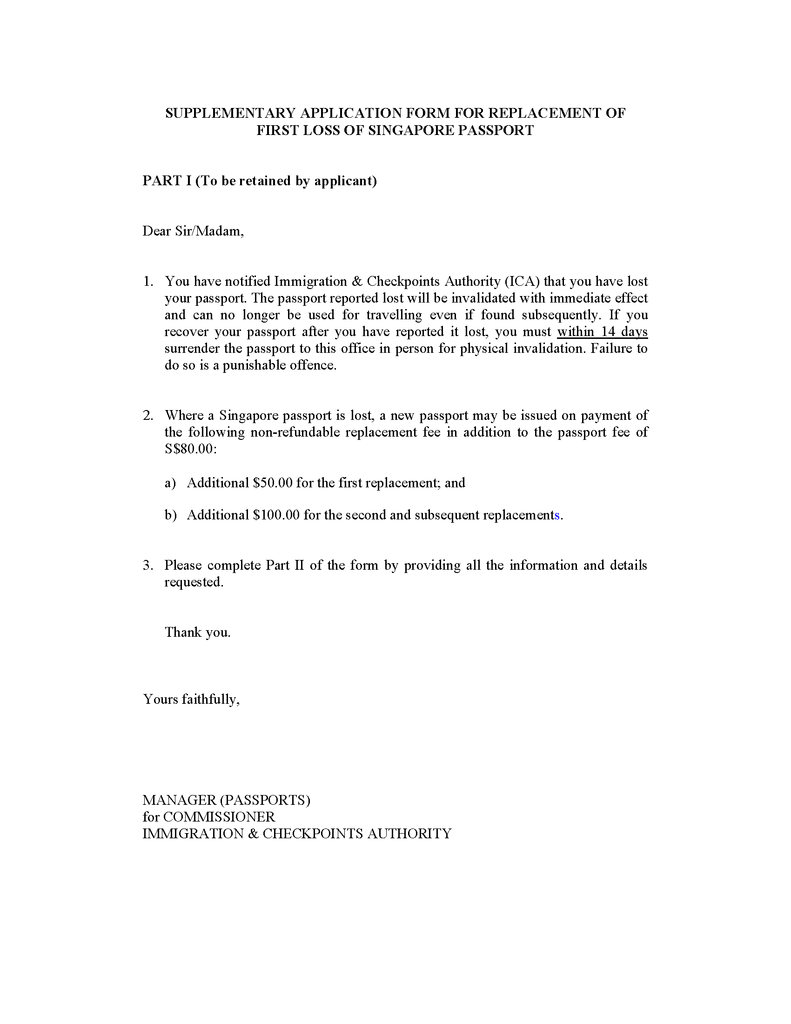
......so we finally know the real reason??...that they were
overwork'ed....did they mentioned underpaid??.......and thus the
more we should empathised with our Home team for losing MKS, the
court escape & the passport foul up......poor sods...these Home
Team chaps  tsk ts tsk
Increasing demands take toll on men in
blue <!-- TITLE : end-->  <!-- Story With Image End --> <!--
CONTENT : start -->
By Teh Joo Lin & Arlina Arshad

A BAG left on an MRT station platform used to be something train
station staff would be saddled with as part of their 'lost and
found' service.
That was before 9/11.
Today, the police can be called in, the area cordoned off and,
if need be, bomb-disposal experts summoned as well.
'It's a totally different ball game,' said Station Inspector
Nazri Abdul Karim from the Bukit Panjang Neighbourhood Police
Centre.
All angles have to be considered, without much extra time or
resources.
And it is taking its toll on the men in blue.
'While difficult to quantify, the psychological and physical
fatigue within the usual working hours is palpable', a police
spokesman told The Straits Times.
A large part of the added strain on the force comes from the
series of manpower-sapping security deployments they are called
upon to provide when Singapore plays host to mega events, like last
week's Asean Ministerial Meeting, which tied up some 2,000 officers
for eight days, with security round the clock.
Although the demands on the force have gone up, the numbers have
not.
There were 12,516 full-time officers in service last year, a
slight drop compared to the 13,377 in 2004.
But over the years, Singapore's population has swelled.
The resident population hit 4.68 million last year as the number
of foreigners here crossed the one-million mark for the first
time.
Their arrival and their language and cultural differences add
another layer to the complexity of the job of policing.
To help ease the load, the force turns to its pool of national
servicemen and volunteers.
During the International Monetary Fund and World Bank meetings
in 2006, about 5,000 police reservists were recalled for an
additional two weeks. The police also roped in about 700 voluntary
special constabulary officers and 600 auxiliary police officers
(APOs).
Duties have also been outsourced to private security agencies
such as Certis Cisco and Aetos. Both companies reported higher
demand for their services, resulting in Certis Cisco's APO force
growing 41 per cent over the past seven years to reach over 3,600
officers.
At Aetos, the headcount has doubled to 2,500 men today compared
to 2004, when it was formed.
However, not all police duties can be outsourced, said the
Tanglin Police Division's Deputy Superintendent Poon Ngee, who
added that the private security forces also had to be supervised by
the police.
For some crowd-control duties, where the threat of a riot is
possible, officers from the Special Operations Command, whose
unique training cannot be replaced, are called in.
SI Nazri, an 18-year veteran, said that his workload had 'been
increasing gradually' and he now puts in an extra two to four hours
for every 12-hour shift.
'Every morning I leave home and, more often than not, it's a
late night and my children are already asleep. They have asked me
why I've to work on my day off,' he said.
Despite the stretched resources, Singapore's police force, with
a lower officer-to-population ratio than Hong Kong and New York,
manages to keep crime rates here lower than in those cities.
If that record is to stay intact, Dr Teo Ho Pin, chairman of the
Government Parliamentary Committee on Law and Home Affairs believes
the police force has to be expanded.
He said: 'I think we should increase by 20 to 30 per cent the
existing workforce, coupled with the use of technology, to prepare
for future security threats.'