continuation:
4.The son of Devan has done well in Sg.
Mr C
V Devan Nair's eldest son, Mr Janadas Devan, a US-based Straits
Times journalist.,was a former editor-in-chief of SPH's English
and Malay newspapers division.u can always read his articles in
ST.
Perhaps a more accurate referral
would have been the comments made by Mr Janadas Devan on "the
Singapore Way".
You should have been more generous to a MAN, who after all was your
President - if you are a Singaporean; and the appropriate requiem
should have been this piece prepared by
ChannelnewsAsia :-
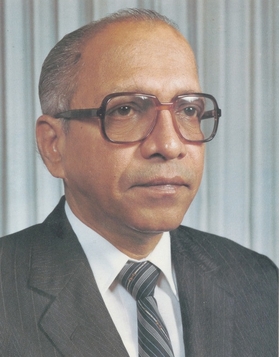
SINGAPORE : Former Singapore President CV Devan Nair has died in
Canada. He was 82.
He was the reluctant Singapore President who resigned and then
chose to live out his remaining years abroad.
But more than this, Mr Devan Nair was a teacher, a communist,
unionist and ruling party stalwart -- all in a lifetime that was
staunchly dedicated to nation-building in Singapore's early
history.
The third President of Singapore, Mr Nair was in office from 1981
to 1985.
Born in August 1923, Mr Devan Nair, the son of a rubber plantation
clerk in Malaysia, identified with the working class early on in
life.
His first political conviction was Communism, one that was sealed
when the trainee teacher met PV Sharma, an influential figure in
the teachers' union.
Under Mr Sharma's influence, Mr Devan Nair joined the Anti-British
League, a cover for the Malayan Communist Party, and in 1951 was
detained on St John's Island.
Said Patrick Jaswan, Mr Devan Nair's friend, "His university is
actually the prison. There was not a single book left that he
didn't browse through."
Out of prison, he continued with left-wing union activism.
He was an effective mobiliser and, with Chinese-educated activists
like the late Lim Chin Siong, had a considerable following.
In 1954, Lee Kuan Yew asked Mr Devan Nair to join him so the unions
could provide the mass base for a new party.
It was a marriage of convenience, but an uneasy one for Mr Devan
Nair.
Referring to those days, he said, "There was a great turmoil going
on inside me because I was caught in an emotional fix. On the one
hand, my head was increasingly with Lee Kuan Yew and company. But
on the other hand, my heart emotionally, I was tied up with these
people. And it became an intolerable contradiction."
When the Hock Lee bus riots took place, the British government
cracked down on the unions and Mr Devan Nair and his comrades, were
arrested.
Mr Lee persuaded Mr Devan Nair to get all the detainees to commit
to a non-communist Malaya, before securing their release.
Although he was closer to the People's Action Party after it came
into power in 1959, this did not mean Mr Devan Nair was willing to
fight his communist friends.
So, he went back to teaching, but was soon drawn back out into the
political fray by Mr Lee.
Said Janadas Devan, Mr Devan Nair's son, "He would say to my
father, 'Here we are Rajaratnam and I, Toh Chin Chye, fighting with
our backs to the wall and there you are marking exercise
books.'"
Mr Devan Nair's work with the PAP included a stint as the only
elected PAP MP in Malaysia after the merger.
Loyal to those who voted for him, Mr Devan Nair stayed put after
the Separation, and formed the Democratic Action Party.
But he soon found his position untenable.
Mr Lee, Singapore's Prime Minister from 1959 to 1990, said on 23
October 1981, "It was not a lack of courage that made him leave
Kuala Lumpur. The Cabinet decided that Singapore-Malaysia relations
would always be bedevilled if Devan Nair remained as a DAP leader.
I persuaded him to come back. I told him that the trade union
movement in Singapore had to be rebuilt on different assumptions
and different attitudes."
And that was Mr Devan Nair's most significant work -- forming the
National Trades Union Congress.
The late author and journalist, Dennis Bloodworth, summed up Mr
Devan Nair's experience as President: "As President with largely
constitutional functions, he was to put it frankly, bored. He
didn't like the job, he was not really cut out to meet the
presidents, kings, queens and others from these countries that
visited Singapore. That was not the Nair thing at all."
Mr Bloodworth added, "He started off life as a dogmatic,
argumentative sort of chap, 'pugnacious' when Lee Kuan Yew first
saw him; and he was hardly suited for what rather was in those
days, the milk and water role of being president."
Mr Devan Nair, who migrated to Canada with his wife, was
philosophical about his place in Singapore's history.
He once said his only regret in life was to allow himself to be
persuaded to occupy a highly ceremonial office so contradicted by
his temperament.
But he blamed no one.
And after he had said his piece for what it was worth, Mr Devan
Nair added that he expected "to fade away, like all old warriors,
into the past."
Some verdicts, he said, "are best left to history." - CNA
/ct/de
Have you wondered why LKY seems to
be mixing with dubious characters, and dumping them after he found
no further use for them ?
Was it the animal instinct of survival that was developed in the
harshest of conditions ?
During World War 2, LKY did work as an
interpreter with the Japanese.
Is it any surprise that the hardy S.R. Nathan was LKY's trusted
guardian of the Singapore Internal Security Department ?
What was the credentials for
S.R. Nathan to head the Singapore ISD - except
for the little known secret that he was working as an agent for the
Kempetai - the Japanese Secret Police responsible for the mass
murders of civilians in Singapore ?
This relationship will last for as long as the Presidential
functions can be performed by S.R.Nathan, who will probably warm
the seats for as long as his personal health
permit.