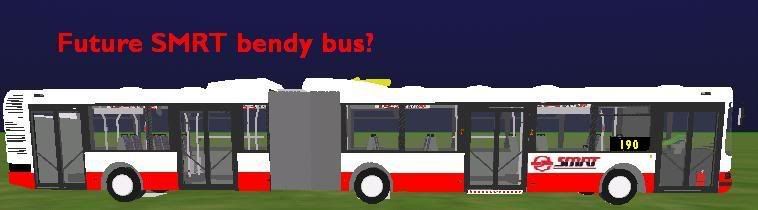
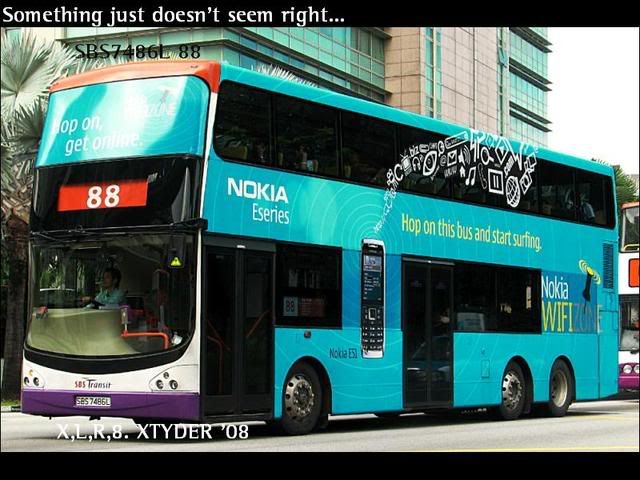
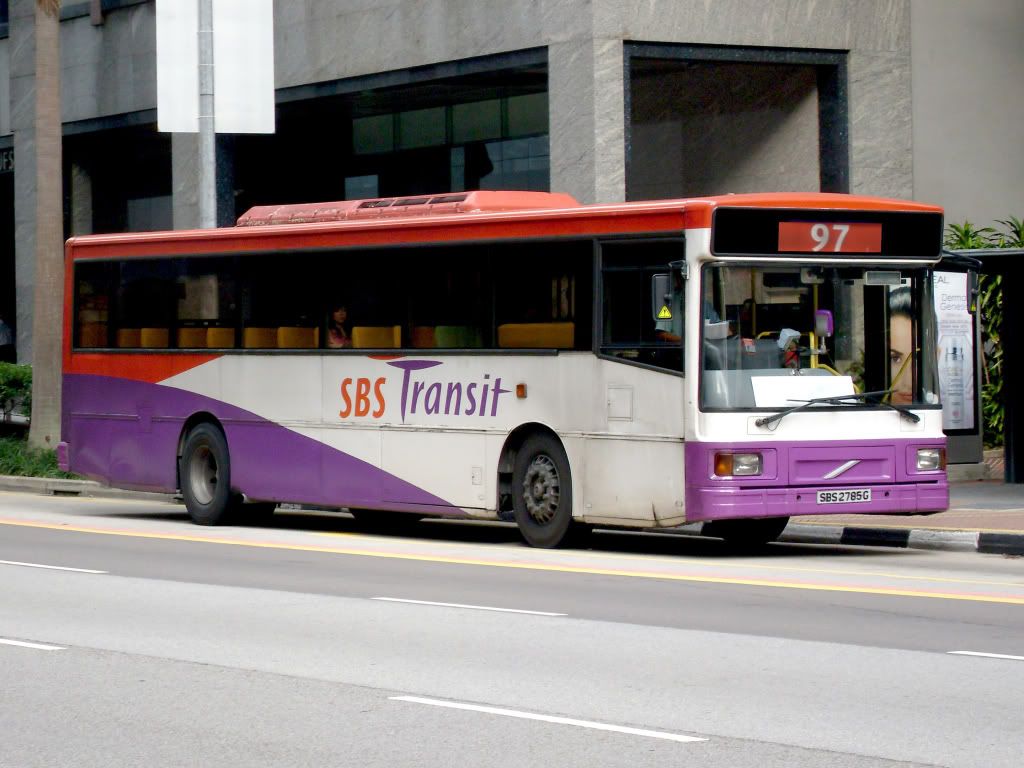
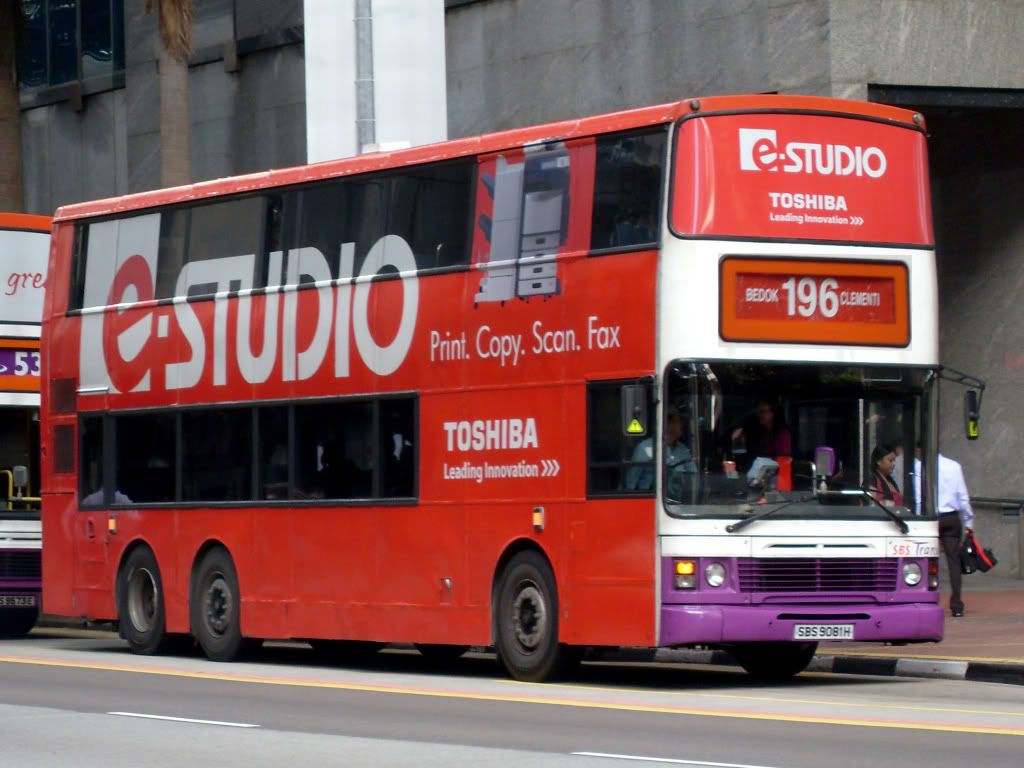
Having a door at the rear encourages passengers to move
rearward. Most passengers stand in between the front door and the
centre door so that they will be near to a door when they want to
alight, rather than having to walk over. Having a rearward door
encourages passengers to move to the rear as they will not worry
about moving back to the centre of the bus to get off, or so the
theory goes. I have seen photographs of rigid and double-deck buses
in other countries that has both a front and rear door, as well as
a centre door. Some older Singaporean commuter buses from the
1970's (and I believe the 1980's too - I faintly recall seeing a
Hino RK176 with such a layout when I was very young), as well as
many private buses today, have a front-rear door layout (rear door
behind the second wheel arch, at the rear overhang, while the front
door is either in front of the first wheel arch, or behind it). The
Londoners are actually experimenting with such a layout on a true
low-floor bus, which can be seen near the bottom of this page.
Which they dint like, there is only one true Enviro 200 built,
the rest are Enviro 200 Darts (ie Dart SLFs with Enviro 200
body).