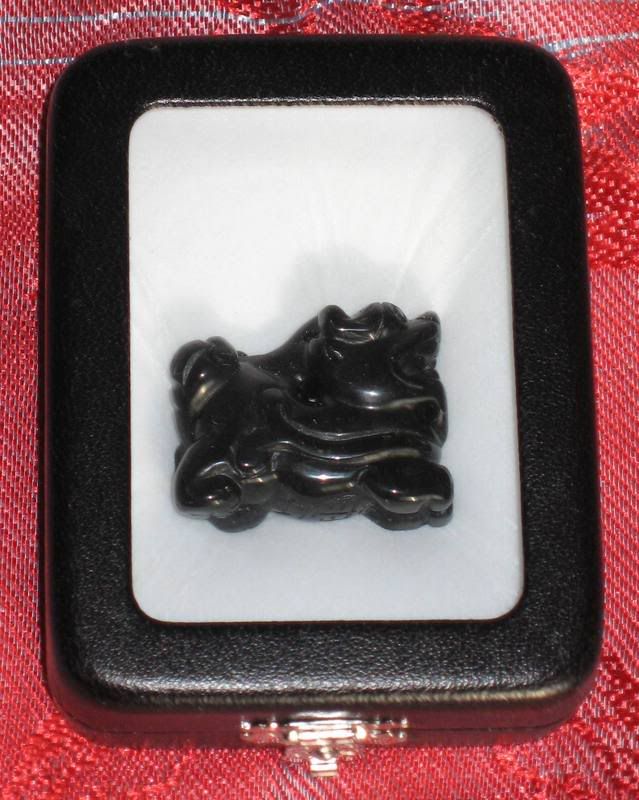
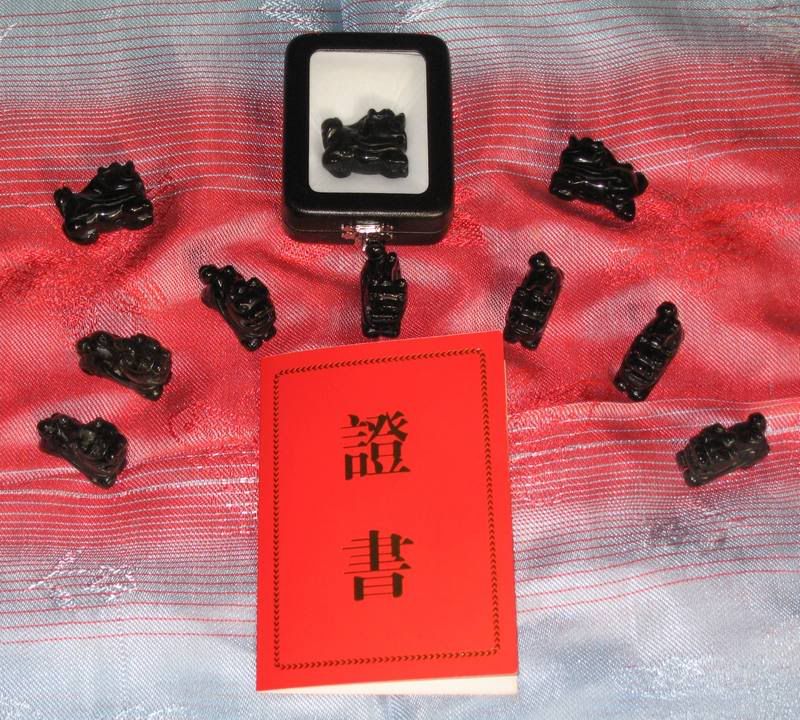
The Mythical
Beast Pixiu
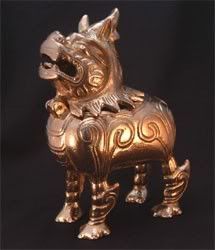
In ancient China, Pixiu was often seen guarding the Imperial Palace
and burial sites of the Emperors to ward off evil spirits. Pixiu
has always been regarded as an auspicious creature that possessed
the divine power capable of drawing wealth from the five
directions. Today, Pixiu may be placed near the main door, wealth
sector or window to fend off negative energy and to boost personal
luck.
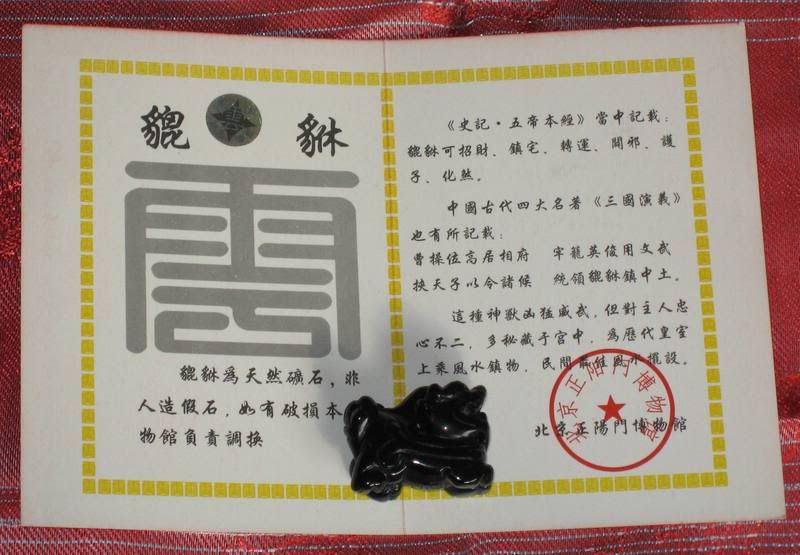
The Pixiu is also known as the Tianlu (Heavenly Salary) and Bixie
(Wards off Evil). It is a Magickal beast in ancient Chinese
mythology with a dragon's head, a horse's body, a qilin's feet, and
the overall shape of a lion. Its fur is greyish-white, and it can
fly. The Pixiu is fierce and a good fighter, and likes sucking the
blood or essence of demons and converting it into wealth. It is
tasked with patrolling the heavens and stopping demons and diseases
from causing chaos. One version of the legend identifies the Pixiu
as the 9th son of the Dragon.
In ancient times, 'the Pixiu' was also used as a synonym for an
army (because of its ferocity). One legend does that the Pixiu
broke one of the rules of Heaven, and was punished by the Jade
Emperor by restricting its food to the wealth all around the world.
It could swallow wealth without ever having to defecate. This
ability to gain wealth without letting it out was auspicious enough
for many Chinese to use jade carvings of the Pixiu as ornaments
even today.
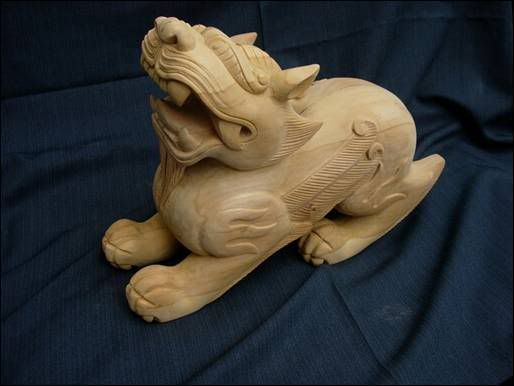
There are two different types of Pi Xiu. The difference is with
their horns. The one with two horns is known as Pi Ya (possibly a
corruption from bi xie ) and the one with one horn is called Tian
Lu (Pi Chen).
Tian Lu - is in charge of wealth. Displaying Tian Lu at home or
in office can also assist one to avoid fast flowing out of
wealth.
Pi Ya - wards off evil. It is also believed that Pi Ya have an
ability of assisting anyone who is suffering from bad Feng Shui
that is due to having offended the Grand Duke Jupiter (also called
as Tai Sui).
According to Mythology & Legends, Pi Xiu is the ninth offspring
of the dragon. Pi Xiu craves for the smell of gold and silver and
it likes to bring his master money in his mouth. Statues of this
creature are often used to attract wealth in Feng Shui.
Characteristics
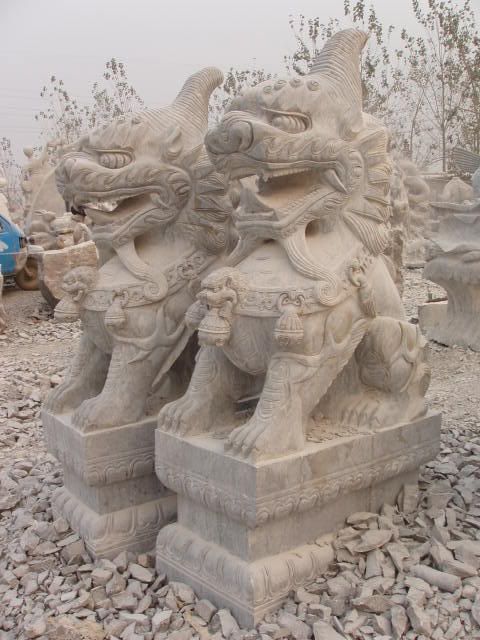
Fierce looking and covered with whitish-grey fur, Pi Xiu has the
head of a Chinese dragon, but is commonly depicted with only one
antler as time passes. Ancient Chinese depictions of Pi Xiu show
the male with the single antler, and the female with two antlers.
As with the Chinese Phoenix, the common image today is a
representation of a single sex. Pi Xiu has protruding eyes and
sharp teeth. Its body resembles a Chinese lion and the legs of Pi
Xiu are those of a Qi Lin. Looking at the posture of the Pi Xiu,
the creature seems to project a sense of strength, elegance and
mobility. Its obvious characteristics is its fat body to indicate a
full stomach loaded with unlimited amounts of good fortune.
Likewise it has a big mouth to gobble up money. Many people like Pi
Xiu because Pi Xiu does not have a hole at its bottom so it only
eats but do not dispose anything. This mean, Pi Xiu could contain a
lot of good fortune and wealth luck for you and your family into
your office or home and it stays within your premises and do not
dispose any of the luck from your offices or home.
Its is believed that the common wingless Pi Xiu assist in seeking
wealth while a winged Pi Xiu assist students in furthering their
studies.
Mythology
The myth of Pi Xiu tells that the creature violated a law of
heaven, so the Jade Emperor punished it by restricting pixiu's diet
to gold, and preventing the creature from defecating by sealing its
anus. Thus, pixiu can only absorb gold, but cannot expel it. This
is the origin of Pi Xiu's status as a symbol of the acquisition and
preservation of wealth.
Pi Xiu is also a fierce creature. The large fangs visible in the
creature's mouth are used to attack demons and evil spirits,
draining their essence and converting it to wealth. Pi Xiu also
guards against disease caused by these same evil spirits.
In tribute to Pi Xiu's ferocity and prowess in battle, The Pi Xiu
was synonymous with the army in Ancient China.