The term church fathers refers to Christian writers and
theologians of the first eight centuries of the Christian church,
especially the period of development up to 451 AD. The church
fathers are sometimes further divided into Apostolic Fathers, who
wrote in the first century, and the Ante-Nicene and Post-Nicene
Fathers, who wrote before and after the Council of Nicea (325 AD),
respectively. The period during which the church fathers wrote is
known as the Patristic Period and the academic study of these
writers is called Patristics. Both terms derive from the Latin word
pater, meaning "father."
The church fathers are of great importance to Christianity because
they formulated nearly all of the Christian doctrine that is
accepted by Christians today. They interpreted the Bible in light
of challenges from Greek thought and various heretical movements,
determined Christianity's relationship to Judaism, elaborated on
theological concepts such as the Trinity and salvation, and
established the structure and organization of the church.
The Patristic
Period
The earliest church fathers wrote in the latter part of the first
century (80-100 AD), around the time the biblical canon was closed.
These writers were especially concerned with practical matters like
faith, righteous living and church organization. The writings of
this period consist primarily of letters between churches and
exhortations to keep the faith in the midst of persecution. These
writers are known as the "Apostolic Fathers" for their close
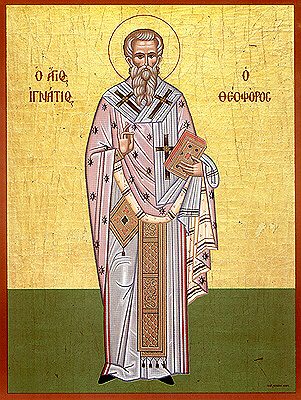
connection with the apostles, and include Clement of Rome,
Ignatius, Hermas, Polycarp and Papias, as well as the unknown
authors of the Epistle of Barnabas, the Epistle of Diognetus, 2
Clement, and the Didache.
Around the turn of the first century, Christian writers began to
turn their attention outward in defense of Christianity against
false claims made by Roman persecutors and demonstrating
Christianity's reasonableness to minds trained on Greek philosophy.
These writings were usually addressed to Roman emperors or other
pagan critics, and their authors are known as the "Apologists."
Among the most important apologists are Justin Martyr and
Tertullian. Augustine's lengthy City of God is also considered an
apologetic work.
The fathers of the second and third centuries also directed their
efforts towards combatting what they saw as heresy, or false
interpretations of the Christian faith. After the conversion of
Emperor Constantine and the end to persecution in 313 AD, Christian
writers turned from apologetics to focus almost exclusively on this
task. No longer threatened from without, the church still faced
threats from within. By the turn of the first century AD, most
Christian converts were Gentiles, not Jews. These converts brought
with them many ways of understanding Christianity, and often their
perspectives on Christianity were quite different from that of most
church leaders. Thus the church fathers from the fourth century
onward were focused especially on the defense of what they saw as
the true Christian faith (orthodoxy) against corruptions or
misunderstandings (heresy).
Further complicating the situation, the conversion of the emperor
had made theology a political matter. After Constantine's
conversion, many new converts flooded into the church, for now
Christianity was not only legal, it was the religion of the emperor
and therefore politically advantageous. Furthermore, Constantine
and his successors viewed Christianity as a means for unifying the
empire, and they had no patience for what they regarded as petty
doctrinal differences. Thus Christian teachers who taught
unorthodox doctrines were not only excommunicated from the church
but exiled from the empire. Not surprisingly, the success of a
particular theological position was sometimes directly related to
who had the ear of the emperor at the moment. Athanasius, honored
by all Christians today as a great defender of orthodoxy, was
exiled and reinstated no less than eight times as the political
winds shifted.