Singapore -- Releasing of
animals has been a traditonal practice of Buddhists. This action is
probably inspired by the vows to save all beings from suffering,
which incidentally also helps the person gain some
merits.
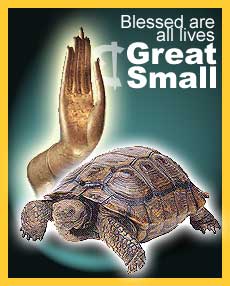 Compassion as it has been said is foolish
without wisdom. Wisdom comes not from gut feeling of "I think I did
the right thing", but arises from careful study and understanding
of the consequences of our actions. Is this respect, when we
release an animal from its captivity, are we certain that our
actions are based on wise contemplation, despite our
compassion?
Just as the Buddha had urged
the kalamas (in the Kalama Sutta) to investigate all teachings and
traditions, Buddhists now are urged to investigate this tradition
of animal release, to know if their acts are worthy of the
cause.
The action of releasing birds
has by itself sprouted an industry for it. For a religion that
talks about compassion, it does seems strange that our actions can
bring about an industry that catches birds in the wild, hold them
in small and cramp cages (usually with many other birds) and then
allowing people to buy and releasing them back to the wild again,
just so that we "humans" may feel that we have done a good
deed.
One of the methods of catching
birds by these vendors is to set up a net across the woods. As the
bird flies through they get entagled inside it. Many of these nets
are not meant for catching bird harmlessly, unlike those used for
research. The entagled birds often gets injured or exhaust
themselves when they desperately try to get free. By the time the
bird catcher comes and collect the bird, they are either exhausted
or starving. Many either die in the net or while being transported
to the market.
Those that live are then
stuffed into a cage which hosts many other birds as well, often in
unhygienic conditions. We don't even know if the vendors feed the
birds, if at all. Due to the cramped conditions, some of the birds
fight amongst themselves in the cage. Some suffocate or bleed to
death because of the fights. By the time anyone comes along to buy
these birds for release they would have already suffered for a few
days. So, for every bird released, probably five more would have
died.
Such acts of cruelty are not
just consigned to birds, but also to other species such as fishes,
terrapins and tortoises. To have them caught, some vendors would
have their habitats destroyed or poisoned, some are ripped apart
from their flock or have their entire flock killed. Like a lot
marine fishes (which are not bred in farms), many of them are
caught by locals using dynamites or cyanide poisoning. In the
process, their habitats are ruined, which in turn render those not
caught to suffer and live in a poisoned environment. Many of these
shop owners who buys fishes and animals care very little about the
sources of these animals or the methods used to catch them. Their
main concern, obviously is the bottom line.
Some of us may feel that its
okay to buy from restaurants because we are directly saving the
beings from being killed and they don't effect the economics of the
restaurant themselves. Ironically however, when we purchase any
"live food" whether with the intention of eating or releasing it,
the act itself continues the economic cycle that benefits those who
make a living out of selling these animals. Also, some of these
live food may not be endemic to our native environment. Releasing
animals into a different environment which they are not accustomed
to causes great impact to the existing ecology, or to even the
animals themselves. If the animal is farm bred, they normally don't
survive well in the wild.
Even if the live animal is
native to our areas, and releasing them would not be detrimental to
the environment, we should also enquire: How were they caught? What
sort of destructive acts were committed before they were
caught? How are they treated by the restaurants? How long have they
been kept in the tank? But the time we buy any of these animals,
they have already gone through all these various stages of
sufferings.
For every ONE we buy, probably
5 more died or suffered, and another 2 or 3 more probably replaces
it. If you buy one fish from me, I won't get just another one to
replace it, it will get at least one more, so that I can sell more.
Therefore, it would be naïve to think that its always a one for one
replacement.
The moral argument here is not
about being for or against the releasing of animals, but in the
economics behind the action, that is, the act of exchanging of
money in order to get them released. Whenever we pay to buy
something, it becomes an encouragement for vendors to continue in
their trade.
This dilemma is constantly
played out with animal conservationalist in places like Africa.
They constantly have to struggle with their personal emotion of not
buying a young primates (e.g. gorilla, chimpanzee or gibbon) from
the market place because once they do that, it will encourage the
sellers to catch more to sell them back to the conservationalists.
And to catch these young primates, usually it means that its
parents have to be killed in order to pry them off from their arms.
So effectively, they are not releasing one animal by buying them
off the streets, but killing 2 or more animals because of
it.
Closer to home, true animal
lovers do not buy pets from pet shops, they adopt them from the
animal shelters. I have a friend's cousin who loves dogs and have
taken in a lot of stray dogs to feed and shelter them. His daughter
thought that since he loved dogs so much, the best birthday present
was to buy a cute puppy for him. Not only was he unhappy, but he
was very upset by this move. True animal lovers knows the
sufferings of these pets have gone through, and will never agree to
buy one from a shop, no matter how cute they are.
What about those whose
livelihood depends on such sales? Well, life is certainly not easy
for anyone caught in such a moral dilemma. It is even harder for a
wise and compassionate Buddhists. This is something for all
concerned to ponder in depth, for there is no quick
solution.
Being aware of the
consequences of our own actions and choosing the right path
perhaps, may be a good way to start. Like a famous NGO campaign
says, only with the buying stops, the suffering and the killing
will stop too.
==============
maybe i was wrong about the temple being the seller. i
apologize.

