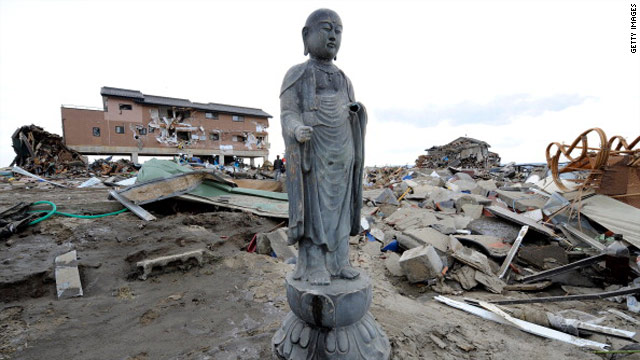
May all beings of Japan be free from mental and
physical suffering, and all beings be free from mental and physical
affliction as that of all victims, and all nations and its people
enjoying happiness and no severe bodily harm and damage arises from
past bad karmic consequences. Amitabha Buddha!
“As a mother would risk her life to protect her child, her only
child, even so should one cultivate a limitless heart with regard
to all beings. So with a boundless heart should one cherish all
living beings; radiating kindness over the entire world.” Sutta
Nipata I, 8
This metta teaching is beloved by Buddhists of every tradition,
and metta meditation is considered an integral aspect of all
Buddhist practice. In the Zen and many other traditions, Buddhists
may also vow to become “bodhisattvas”—individuals who pledge to
work for “the welfare of all sentient beings,” whoever they might
be or whatever their status, throughout all time, until all are
beings are liberated.
 This unconditional, mother-like love
is reflected in both compassionate empathy and practical
action. And it’s extended to all beings. As the great Zen teacher,
Dogen, said:
“Commiserate with a turtle in trouble. Take care of the sparrow
suffering from injury. When you see the distressed turtle or watch
the sick sparrow you do not expect any repayment for your favor,
but you are move entirely by the desire to help others….therefore,
serve enemies and friends equally, and assist self and others
without discrimination. If you grasp this truth, you will see
that this is the reason that even the grass and trees, the wind and
water, are all naturally engaged in the activity of profiting
others, and you understanding will certainly serve the other’s
benefit.” John Daido Loori, Invoking Reality: Moral and Ethical
Teachings of Zen