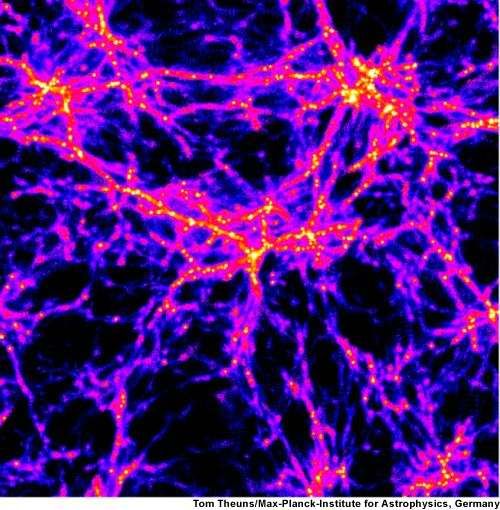
Just found an article. This article supports that Net of Indra
is the Mahayana way of understanding Dependent Origination. It
seems that Mahayana is more heavy on the 'metaphysical side' of
dependent origination, stressing that dependent origination is
about emptiness nature.
http://www.purifymind.com/SunyataEmp.htm
Sunyata ("Emptiness"). The Mahayana tradition has put a special
emphasis on sunyata. This was necessary, in part, because of the
tendency among certain early Buddhist schools to assert that there
were aspects of reality that were not sunya, but which had inherent
in them their "own-being". Several important Buddhist philosophers
dismantled these theories by arguing for the pervasiveness of
sunyata in every aspect of reality. (Nagarjuna was among the most
important of these.) The specific arguments are too complicated for
us to deal with here. But it is important to appreciate that
understanding absolutely everything as sunya could imply that even
those things most revered by Buddhists (such as the arhant ideal
and the rules laid down in the vinaya) were empty. Mahayanists
tended to argue that members of the Hinayana traditions were
attached to their ideal forms as if they were not sunya.
To some extent, sunyata is an extension of the concepts made
explicit in the 3 Flaws. All things being impermanant, nothing can
be seen as having an independent, lasting form of existence. And
this is, in essence, what sunyata is all about. Strictly speaking,
sunyata can be defined as "not svabhava". The concept svabhava
means "own being", and means something like "substance" or
"essence" in Western philosophy. Svabhava has to do with the notion
that there is a form of being which "is" and "exists" in a form
that is not dependent on context, is not subject to variation, and
has a form of permanent existence. As such, the "soul" as
understood in Abrahamic religions would have svabhava. God would
certainly have svabhava. The Platonic forms (such as those
described in the allegory of the Cave) would have svabhava..
Certain abhidharma teachings conclude that the building blocks of
reality have such svabhava. But Mahayana philosophers like
Nagarjuna concluded that sunyata is the fundamental characteristic
of reality, and that svabhava could be found absolutely
nowhere.
One of the images used to illustrate the nature of reality as
understood in Mahayana is The Jewel Net of Indra. According to this
image, all reality is to be understood on analogy with Indra's Net.
This net consists entirely of jewels. Each jewel reflects all of
the other jewels, and the existence of each jewel is wholly
dependent on its reflection in all of the other jewels. As such,
all parts of reality are interdependent with each other, but even
the most basic parts of existence have no independent existence
themselves. As such, to the degree that reality takes form and
appears to us, it is because the whole arises in an interdependent
matrix of parts to whole and of subject to object. But in the end,
there is nothing (literally no-thing) there to grasp.
Pratitya-samutpada ("Dependent Co-arising"). The flip side of
sunyata is pratitya samutpada. They are two sides of the same coin.
They mean the same thing, but from two different perspectives. To
the extent that sunyata is a negative concept (i.e., not svabhava),
pratitya-samutpada is the positive counterpart. Pratitya-samutpada
is an attempt to conceptualize the nature of the world as it
appears to us, not (as with sunyata) by saying what the world is
not, but by characterizing what is. I would say that
pratitya-samutpada is probably just about my favorite
religious-philosophical concept from within the traditions of the
world. It is wonderfully subtle, and Buddhist philosophers have
developed it beautifully.
As mentioned above, this concept is understood in two quite
different ways in Theravada and Mahayana thought. In Theravada
dependent co-arising (usually designated by its form in Pali,
paticca-samuppada) is understood as a logical-causal chain which
illustrates in a linear fashion the preconditions of suffering that
can be analyzed and eliminated according to a strictly codified
pattern of behavior. In Mahayana, on the other hand, which
emphasizes the emptiness of things, dependent co-arising as a
concept is used to clarify the nature of sunyata by showing that
all things that appear to have independent, permanent existence are
really the product of many forces interacting. Thus, in Mahayana it
is stressed that all things are dependently co-arisen, because
their seemingly independent existence really depends on the coming
together simultaneously (the co-arising) of the various parts and
forces that go into making them up. As such, pratitya-samutpada is
more a metaphysical concept in Mahayana, and it is nonlinear
inasmuch as it attempts to picture a universe in which all things
are inextricably linked in a cosmic wholeness that cannot be
unwoven into independent threads or pieces.
One illustration of sunyata and pratitya-samutpada is the Jewel Net
of Indra (see above). Another is a rainbow. We know that a rainbow
is real in some sense, because we can see it, locate it, measure
it, and so forth. However, it is also clear that a rainbow is no
"thing", but rather the product of various forces interacting as
sunlight shines through an atmosphere that has water droplets in
suspension. Mahayana thinkers have asserted that all phenomena,
including especially individual human beings, are like this,
inasmuch as it is impossible to locate any basic particle or entity
that is dependent in no way for its definition and existence on the
relationship that it has to other things. All things are,
therefore, "empty" and "dependently co-arisen".
Many great Buddhist philosophers have thought through with great
care the nature of shunyata and pratitya-samutpada. This is but a
simple illustration of much more complex reasoning, such as that
found in the writings of Nagarjuna, Chandrakirti, and other subtle
thinkers. (See Smith, 82-112. See also Paul Ingram. 1990. "Nature's
Jeweled Net: Kukai's Ecological Buddhism" on Electronic Reserve.
)
It may seem that the articulation of such ideas "tends not to
edification", or that it resembles absurd philosophical speculation
such as "how many angels can dance on the head of a pin?" However,
the study of these (and other) philosophical concepts has typically
been linked with practices that train Buddhists to release
themselves from attachment to or striving after "things" that might
seem to offer some lasting sort of satisfaction. One of the most
basic forms of attachment is the mind's tendency to grasp after
objects of thought and perception as real (i.e., as having
svabhava), and this tendency is reinforced in ideas that we have
about the world. The use of philosophical reasoning to deconstruct
such misconceptions (as they are understood within Buddhism) is a
powerful vehicle for eliminating seeds that can eventually grow
into very serious obstacles in one's orientation to the
world.
Among the most important applications of these ideas with Mahayana
has been to expose the emptiness and the co-dependently arisen
qualities of even Buddhism itself. Mahayana claims itself to be an
important vehicle to liberation, but it also points to its own
provisional character. Mahayana does not see itself as an end, but
as means to an end. That end is liberation, enlightenment, and an
end to suffering. However, as with all religions, there is a
tendency for the religion to reinforce itself as real, as an end in
itself, within the minds of its adherents. The philosophical
traditions of emptiness and dependent co-origination are important
correctives to this tendency. There is an important saying within
Zen: "If you meet the Buddha on the road, kill him." When people
come to see the Buddha as a being to be revered merely for the sake
of piety itself, or when Buddhism itself becomes the chief focus of
its practitioners, then it is time to "kill the Buddha", to point
to the emptiness and provisional quality of Buddhism itself.