Finding karma
through 'Earl'
By
KIM MULFORD, Gannett News Service, December 1,
2005
TV's hottest new comedy turns
thoughts to an ancient notion
Binghamton, NY (USA) -- For most viewers of NBC's
hit show My Name is Earl, the closest thing they'll ever see to a
Buddhist teacher wears a mustache and looks like he slept in his
shirt. Which is probable.
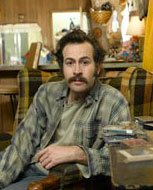
The sitcom's premise, that "karma is a
funny thing," depicts a guy who has done nothing but bad
things in his life before realizing that might be the reason his
life isn't so great.
"Every time something good happened to
me, something bad was waiting around the corner," Earl
explains to viewers, as he scratches off a winning lottery ticket
just before getting hit by a car.
That's karma, says Earl, played by Jason Lee. And that's why he's
trying to right every wrong he has ever committed.
Karma originated in the Hindu faith in India. Hindus believe a
person must rely on good karma if they want to move into a higher
social class in a future life, explains Youru Wang, who teaches
religion at Rowan University in Glassboro, N.J.
Buddhists teach that karma is more than
just consequence of actions it is the consequence of our
intentions, even if we don't act on them.
"If you step on an ant by accident, then
you will not have bad karma," Wang explains. "But a person will always have evil thoughts in
mind, even if he or she didn't realize it."
There are some similarities between karma and the Christian concept
of the Golden Rule, which teaches you should do unto others what
you would have them do to you.But in Buddhism, karma is a
law of nature, Wang explains. It's not God's punishment.
"For my students, they say karma is
quite widely accepted in this society," says Wang, adding
there are some similar American ideas. "Students always use, 'What goes around comes
around.' That's a common belief."
Eastern religious ideas frequently influence American pop culture,
Wang explains.
From television shows to movies such as The
Matrix, to the popularity of martial arts, tai chi and
yoga, Americans are growing increasingly familiar with and
accepting of Eastern thinking.
Stephanie DeCosta, an English teacher at Triton Regional High
School in Runnemede, N.J., asked her ninth- and 10th-grade students
to write essays about their thoughts on karma. Most cited examples
of it in their own lives.
Danielle Netter, a student at Triton, says she agrees with the
concept of karma as
the "fate or destiny of a person, based on their
actions."
One day in school, she said a friend laughed at her for having
sawdust on her pants. While she was laughing, the friend was hit in
the face by a swinging door.
"I told her that was bad karma, and
walked away laughing," wrote Netter. "I believe that my friend had bad karma since she
laughed at me, and her punishment was being
humiliated."
Nai Hsiao has been studying Buddhism for four years, and volunteers
at a Buddhist monastery in Shamong, N.J. She believes Buddhism
helps explain what goes on in the universe.
"There's always a reason that things happen," says the 38-year-old
nurse. The results of what we do might not show up immediately, she
says, or even in this lifetime. That's why it is so important to
treat others with compassion, remain mindful of one's thoughts and
actions, and avoid doing harm.
"You always want to do good things, so
that you will have a positive result," Hsiao says. Or, as
Earl says, "I'm just trying to be a
better person."


