Mother's Day
Around the World
By Lauren Brown
Provided by WorldNow
The United States commercial market for Mother's Day has
skyrocketed in recent years. According to the Society of
American Florists, 25% of all purchases of fresh flowers and plants
are for Mother's Day; and Hallmark says Mother's Day is the third
largest card selling holiday and second most popular gift-giving
holiday after Christmas.
So it may surprise you to find that the first efforts to
establish Mother's Day in the U.S. weren't exactly successful.
After the Civil War and during the start of the Franco-Prussian
War, social activist Julia Ward Howe wrote a Mother's Day
Proclamation calling for peace. She was inspired
by a woman named Ann Jarvis who attempted to unite women and
improve sanitation conditions through the Mothers' Work Days.
Howe's Mother's Day for Peace did not gain much of a following and
her proposal to convert the July 4th festivities into a
celebration of peace and mothers fell flat.
In 1908, after Jarvis' death, her daughter Anna M. Jarvis
campaigned for a Mother's Day holiday. Her Methodist Church
in Grafton, West Virginia held the first official Mother's Day
celebration and in 1914, President Woodrow Wilson eventually
declared the second Sunday of May the official national date for
the holiday.
By the end of Anna Jarvis' life, Mother's Day was celebrated in
more than 40 countries. The carnation was Ann Jarvis'
favorite flower and was present at her funeral. The tradition
has arisen of wearing a carnation, colored if the mother is living,
and white if not, to honor one's mother on the holiday. It is
also common to honor Grandmothers, wives, and other important
mother figures in your life.
Here's a look at Mother's Day traditions around the world:
Central and South America
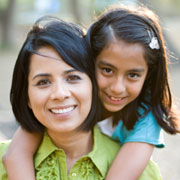
In Mexico, Mother's Day has been celebrated on
May 10 since the early 1900s. It is one of the biggest
gift-giving holidays in Latin American countries. The
celebration is also tied to the Virgin of Guadalupe who is
considered a symbol of motherhood. There is a special mass
for Dia de las Madres along with traditional breakfast or brunch
for mothers and some sort of serenade in the morning as well in
Mexico. El Salvador and
Guatemala also observe Mother's Day on May
10.
Europe
In the United Kingdom Mother's Day is
celebrated on the fourth Sunday of Lent. In the 1600s,
children that were working away from home as servants visited their
Mother Church on Mothering Day. They also saw their families
and their mothers during this time. Eventually the holiday
began to take on a secular celebration as well. A
tradition of giving your mother a glazed cake was started.
The cake comes from a folk tale about a married couple named Simon
and Nell. When they couldn't decide whether to boil or bake a
cake, they did both and invented the Simnel cake.
In Spain and Portugal, where
the holiday is more religious, people respect and remember the
Virgin Mary on December 8. Children also honor their own mothers on
this day.
In the former Republic of
Yugoslavia, Mother's Day was tied to a three day
series of holidays. The Mother's Day cycle in Yugoslavia
began with Children's Day or "Dechiyi Dan" three days before
Christmas. The following Sunday was Mother's Day or "Materitse",
and the Sunday after that was Father's Day or "Ochichi." It
was a three day event where in the parents and the children
alternated in tying each other up. The children had to
promise to be good in order to be released and the mother offered
the children treats so that she could be freed.
Many countries celebrate Mother's Day on March 8:
Afghanistan, Serbia,
Bosnia and Herzegovina,
Armenia, to name just a few. However, that
date has other importance as well. International Women's Day,
celebrated on March 8, recognizes the economic, political, and
social achievements of women. The Socialist Party of American
began celebrating a National Women's Day in 1909. The
following year the Socialist International met in Copenhagen and
established a Women's Day of an international nature in order to
support the women's rights movement.
Albania, Belarus,
Bulgaria, Macedonia, and
Russia are just a few of the countries that
celebrate International Women's Day rather than Mother's
Day.
France celebrates Mother's Day the last Sunday
in May. After WWI the holiday took shape around the desire to
repopulate the country. Medals were awarded depending on the
number of children a woman had. This springtime Sunday is
referred to as La Fete des Meres, and it provides
children and adults throughout France with the opportunity to make
their mother the center of attention, and give her gifts and
treats. Today a common gift is a cake shaped to resemble a bouquet
of flowers, along with candies, flowers, cards and perfumes.
In Sweden, the Swedish Red Cross sells
little plastic flowers before Mother's Day. They then use the money
that they make from these flowers to help needy children and their
mothers.
In Finland Mother's Day is called
aidipayiva. The family picks flower and presents a
bouquet to the mother. A small white pungent flower called
the valkovuokko is usually
preferred.
Asia
Some Asian countries, such as Singapore and China, follow suit
with the American Mother's day tradition. In China most names
begin with a character signifying mother which honors the maternal
heritage. Other Asian countries have their own
unique traditions. In Thailand, the
celebration of the beloved queen Sirikit Kitayakara's birthday on
August 12 has become a Mother's Day celebration. Hong
Kong's holiday, called mu quin jie, usually
honors the parents of the mother if she is deceased.
In Japan, the name for Mother's Day is haha
no hi. In the early 1900s the Japanese celebrated Mother's day
according to Western custom, but this was banned during World War
II. After the war, the tradition became widespread again and there
were drawing contests offered for children to illustrate their
mothers. The exhibits celebrating mothers and peace toured
throughout the country.
Middle East
In Bahrain, Ruz-e Madar or Mothers'
day is observed on the first Day of Spring, March 21. This
also happens in Lebanon and United Arab
Emirates.
In Pakistan and Saudi Arabia,
Yaum ul-umm, is modeled after Western Mothers' Day and is
marked by celebrations and feasts.
Africa
In Ethiopia, Mother's Day
occurs in mid-fall when the rainy season ends. There is a
three day feast called "Antrosht," which is part of the
celebration.
South Africa celebrates Mother's Day on the
first Sunday in May.
Ancient Mother Worship
The Egyptian goddess Isis was considered the
mother of the gods. She was revered as a loving wife and
mother and symbol of fertility and magic. She was revered and
a cult even formed to worship her.
In ancient Greece, Rhea, "mother of the gods,"
was honored in the spring with honey-cakes, fine drinks, and
flowers at dawn. Her Roman counterpart,
Cybele, was celebrated with games and a procession through the
streets.
The Celtic goddess Brigid, was celebrated
during spring in connection to the first milk of the ewes and
calves that flowed, symbolizing purity and nourishment.
For thousands of years, In India, the Hindu
people celebrate for nine days in October during a festival called
Durga Puja. This puja (or worship) celebrates Hindu goddess
Durga, a warrior-like protector and mother. It is currently
the largest Hindu festival in Bengal.