4 asset classes to hedge against
inflation
Bank interest rates remain low, so you may
have to consider other options to protect your money’s purchasing
power
As consumers across Singapore are feeling all too keenly, prices
these days seem to be headed stubbornly in one, direction: up.
The latest inflation figures show that prices of consumer
goods surged by an unexpected 5.2 per cent in March, mainly from
escalating housing rentals and vehicle prices.
The Government last month raised its inflation forecast
for the year to between 3.5 per cent and 4.5 per cent.
With bank deposit rates well below that level, money left
in a bank will see its value steadily eroding.
That leaves consumers with a thorny problem: how to
protect the purchasing power of their money.
“While investors in the United States, Europe and
Australia can invest in inflation-linked bonds or treasury
inflation-protected securities to preserve their wealth in times of
inflation, such tools are not widely available in Singapore and
most of the Asian markets,” noted Mr Hugues Delcourt, chef
executive officer of ABN Amro Private Banking Asia.
“When it comes to inflation protection, diversification
is key – not only as protection against inflation risk, but also as
a way to protect portfolios against other cyclical risks along the
way.”
Here’s a long at four asset classes that help to do just
that.
Fixed Income
One asset class to consider is fixed income, such as high-yield
corporate bonds.
Bonds offer a fixed annual interest rate called the
coupon and repay the principal according to a schedule. A broad
range of bonds is on offer out there for investors with varying
risk appetites.
For instance, the HDB has a five-year bond which offers a
low coupon rate of 1.165 per cent.
At the other end of the spectrum, Hong Kong-listed
Central China Real Estate is offering a four-year bond that pays
out 10.75 per cent.
Perpetual securities, which are bond-like instruments,
are another option.
Unlike in the case of bonds, where the investor gets the
interest and principal according to a fixed schedule, issuers of
perpetual securities can defer coupon payouts under certain
circumstances.
The repayment of the principal is also left to the
issuer’s discretion.
Examples include Genting perpetual securities which offer
a coupon rate of 5.125 per cent, and Hyflux perpetual securities
which are paying 6 per cent.
“The yield (for perpetuals) are high and attractive to
counter inflation,” noted CIMB research head Kenneth Ng.
But he cautioned: “The only dampener is that transaction
costs to unwind the position could be a little higher, as trading
in these perpetuals might not be so liquid.”
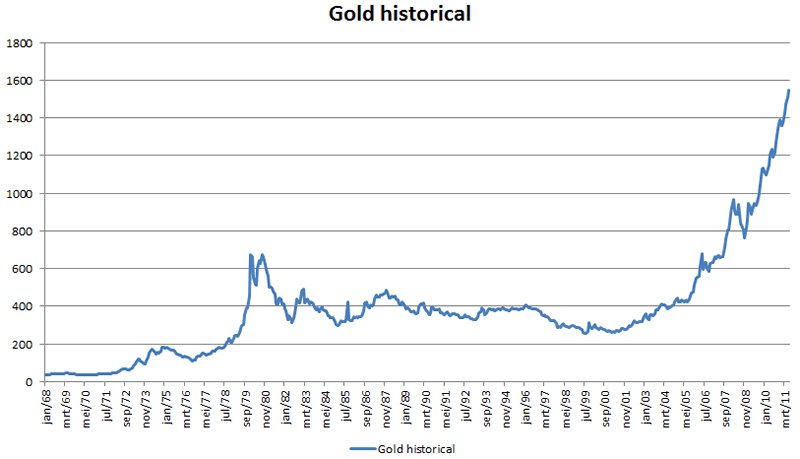
Gold
The yellow metal is traditionally seen as one of the best hedges
against inflation.
“The price of gold tends to increase under two
conditions. First, when inflation is high and rising, and second,
when there is imminent economic depression and investors fear the
security of their bank deposits,” said Phillip Futures analyst
Lynette Tan.
Said IG Markets market strategist Justin Harper: “While
the real value of most currencies has generally declined, gold has
retained its purchasing power.
“As we have seen in recent years, gold also has the
potential to out-perform other assets and provide impressive
returns. As an inflationary hedge, it is hard to beat for
consistency.”
The price of gold has recently fallen below the US$1,600
level to around US$1,590 per troy ounce, dragged down by fears
about Europe’s political crises.
But ANZ senior commodities strategist Nick Trevethan
said: “If commodity prices rise, historical data suggests it is by
no means certain that gold prices will rise in tandem.”
Ms Tan added: “Unlike silver, gold does not have an
industrial purpose. Therefore, when gold loses its safe haven
demand stemming from fears or crises, it can face significant price
corrections.”
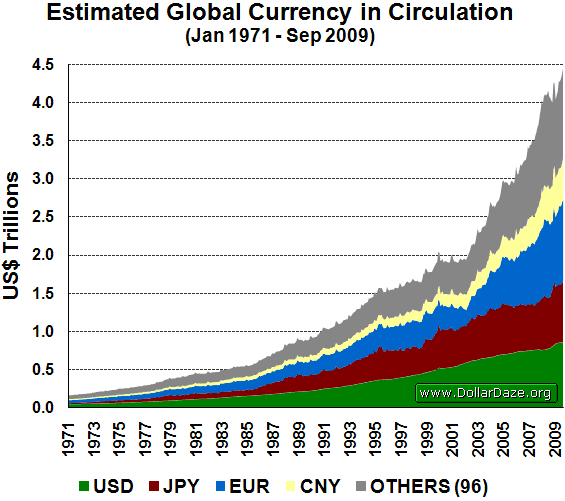
Currencies
Given that Singapore dollar has continued to strengthen, it
might remain one of the best to hold.
The Monetary Authority of Singapore said in April that it
would let the Singdollar appreciate at a faster pace, in a move to
counter ballooning import prices of consumer goods.
But analysts said holding other currencies in your
portfolio might also help mitigate against price rises.
"Asian currencies could be a good hedge against inflation
in the medium to long term if investors believe in their
appreciation trends," said Ms Grace Tam, market strategist at JP
Morgan Asset Management.
"However, currencies ' movement could be very volatile in
the short term... Asian local currency bonds would be an even
better inflation hedge than pure Asian currencies, as investors
could potentially benefit from higher yields as well as the
appreciation potential of the local currencies."
Mizuho Corporate Bank market economist Vishnu Varatha
noted that the currencies of countries that produce commodities
might be a good inflation hedge, if commodity prices go up.
In particular, he said the Australian dollar and
Malaysian ringgit could be interesting to look at.
"These have exposure to energy segments (coal and
petroleum), some hard commodities as well as agricultural
commodities.
"Outside of Asia, the Canadian dollar and some South
American currencies could be attractive due to the energy and
agriculture commodities exposure."
Equities
Despite market volatility, stocks are worth a look as long-run
inflation hedges, analysts added.
"Equities may not protect you from short-term spikes in
inflation. But over a longer period of time they are likely to
outperform the effects of inflation," said IG Markets' Mr
Harper.
CIMB's Mr Ng said investors should "pick companies that have
pricing power as their costs increase".
One area is real estate investment trusts, or Reits,
which generally provide yields of over 5 per cent, Mr Ng said,
noting: "For some of the asset sub-sectors like retail and health
care, cash flow is less subject to economic conditions."
Another area is emerging market equities. Said Mr
Delcourt of ABN Amro Private Banking Asia: "In an inflationary
environment, emerging market equities returns may show a higher
correlation with commodity returns, since many of these
emerging economies are heavy users, or producers, of
commodities."
Some currencies, like the ringgit, may gain from
exposure to commodities.
Gold is traditionally seen as one of the best hedges
against inflation, with the potential to outperform other assets
and provide impressive returns.
Invest, The Sunday Times, May 13, 2012 Pg 35-36