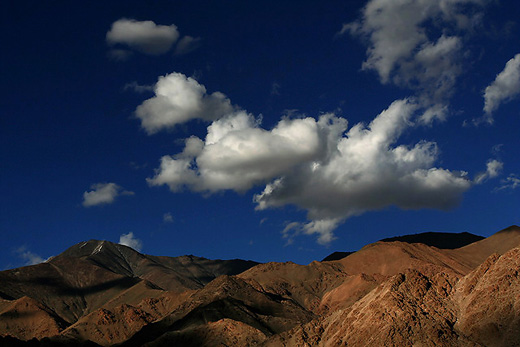
Kashmir
Kashmir is the principal region in
the state of Jammu & Kashmir and a favourite destination of the
whole world, as unforgettable like ever before. Nestling in the lap
of the dazzling, snow-capped Himalayas, the Kashmir valley is
undoubtedly a jewel in India's crown. An inspiration for so much
art, music and poetry, Kashmir is also a honeymooners' paradise, a
nature lover's wonderland and a shopper's dream come true. The
Mughal emperors who came here in the summer months described the
valley in one word "Paradise".
Over the years, Kashmir has come
to love and look after its tourists, fulfilling their every whim.
Tourists are everywhere, soaking up all the Kashmir has to offer -
the walks, the pony treks, the cable car rides over Gulmarg resort,
the shikara rides at sunset on the Dal Lake.

Srinagar
Srinagar, the state capital, is situated at an altitude of 1,730
metres above sea level. The lush greenery of the valley with its
terraced rice fields, fruit orchards and swirling waterways spills
into the city of Srinagar via the Dal Lake and great avenues of
popular and chinar trees. This fresh natural atmosphere combined
with the commercial clamor of the old city's twisting medieval
streets gives Srinagar a distinctive and vitalizing flavour.
The water world of the Dal and Nagin lakes in Srinagar can be
explored in the almost decadent comfort of Shikaras,
hand-paddled water taxis. In the mountains, sturdy hill ponies are
available for riding or as pack animals to carry trekking supplies
on a number of beautiful trekking routes.
How To Get There
By Air: Srinagar is connected to Delhi by flights via Jammu and
Leh. Flights are also operated from Delhi to Srinagar. It takes
about 40 minutes to reach the Airport if the road is clear.
By Rail: The nearest railhead is Jammu Tawi 305km away. Jammu is
connected to all parts of the country by express trains.
By Road: Srinagar, being the only major town linked by road to
the rest of the country, is a base for excursions to nearby
resorts, for fishing or trekking expeditions. The capital of the
state of Jammu and Kashmir is connected by JKSRTC bus services to
Jammu, 293km; Leh, 434km; Kargil, 204km; Gulmarg, 52km; Pahalgam,
96km; Chandigarh, 630km; and Delhi 876km. SRTC, Booking Office:
Tel: 455107, 472436. Several private companies from Delhi operate
buses to Srinagar.
Accommodation
All types of good, clean and reasonable hotels including
cottages and bungalows are available.

House
Boats
Most visitors begin their tour of Jammu and Kashmir in Srinagar,
with a stay in a legendary houseboat. Houseboats have been a part
of Kashmir's aquatic culture for centuries. Houseboats of all sizes
and costs range the banks of the busy Dal Lake and the quieter,
cleaner Nagin. Most houseboats on the Nagin and the Jhelum are
situated on the banks of the lake, and can be accessed directly
from land without the help of a shikara, while all those
on the Dal require a shikara to get to and from them.
The Dal is famous not only for its beauty, but also for its
vibrancy, because it sustains within its periphery, a life that is
unique anywhere in the world.


Nagin Lake and
Hari Parbat
A beautiful circular drive through apple orchards and rice
fields connects Shalimar with the Nagin Lake and the old city of
Srinagar. Visitors take this drive to visit the shimmering white
marble mosque of Hazratbal, which possesses a hair of Prophet
Mohammed. On the lake margin, a short distance from the mosque, is
the tomb of Sheikh Mohammed Abdullah, the "Lion of Kashmir". Just
beyond Hazratbal and separated from Dal Lake by a causeway, is the
Nagin Lake. The Nagin is popular with tourists searching for a
quiet vacation. Four swimming boats anchored in the deepest part of
the lake offer facilities for swimming, water skiing and surf-board
riding. Behind Nagin lake looms the Hari Parbat fortress, atop a
small hill built by the Mughal Emperor Akbar. Across the combined
lakes from Hari Parbat, on the Takht-e-Suleiman (throne of Solomon)
hill is the temple of Sankaracharya. A motor road leads up the hill
to this ancient Shiva temple.

Mughal
Gardens
The famous Boulevard Road circles the Dal Lake and leads out
towards the magnificent Mughal Gardens. The first two gardens -
Chashma Shahi and Pari Mahal are to the right of the Boulevard, set
into the slope of the circling hills. The two larger gardens,
Nishat and Shalimar are located much farther down the boulevard.
Nishat is the larger of the two and has an impressive plantation of
huge chinar trees on the highest terrace, planted perhaps by the
great Mughals themselves. The Shalimar is the more famous garden
because of the celebrated romance between its builder, Emperor
Jahangir, and his queen Nur Jehan.


Hill Resorts
Around Kashmir
Pahalgam is very popular with Indian tourists as the staging
point for the famous pilgrimage to the sacred ice lingam in the
Amarnath Cave, four days walk to the east. A growing number of
foreign tourists go to Pahalgam to relax in surroundings that
compare favourably with the Swiss Alps, to play golf on the rough
little nine-hole course, or to start off on a number of treks into
the high altitude meadows beyond. Tents and pack ponies can be
hired in Pahalgam for treks to the 11,800-foot (3,600 meter)
Kolahoi glacier, which can be done in three days, or for the
arduous, 10-day walk into Ladakh, across the main Himalayan
range.
Pahalgam
Pahalgam is Kashmir's premier resort, cool even during the
height of summer. A number of hotels and lodges cater to all
preferences and budgets, from luxurious to unpretentious trekkers'
lodges, including JKTDCs delightfully romantic, fully furnished
huts, partially concealed by giant pine trees.
Around Pahalgam are many places of interest, and because the
resort is set between fairly steep hills, it is worth hiring a pony
rather than walking. Pony fares are posted at prominent
locations.
The most beautiful of these is the huge, undulating meadow of
Baisaran, surround by thickly wooded forests of pine.
Pahalgam has within it no fewer than eight tiny villages, one of
which is Mamal. There is a Shiva temple here, generally considered
to be Kashmir's oldest existing temple dating to the 8th
century.
Chandanwari, 16kms from Pahalgam, is the starting point of the
Amarnath yatra which takes place every year in the month of
Sawan (July-August). The destination is the Amarnath
cave, believed to be the abode of lord Shiva. Although the road
from Pahalgam to Chandanwari is on fairly flat terrain, and can be
undertaken by car, from Chandanwari onwards the track becomes much
steeper, being accessible only on foot or by pony. 11kms from
Chandanwari is the mountain lake of Sheshnag, after which, 13kms
away is the last stop, Panchtarni. The Amarnath cave is 6kms away
from there. During the month of Sawan, an ice stalagmite
forms a natural shivling which waxes and wanes with
the phases of the moon.
The State Government makes extensive arrangements every year for
the successful completion of the pilgrimage, registering each one
of the over one lakh pilgrims, registering pony owners and
dandi walas, providing camps enroute, and ensuring safe,
comfortable and speedy progress of the yatris.
Fishing
Pahalgam spreads along the banks of the Lidder river, the focal
point of interest for fisherman looking for trout.
Trekking
Apart from angling, Pahalgam is also known as the starting point
for treks to the surrounding mountains.
Popular treks from Pahalgam are to the Kolahoi Glacier via Aru,
Satlanjan and Dudsar Lake, and to the high altitude lakes that dot
the meadows and mountain ridges between Pahalgam and Sonamarg.

How To Get There
The two-and-a half hour journey by road from Srinagar can be
covered by deluxe buses operating from the Tourist Reception Centre
every morning. Taxis can also be hired for the trip, with the
choice of a same-day return basis.
Accommodation
Good, clean and reasonable hotels are available.
Gulmarg
A huge cup-shaped meadow, lush and green, with slopes where the
silence is broken only by the tinkle of cow-bells, Gulmarg looks
like a fantasy set in a film, and not surprisingly, has been the
venue of several films. All around are snow capped mountains, and
on a clear day you can see all the way to Nanga Parbat in one
direction and Srinagar in another.
From Gulmarg, a pony track leads upwards to Khilanmarg, Kongdori
and Seven Springs, a couple of hours by pony but longer on foot.
From here, across the Apharwat - the peak which looms up from this
point - is Alpather Lake, a picturesque alpine lake, frozen till
late June.
Slight lower than Gulmarg is the shrine of Baba Reshi, a Muslim
mystic saint, whose shrine is visited by people of all faiths.
Gulmarg also has one of the world's highest grreen 18-hole golf
course which attract sportsmen in the summer just as its ski runs
make it India's premier skiing center in the winter. Several short
trekking routes and numerous day walks can be taken from Gulmarg
which is only 32 miles (52km) from Srinagar, to the southwest.
Gulmarg is the ultimate beginner's skiing resort. You don't need
the kind of wardrobe you see on TV - Slacks or a salwar kameez will
do fine.
You don't even need heavy woollens, as in Gulmarg you'll be able
to hire snowboots, mufflers, woollen socks, windproof jackets and
caps. You'll also be able to drift to one of the many ski shops and
hire skis, sticks and goggles, find yourself a ski instructor and
set off down a slope, cheered lustily by your family while the ski
instructor takes a picture of your with your camera!
There are several hotels, (two of them being luxury, several
being comfortable) in addition to JKTDC's winterized, fully
furnished huts which are great value for money.
Ski
Slopes
Come winter and Gulmarg's slopes turn it into a premier ski
resort. Not all winter tourists come to ski, some are there to
enjoy the snow. Among the multitudes of slopes are a few serviced
by ski lifts. Most skiing is centered around these slopes, suited
to beginners and intermediate-level skiers, with runs ranging from
200-900 metres.
Instructors are available on payment from the ski shop run by
the department of tourism, Government of India. Equipment is of
international standard and skiing here is cheaper than anywhere
else in the world. For the not-so-adventurous are other snow sports
such as tobogganing where no skill is required. Similarly, there
are snow-scooters.
Gondola
Project
For a fun-filled ride of a most unusual kind, Gulmarg's newly
constructed gondola lift from high above Gulmarg, through pine-clad
slopes is exhilarating. There are 60 cable cars ferry which takes
tourists right up to a height of 3090 mts from 2690 mts at the
base.

Trekking
There are several delightful walks around the resort, the most
popular being to Khilanmarg 4km away, and Apherwat, 7km away on the
same route. Ningal Nallah and Lienmarg are both 10km from Gulmarg,
and are popular for day excursions and picnics. Tosa maidan is a
three-day trek from Gulmarg. All these journeys can be made on
horseback with fixed rates for each. Pony-riding is the chief way
of getting around Gulmarg.
How To Get There
Buses and taxis ply between the Tourist Reception Centre in
Srinagar and Gulmarg, 56km away.
Accommodation
Good, clean and reasonable hotels are available.
Sonamarg
Sonamarg is a quiet valley, at an altitude of 3000 metres. 80km
northeast of Srinagar, almost like heading for an enchanted journey
into a wonderland of nature.
Sonarmarg, which means 'meadow of gold' has, as its backdrop,
snowy mountains against a cerulean sky. The Sindh meanders along
here and abound with trout and mahseer. Ponies can be hired for the
trip up to Thajiwars glacier, a major attraction during the summer
months.
Surrounded by mountains up to 5,300m high, the valley is divided
by a spur of the Thajiwars range. The climb is challenging and
there are many camping sites available, making it easier for the
trekker to seek respite.
Waterfalls and the Thajiwars glacier from a sparkling white
contrast to the greenery-covered meadows. From Sonamarg, trekking
routes lead to the Himalayan lakes of Vishansar (4,084m),
Krishansar (3,810m) and Gangabal (3,658m). A nearby excursion is to
Baltal, 15km north of Sonarmarg. This valley is at the foot of
Zojila, a day's journey from the sacred cave of Amarnath.
Trekkers can also reach Leh, the starkly splendid rooftop of the
world, by crossing over the Zokila Pass.
Accommodation
Good, clean and reasonable hotels are available.