Hi sir
Ultima, may i ask,
a
Lewis diagram = Dot and Dot structure
a Kekule
diagram = Line and Dot structure
a Dot
and Cross diagram = Dot and Cross structure
Many
people, including teachers in Singapore JCs, are confused about the
difference between these terms, and often use the term "Lewis
structure" when they mean "Kekule structure"; Cambridge uses the
term "Displayed Structural Formula".
For 'A'
level purposes, Cambridge will accept any of the above, or even
hybrid variants between.
a
Lewis diagram = Dot and Dot structure
What
dyou mean by Dot and Dot?
Thank
you !
Lewis structures are dot-dot diagrams :

https://www.nyu.edu/classes/tuckerman/adv.chem/lectures/lecture_11/node1.html
Kekule structures are bond-line diagrams :

http://chemwiki.ucdavis.edu/Core/Organic_Chemistry/Case_Studies/What_is_Organic%3F
Singapore JC teachers often wrongly call Kekule structures as
Lewis structures. But it doesn't really matter, coz Cambridge
doesn't use either term, rather, Cambridge will call it "displayed
structural formula" or "full structural formula" (ie. the Kekule
structure, with lone pairs not required to be shown unless the
molecular or ionic geometry is also required), as opposed to
dot-&-cross structures.
Lastly, Singapore JC teachers also wrongly call the resonance
contributor of benzene as "the Kekule structure of benzene".
(Actually here, it's not totally the Singapore JC teachers' error,
becoz in a way it was Kekule's own error when he drew out the
structure of benzene over a hundred years ago, but don't blame him,
he was still the first human to come closest to the correct
structure of benzene (you should check out the alternative
proposed structures of benzene by other rival chemists), and
back then, humans didn't understand the concept of resonance
contributors and resonance hybrids (which Singapore JCs only
properly teach to H3 Chem & OIympiad Chem students, depriving
poor H2 Chem students of a proper understanding of Chemistry), so
Mr Kekule was still the best man with the best idea back then).
This (what Singapore JCs call as the "Kekule structure of
benzene") is more correctly called the Kekule/Lewis structure and
skeletal structural formula (respectively) for the resonance
contributor of benzene :
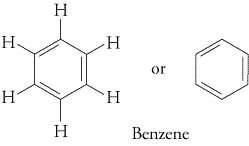
http://preparatorychemistry.com/Bishop_Resonance.htm
This (what Singapore JCs call as the "correct structure of
benzene") is more correctly called the Kekule/Lewis structure and
skeletal structural formula for the resonance hybrid of
benzene :

http://www.tutorvista.com/chemistry/physical-properties-of-benzene

http://chemistrywithelevens.blogspot.sg/2012/05/rings-and-cyclones.html
Lastly, note that Cambridge will accept the skeletal formula for
benzene even if the question specifies "full or displayed
structural formula". And when drawing structures or mechanisms,
Cambridge will accept either the resonance hybrid (ie. with the
circle in the middle, which Singapore JCs anally insist you draw
this instead of the resonance contributor with alternating double
and single bonds, because they're afraid you JC H2 students are not
intelligent enough to understand the intricacies of the differences
between resonance contributor and resonance hybrid), or the
resonance contributors (ie. with the alternating double and single
bonds, which is actually the more correct structure to use when
drawing reaction mechanisms, as you'll learn in the University, if
you take Chemistry or Medicine in the University).
Cambridge will accept either the resonance contributor or
hybrid, so no worries. Of course, the A level shortcut of using the
resonance hybrid saves time, so go ahead and use it (most students
can't even complete doing all questions in the A level paper during
the A level exams). But if you want a deeper understanding of
Chemistry, and also for some of the more challenging exam A grade
distinction questions (eg. one of my BedokFunland JC H2 Chemistry
questions : Under certain conditions, para- aminophenol, also
known as para- hydroxyphenylamine, can be oxidized to generate a
product with molecular formula C6H5NO. By drawing the simplified
free radical mechanism to represent the reaction, elucidate the
structure of the product.), you'll find that using the
resonance contributor is actually superior to using the resonance
hybrid.
