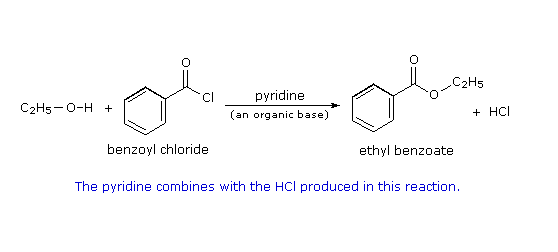
Fischer Esterification is a nucleophilic acyl substitution
reaction via the addition-elimination mechanism, and because a
small molecule (eg. H2O) is removed to join two molecules
together, it is also called a condensation reaction.
Because acyl halides and acid anhydrides are more reactive
electrophiles compared to carboxylic acids, using acyl halides or
acid anhydrides will increase both the rate (ie. kinetics) and the
yield (ie. equilibrium). The reactions are similar : they are all
nucleophilic acyl substitution reactions, via addition-elimination
mechanisms, and are also condensation reactions.
To properly understand these reactions, you must be able to draw
their mechanisms (taught to H3 Chem, Olympiad Chem and
BedokFunland JC students). If you're now preparing for your A
levels in week's time, don't worry too much about drawing the
mechanism; rather focus on understanding it.
You can Wikipedia and Google out the mechanisms yourself. It's
always a good idea to compare different sources, books and
websites; it will give you a more balanced and
comprehensive perspective.