so both charges can move but only electrons can move ah?
you need to understand the fundementals of charge..i shall
start
Firstly, when an object has the same number of protons( +ve),
and the smae number of electrons (-ve). they are at neutral
charge.
When more protons than electrons, the object is at positive
charge, when more electrons are at negative charge, it means here
are more electrons
Take as example
18 Protons (++++++++++++++++++) and 16 electrons
(----------------), resulting as + and - cancel out, left 2 plus
(++), therefore the object is said to be having a 2+ charge, need
to take care, is 2+ not +2 (This is oxidation state)
Therefore, charge can move is a abituary term, which means
charge do not really "move", but the shift in charge is due to the
moving of electrons which carries a negative charge which will in
some term, make one side positive, due to the departure of
electrons which make the side having more protons, while the other
having more negative charges due to the arrivial of more
electrons.
Additional response
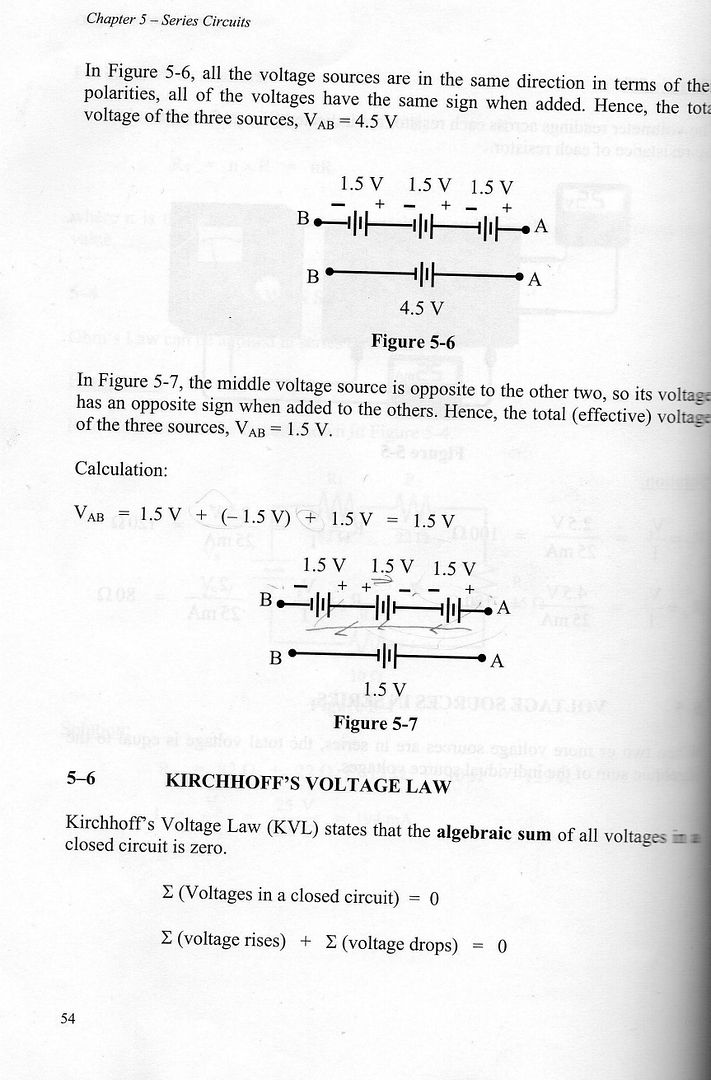
Q4. Battery "cancelling each other out" is due to when two
battery are facing each other in the same pole direction, electron
flow (which bring the current) will be obstructed as a result,
therefore, no electrons can flow each way and thus cancelled each
other out. However in the example quoted, there is 2 battery versus
one. therefore, think like a tug-o-war game, one side use 2 man and
another one, and the man are exerting each 400N of force,
definately thre side with two man will win as they use 400N more
force, so a battery is also the same, one side 3 V another 1.,5 V,
so it will be overall 1.5 V in the direction of the side which have
more battery.
Q5. Let me define principle of moments
Moments = Force X Length of perpendicular distance fm pivot to
line of action
So when axle reach vertical position, length of perpendicular
action reaches 0 m which will cause the moment of force to
decrease.