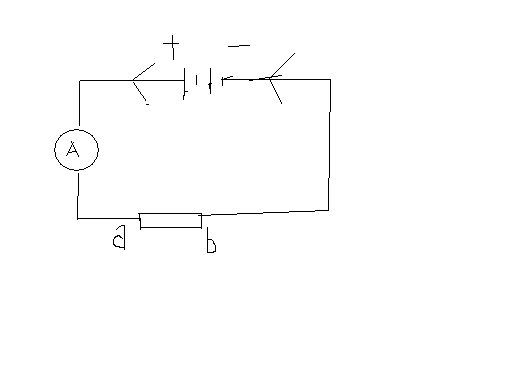
Err.... electric charges do not only move because of electric
fields....
And the "electron emission" thingy.... still stands...
Anyway for your question... let's see it in this simplified way.
In a resistor, it sorts of "slow down" the movement of electrons
until they move at a constant speed. The higher the resistance, the
more it "slows down" the movement. The lower the resistance, the
lesser it "slows down"
Take this simple analogy... It's just like slow moving constant
traffic in high traffic roads vs slightly faster moving constant
traffic in lesser traffic roads vs very fast moving constant
traffic in zero traffic roads.
Or rather, take the analogy given in schools... Battery is like
a motor, and electrons is like the water that the motor is driving
through the pipe. If the motor turn at a constant speed, is the
flow of water going to be the same? If the rate of flow of
water gets faster, it will "push" the motor to turn even faster....
yet if the rate of flow of water gets slower, it will be "pushed"
from behind by other water... doesn't make much sense right?
It's quite hard to explain over the net... There's a need for a
lot of graphics drawing and visualisation... You should ask your
teacher or tuition teacher to draw out for you... I'm a bit
reluctant to add more info without some form of drawing because it
might confuse you even more...
Sry for being blunt, but I think you are just confusing yourself
with your question... Your question is like.... why does an
electron contains charge? Why does moving charges give a current?
Things like that... Chances are, your question isn't found in most
uni physics textbooks... If you are interested, you could come over
to around YCK road there and I could lend you a few of such
textbooks to read through :D