dbowie SG I keep hearing of dy/dx but have no idea what it is .. can someone enlighten me ? P.S please use simple languages as I am a maths retard
^tamago^ SG http://en.wikipedia.org/wiki/Differential_calculus In calculus, a branch of mathematics, the derivative is a measurement of how a function changes when the values of its inputs change, much like the instantaneous gradient of a function at a given point. This topic is only taught from Secondary 3 onwards (in Additional Mathematics) or 'AO' Mathematics in JC (for those who did not take Add. Maths in Sec Sch).
AndrewPKYap SG Don't you know how to Google? 1st you google, then you quote the explanations and ask people to explain to you what the explanation is trying to say if you do not understand the explanation. Tip: Wikipedia, the free encyclopedia, is excellent.
skid SG i have no idea....can show you what encarta says: 4. mathematics change of function: the limit approached in the ratio of a function and its variable, as the variable is changed ever more infinitesimally
dbowie SG Originally posted by ^tamago^: http://en.wikipedia.org/wiki/Differential_calculus In calculus, a branch of mathematics, the [b]derivative is a measurement of how a function changes when the values of its inputs change, much like the instantaneous gradient of a function at a given point. This topic is only taught from Secondary 3 onwards (in Additional Mathematics) or 'AO' Mathematics in JC (for those who did not take Add. Maths in Sec Sch).[/b]I am in sec3 taking A Maths ..why do you have to find out the instantaneous gradient ?
AndrewPKYap SG The graph of a function, drawn in black, and a tangent line to that function, drawn in red. The slope of the tangent line equals the derivative of the function at the marked point. Explain this.
hiphop2009 SG u noe how to find the gradient for a slope? in emaths term, we simply (y2-y1)/(x2-x1) but in amaths, we can use dy/dx to solve the same problem and get the same answer.
dbowie SG Oh.. thanks for the "enlightenment".. I got a qns from my t/b y=x^2-1 for x>0. Show dy/dx is always +ve. Soln_ y=x^2-1 dy/dx = 2x For x>0 , dy/dx>0 and this shows that dy/dx is positive. Can someone tell me how the t/b reaches the soln ?
^tamago^ SG Just started your chapter on differentiation? Differentiation allows you to find out the rate of change of something that could be defined by a function and its variables, like rate of change of radius of the cross-section of an expanding cylinder. And certain other mathematical topics require you to know how to get the deriative (function) in order to complete, say a series. It is most significantly used in the engineering world.
dbowie SG nah tammy jie i haven't started, still have a long winding road to go. my a-maths teacher a bit slack. Its just that people in homework forum keep saying dy/dx ,so i am very interested in how it works. p.s can someone tell me how to solve my above qns in my previous post ?
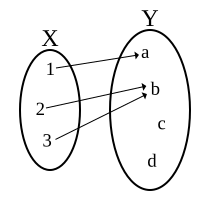
AndrewPKYap SG A function associates to each element in the set X (an input) exactly one element in the set Y (the output). Two different elements in X can have the same output, and not every element in Y has to be an output. This relation is not a function (one input has two outputs). From Wikipedia, the free encyclopedia
^tamago^ SG dun treat "dy/dx" as a fraction at this point ("dy/dx" is "dy divided by dx" here), except when u're involving something other than x and y.
dbowie SG @tammy jie : you meant, to treat dy/dx as derivative y divided by derivative x , not as a fraction ? ok.. and when you meant other than x&y what do you imply ? i still don't know how to figure out the value for dx.
dbowie SG what i meant is .. dy/dx = 2x, correct ? y= x^2-1 so how do they get the results if they don't know value of dx ?
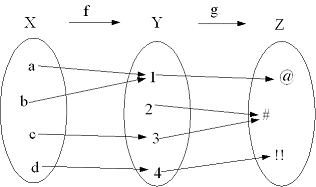
AndrewPKYap SG g o f, the composition of f and g Derivatives of compositions involving differentiable functions can be found using the chain rule. "Higher" derivatives of such functions are given by Faà di Bruno's formula. wikimedia.org