• Only five Premier League clubs made a profit in
2010-11
• Manchester City's £197m loss the biggest in football history
The Premier League's 20 clubs collectively made a loss
of £361m last year, after spending all of their record £2.3bn
income. Of the clubs which were in the Premier League in 2010‑11,
the year of most clubs' latest published accounts, eight made a
profit, of £97.4m in total.
Of the other clubs, 11 made losses, totalling £458m.
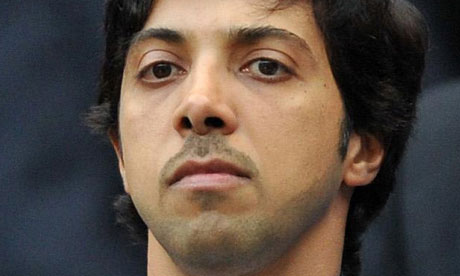
Manchester City, in the third year since Sheikh Mansour bin Zayed Al Nahyan of Abu Dhabi's
ruling family bought the club and began to pour in money to acquire a team
capable of winning the Premier League, lost £197m, the greatest
financial loss in the history of football.
Chelsea lost the next highest amount, £68m, bankrolled by
their owner, the Russian oligarch Roman Abramovich, who loaned
£94m to the club during 2010‑11. Liverpool,
documenting the first eight months of ownership by John Henry's
Fenway Sports Group, lost £49m.
Birmingham City, now in the Championship, have failed to file
their accounts for 2010‑11, which were statutorily due on
31 December. The club's parent company, Birmingham
International Holdings, registered on the Hong Kong stock exchange,
has not yet published its own accounts, and Carson Yeung, who led
the takeover of the club in 2009, is awaiting trial on money-laundering
charges, which he
denies.
The clubs' combined turnover of
£2.3bn is partly the result of the first year of the Premier
League's 2010‑13 TV deals, in which a record £1.5bn was earned from
overseas broadcasters. The financial figures portray a league of
fierce sporting competition which relentlessly forces up players'
wages.
In total, £1.5bn was spent on
wages by the 20 clubs in 2010-11 (including Birmingham's £38m wage
bill in 2009‑10). That accounted for 69% of the clubs' total
income, slightly up from the 68% of income the clubs spent in
2009‑10 on wages.
The largest profit was recorded by
Newcastle United, in their first season back in the Premier League
since relegation in 2009. The accounts were published before last
summer's transfer business, swollen by the £35m sale to Liverpool of
the striker Andy Carroll, which netted £33m profit. Manchester
United, despite paying £50m in interest on the debts loaded on to
the club by United's owners, the Glazer family, won the
championship having spent less on wages, at £153m, than Chelsea and
City, and still made a profit of £12m.
Liverpool, by contrast, made an operating loss of £90m. Had they
not recorded a profit of £43m for the sale of players, including
£50m from Chelsea for Fernando Torres (the money spent on buying
players, such as Carroll, is accounted for more gradually),
Liverpool would have stated a much greater overall loss than the
£49m final figure.
Richard Scudamore, chief executive of the league which this
season celebrated 20 years since it was formed by a breakaway of
the old Football League First Division clubs, has rejected
introducing a break-even rule similar to "financial fair play".
Such rules, designed to make clubs break even rather than rack up
losses, whether bankrolled by an owner or not, have been agreed by
Uefa for its competitions and, more recently, by the Football
League.
In the Premier League, clubs playing in Uefa's Champions League
or Europa League must comply with financial fair play over this
year and next. Even the two which are lavishly backed, Chelsea and
City, have stated they want to move towards breaking even.
Lower down, most clubs make losses in the effort to stay up. The
Wigan Athletic owner, Dave Whelan, who wrote off £48m in
loans to the club last August, said that financial fair play
"can only be a good thing … for football in general to ensure that
debt is maintained at reasonable and sustainable levels".
