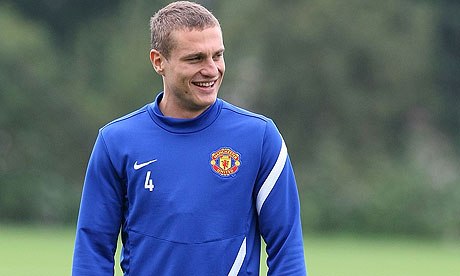
Singapore beat Hong
Kong to lure the initial stock sale of record 19-time English
soccer champion Manchester United Ltd. in part by assuring a
speedier approval process, bankers with knowledge of the matter
said.
A pledge by Singapore
Exchange Ltd. (SGX) to shrink the time lag between IPO
application and approval to as little as four weeks -- from the
usual two to three months -- was key to swaying United, said the
bankers, who requested anonymity as they’re not authorized to
discuss the deal. United plans to raise about $1 billion to reduce
its debt burden and finance player purchases, people familiar with
the IPO said last week.
Singapore Exchanges Chief Executive Officer Magnus
Bocker’s push to lure United is a sign of increased competition
between the city-state and Hong Kong for IPOs by
global brands. Hong Kong, whose market capitalization is more than
four times that of Singapore, this year hosted offerings by Prada
SpA, Glencore International Plc and Samsonite International SA,
extending its lead as Asia’s premier venue for
IPOs.
“If all the major listings are going to Hong Kong, people might
increasingly see the SGX as not as important,” said James Koh, a
Singapore-based analyst at Kim Eng Securities Ltd., using an
abbreviation for Singapore Exchange. “That’s why it’s good to get a
big catch like that.”
United applied for a listing on Aug. 18, according to the
people. The company expects to start gauging demand for the IPO in
mid-September and aims to begin trading in the first half of the
following month, they said. United has held talks with Temasek
Holdings Pte., Singapore’s state-owned investment company, about
buying shares in the IPO, according to the people.
Bocker and listings head Lawrence Wong led the efforts to woo
United, the people said. Hong Kong’s bourse typically takes one and
a half to two months to approve an IPO application, according to
bankers familiar with the matter.
Manchester United spokesman Philip Townsend declined to comment,
as did spokespeople for Singapore
Exchange and Temasek.
“Hong Kong’s listing process is efficient and HKEx aims to keep
it that way,” Hong Kong Exchanges & Clearing Ltd. said in an
e-mailed statement. “The process is interactive so there are no
typical cases, and there are fast-track cases from time to time.”
The bourse didn’t specify any cases where it has allowed speedier
approval.
Singapore isn’t competing with Hong Kong for IPOs, Bocker said
in an Aug. 23 interview. He declined to comment on United’s
offering.
“We are offering different things,” Bocker said. “Hong Kong has
been very successful in offering listings for companies that want
to have a very Chinese focus. Singapore has a very strong offering
for companies that want to have much broader focus, reaching out to
India, Southeast
Asia and even to China.”
Luring United may help Bocker, a 49-year-old Swede who took the
helm at Singapore Exchange in December 2009, recover from setbacks
including the failed attempt to acquire the operator of Australia’s bourse,
ASX Ltd.
(ASX), for A$8.3 billion ($8.7 billion). That deal was blocked
by Australia’s government in April.
Glencore, run by billionaire Ivan Glasenberg, picked London
and Hong Kong for an IPO that raised $10 billion in May. After
learning that Glencore was considering listing in Hong Kong, Bocker
called bankers working on the deal, asking them to persuade the
company to choose Singapore instead, a person with direct knowledge
of the matter said.
Bocker flew to London before United was due to submit a listing
application to Hong Kong’s exchange, seeking to convince
billionaire owner Malcolm Glazer to pick Singapore, the Straits Times
reported Aug. 21, citing unidentified people.
United CEO David Gill and Chief Operating Officer Edward
Woodward were in Singapore last week meeting with bankers and
exchange officials, a person with knowledge of the matter said.
“I’ve got a bit of sympathy for the Singapore Exchange,” said
Daniel Yong, head of the asset management practice at law firm
Norton Rose LLP in Singapore. People “don’t give credit to the
Singapore Exchange for the breadth and variety of listing
applicants that they try to attract.”
Hutchison Port Holdings Trust, an owner of port assets
controlled by Hong Kong billionaire Li Ka-shing, raised
$5.5 billion in Singapore’s largest IPO in March.
Companies have raised $178 billion in IPOs in Hong Kong since
the beginning of 2006, led by the $17.8 billion sale of AIA Group Ltd.
(1299) in October last year, data compiled by Bloomberg show.
That’s more than seven times the amount garnered in first- time
offerings in Singapore over the same period.
Hong Kong’s development as an IPO hub benefited from its
proximity to China, as Chinese companies buoyed to the country’s
economic expansion rushed to tap the city’s stock market. Chinese
companies account for nine of the 10 biggest IPOs in Hong Kong’s
history, Bloomberg data show.
“Hong Kong may have an advantage in terms of listing Chinese
companies because they already have a critical mass,” said Ng Soo
Nam, the Singapore-based chief investment officer at Nikko Asset
Management Co., which oversees about $154 billion. “The more
international names Singapore Exchange can get to list here, the
more they can attract.”
Bocker’s sales pitch to United also touched on soccer’s rising
popularity in Southeast Asia, the bankers said. United estimates
190 million of its 330 million fans are in Asia. Singapore, with a
population of 5.1 million, has the world’s highest concentration of
millionaires.
Singaporean Peter Lim in October offered 320 million pounds for
Liverpool, the soccer team that finished sixth in the last
Premiership season. He later pulled the offer, saying Liverpool’s
board wouldn’t talk to him. Tony Fernandes,
the CEO of Malaysia’s AirAsia Bhd,
this month agreed to buy Queens Park Rangers, the west London-based
soccer club newly
promoted to the Premier league.
“The appetite is big in Asia for the Premier League,” said
Fernandes in an Aug. 18 interview. “Singapore’s got lots of capital
and Manchester
United is a very strong brand in Southeast Asia. It’s a smart
move if done correctly.”
extracted from bloomberg