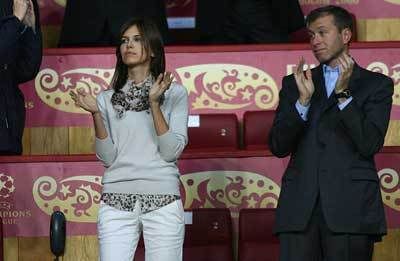
Abramovich's executives may talk of balancing the books,
but the owner does not behave as if that is a remote concern. He
bought Andriy Shevchenko from AC Milan for £30million and when that
did not work out, loaned him back to the same club and would appear
to be ready to write off the transaction as an expensive mistake.
The only reason Chelsea's bidding for Robinho stopped at less than
Manchester City's is because Abramovich no doubt realised he was
going against a tycoon who had even more millions to burn than him
and respectfully withdrew. Whatever he offered, City were always
going to top it.
Like Abramovich, Sheikh Mansour is not in it for profit. He
loves sport, yes, but perhaps also sees City as the way to promote
the emirate of Abu Dhabi, with Premier League ownership as a
prestigious accessory, the way that the Godolphin stable owned by
Sheikh Mohammed introduced the entrepreneurial strengths of Dubai
to the world. At a time of political uncertainty, maybe this is
also seen as an opportunity to present the Arab nations in a
positive light around the world.
At Chelsea, the dynamic is different. The more that is
understood of Vladimir Putin's Russia, the more the political
energy behind Russian investment in sport can be recognised, too.
These owners and their clubs are no longer operating within the
same boundaries as Premier League rivals who value a conservative
balance sheet. It is different for Wigan Athletic or Bolton
Wanderers. No one expected them to get through the door to this
ludicrously fancy establishment anyway; it is an achievement just
to be a member.
What has been changed by the Manchester City takeover is that
the most thankless job in football now is to be in charge of a club
who believe that they should be big. Newcastle, Liverpool,
Tottenham Hotspur, Aston Villa; where do these clubs go if joining
the elite requires a key to the exclusive platinum room at the
billionaires' spa, the one that their gold membership card does not
quite cover?


