
The football star Ronaldo is suing a Chinese medicine
company which allegedly used a hastily shot photograph of him to
advertise throat lozenges, reports said today.
According to a series of Chinese papers, the Brazilian striker
innocently posed holding a packet of Golden Throat Lozenges at a
dinner in Beijing in September 2003 when he and his Real Madrid
team-mates were touring China. Ronaldo's representatives said the
picture was then used by the Guangxi Golden Throat Group without
permission for a television commercial broadcast nationally.
According to the China Daily newspaper, the footballer, who is on
the verge of leaving Real Madrid for Milan, only found out about
the advertisement when he was approached by another Chinese company
to front an advertising campaign, on the condition he terminate his
arrangement with Golden Throat. The paper said the illegal campaign
had caused Ronaldo to miss out on seven other potential million
pound-plus deals to endorse Chinese products.
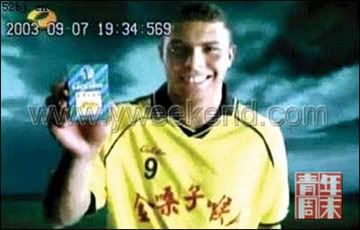
The China Daily printed a still picture from the offending
advertisement. It shows a grinning Ronaldo wearing a yellow
football shirt bearing the drug company's name in Chinese
characters and holding up a packet of the lozenges.
The paper said the company, based in the south-western Chinese
region of Guangxi, insisted it had permission to use the image,
which remained prominently on its website today.
According to a series of reports, local lawyers have been hired to
collect evidence, with Ronaldo expected to begin legal action next
month. Piracy and the illegal use of copyrighted images and brands
remain rampant in China - figures from 2004 showed that 90% of
computer software used in the country was illegal - despite
increasing international pressure for reform, especially after
Beijing joined the World Trade Organisation five years ago.
At the same time, football is hugely popular in the country and
players regularly star in advertisements. When the Serbian coach
Bora Milutinovic achieved massive popularity by guiding the Chinese
team to their first ever World Cup finals in 2002, he made millions
of pounds fronting advertisements for everything from air
conditioners to rice wine.
