If memory serves, Concorde was more of a 'prestige product' for
both British Airways and Air France. The plane never made a profit
flying scheduled routes, and never recouped its monumental
development costs (which were mostly paid for and written off by
the British and French governments). It only became mildly
profitable for British Airways during the later years of its
operational life, when it was used for charters.
Concorde's potential for halving the flying time between
destinations could only be realized on the transatlantic routes,
where it was able to cruise at supersonic speeds over open
international waters. On overland routes, however, the governments
of the countries it overflew often restricted the plane to subsonic
speeds within their airspace, purportedly to eliminate the
perceived negative environmental impact of the sonic boom. Hence,
Concorde flew most of the route between Singapore and London at
subsonic speeds.
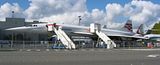
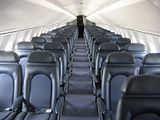
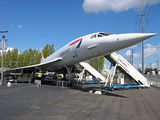
Just for kicks, here are some images of the BA Concorde that's
currently on display at Seattle's Museum of Flight, taken when I
was there last year: