Thu Mar 22, 12:20 AM ET
Root beer could be the safest soft drink for your teeth, new
research suggests, but many other popular diet and sugared sodas
are nearly as corrosive to dental enamel as battery acid.
Prolonged exposure to soft drinks can lead to significant enamel
loss, even though many people consider soft drinks to be harmless
or just worry about their sugar content and the potential for
putting on pounds, the study says.
The erosive potential of colas is 10 times that of fruit juices in
just the first three minutes of drinking, a study last year showed.
The latest research, published in Academy of General Dentistry
(AGD) journal General Dentistry, reports that drinking any type of
soft drink hurts teeth due to the citric acid and/or phosphoric
acid in the beverages.
Non-colas are less acidic than colas overall, the study found, but
they erode the teeth more effectively than colas.
"This study simply doesnt mirror reality," said American Beverage
Association spokesperson Tracey Halliday. "The findings cannot be
applied to real life situations where people's eating and drinking
behaviors are very different and there are many factors at
work."
Nutrition Quiz
5 percent weight loss
The study measured the acidity, or pH, of 20 commercial soft
drinks, including Coke, Pepsi, 7 Up and their diet versions,
immediately after cans were opened. Then slices of enamel from
freshly extracted teeth were weighed before and after being
immersed in the soft drinks for 48 hours.
The result was that the teeth immersed in Coke, Pepsi, RC Cola,
Squirt, Surge, 7 Up and Diet 7 Up lost more than 5 percent of their
weight, according to the report by Poonam Jain of the Southern
Illinois University School of Dental Medicine and her colleagues.
(Other sodas brought about losses in the enamel weight in the range
of 1.6 percent to 5 percent).
AGD spokesman Kenton Ross said that RC Cola was found to be the
most acidic soft drink studied, with a pH of 2.387 (the pH scale
ranges from 0 to 14 for most liquids, with 0 being the most acidic
and 14 being the least acidicor most alkaline). Cherry Coke was
found to be the next most acidic (pH of 2.522), and Coke was the
third most acidic soda tested (pH of 2.525).
Battery acid has a pH of 1.0. Pure water at room temperature has a
pH of 7.0.
The results show that a soda's acidity is not the whole story when
it comes to tooth erosion. The type of acid in the soda, level of
soda and calcium content are also factors. Citric acid is the most
erosive acid found in soft drinks and is the predominant acid in
non-cola drinks.
"The bottom line is that the acidity in all soft drinks is enough
to damage your teeth and should be avoided," Ross said in a
prepared statement.
Top 10 Good Foods Gone Bad
Root beer's advantage
Root beer was found to be the least acidic of all soft drinks, with
a pH 4.038 for the Mug brand, Jain and her colleagues found. The
reason for the reduced acidity is that root beer is often
non-carbonated and contains no phosphoric or citric acids.
A 2006 study reported that orange juice and sports drinks also
reduce the surface hardness of tooth enamel, but a cola reduced
morethe dentin, surface enamel and two additional dental
components. (Dental erosion refers to the action of acid on the
entire tooth surface. Cavities and tooth decay tend to hit targeted
areas, such as pits, grooves and spots where teeth are
adjacent).
In the past 40 years, many Americans have swapped nutrient-dense
milk for sodas and other beverages that are mostly bereft of
nutrients. In 1966, Americans drank, on average, 20 gallons of soft
drinks and 33 gallons of milk. In 2003, Americans drank an average
of 46 gallons of soft drinks and 22 gallons of milk. Milk contains
minerals, proteins, vitamins and, most importantly, calcium.
10 Easy Paths to Self Destruction
Study shortcomings
No one swishes soda in their mouth for two full days, as was the
case with the study, but the corrosive effect of soda starts nearly
immediately, Jain's research points out, and increases with
time.
Richard Adamson, a scientific consultant to the American Beverage
Association, called the study "unrealistic," pointing out, among
other things, that toothbrushing was not factored in.
"The most protective factor you have in your mouth is saliva, which
has both a diluting and a buffering effect," Adamson told
LiveScience. "Of course, you're not going to mirror reality (with
the new study)."
"There are many foods which are as important as soft drinks in oral
health and dental hygiene," Adamson said. "Fruit and fruit juices
and cider and food such as pickles and salad dressing and
winethose are just as important in regards to general erosion as
soft drinks. There is no single food or beverage that is
responsible for dental erosion. There are numerous factors. The
thing is to enjoy everything in moderation."
Ross recommends that consumers drink soda through a straw, if at
all, as that reduces the teeth's exposure to the beverage. One way
to reduce soda intake, he suggested, is to drink it only with
meals.
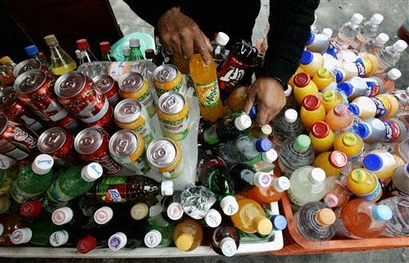
Despite several reports of the harmful effects of soft-drinks,I
still drink them a lot 