Running Posture
From http://www.dummies.com/WileyCDA/DummiesArticle/id-1711.html
Running posture is similar to the posture that your mother nagged
you about when you were growing up: It's how you hold your back,
shoulders, and neck. What position is your back in when you run? To
find out, have a friend take a video of you (straight on and from
the side). If that's not possible, ask someone to take a picture of
you, from the side, as you run by. Although not as effective, you
can also run in place, sideways, next to a full-length mirror and
look at your posture. Either way, evaluate what you see and
determine which of the following categories you fall into:
* Your back is perfectly straight up and down. Running with your
back perfectly straight can make for good running posture, as long
as it doesn't indicate that your body is as tight as a violin
string. Be sure that, in keeping your back straight, your body
isn't rigid, such that your neck and arms are tensed instead of
relaxed. If running with a perfectly straight back is natural to
you and you feel relaxed, don't try to change it. But if you feel
tense, try to lean forward just slightly from your waist as you
run.
* You lean just slightly forward from your waist. This is the most
common and most efficient way to run, with a slight lean
forward. With just a slight lean, your arms, back, neck, shoulders,
and diaphragm relax. See Figure 1.
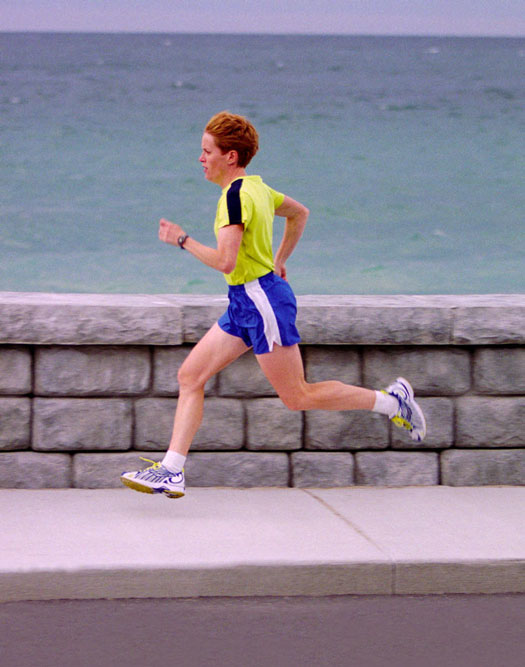
Figure 1: Correct running posture inclines an
ever-so-slight forward lean.
* You lean far forward at the waist. Although this posture is
unusual, some runners do lean so far forward that they look as
though they may fall. This posture puts quite a bit of pressure on
your lower back and doesn't allow you to keep your eyes up and on
the back of the person ahead of you in your marathon. It can also
interfere with your breathing. Although changing your posture may
seem awkward at first, try pulling yourself back to perfectly
straight or a slight lean forward for at least three runs.
* You lean back at your waist. Leaning too far back makes you
unable to fully fill your diaphragm, which means that you can't
breathe as well as you would if you leaned a bit forward. Instead,
you want to lean forward slightly at the waist. Also think about
bringing your chin down, because it's likely tipped back.

The main reason people run with a slight lean back is because
they're fatigued in their arms and upper body. If you begin to lean
back at the end of workouts or races, consider adding pushups or an
entire circuit routine to your training.

When running uphill, lean forward, so that you're leaning into the
angle of the hill. Thrust your elbows back hard as you run up the
hill. In this position, you run hills powerfully, instead of
letting hills conquer you.
Two other common mistakes in running posture are as follows:
* Scrunching your shoulders so that they're up near your ears. This
makes running far more difficult than it needs to be. Instead,
relax your shoulders and hold them slightly back just like your
teacher told you to stand when you were a kid. Efficient running is
all about relaxation, and you can't relax your body with your
shoulders all scrunched.
* Tilting your chin up so that it points to the sky. Ideally, your
neck stays perfectly straight; your chin is neither tilted down
toward your chest nor tilted up. Many runners, however, do tilt
their chins up, especially as they become fatigued. Practice
keeping your neck perfectly straight as you run.


