ROME (AFP) - – Italian researchers who specialise in resolving
art mysteries said they have discovered the disputed identity of
the model for Leonardo da Vinci's Mona Lisa -- and claimed he was a
man.
Silvano Vinceti, chairman of the Italian national committee for
cultural heritage, said the Florence-born Renaissance artist's male
apprentice and possible lover Salai was the main inspiration for
the picture.
However his claim was immediately disputed by experts at the
Louvre in Paris, where the painting is on display.
Salai, real name Gian Giacomo Caprotti, an effeminate young
artist who worked with da Vinci for 25 years, is thought to have
served as a model and muse for several of his paintings. The pair
had an "ambiguous" relationship and were probably lovers, Vinceti
said.
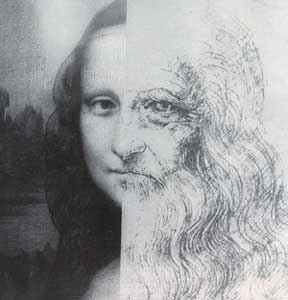
Comparisons between the facial characteristics of figures from
several of da Vinci's works -- such as "St. John the Baptist" and
the "Angel Incarnate" -- reveal striking similarities with the Mona
Lisa's nose and mouth, he said.
"There are remarkable similarities," Vinceti told reporters.
What is more, Vinceti said da Vinci had left clues to the
model's identity in tiny letters L and S which he and his team
found painted into the eyes of the Mona Lisa.
"Close examination of a high-quality digital copy of the
portrait had revealed an L for Leonardo and an S for Salai," he
said.
But Vinceti's claims have been disputed by the Louvre
museum.
The museum said it had carried out "every possible laboratory
test possible" on the picture in 2004 and then again in 2009, and
insisted that "no inscriptions, letters or numbers, were discovered
during the tests."
"The ageing of the painting on wood has caused a great number of
cracks to appear in the paint, which have caused a number of shapes
to appear that have often been subject to over-interpretation," the
Louvre told AFP.
The museum also said Vinceti's had made his claims without
having had access to the painting itself.
The Italian aficionado, whose team gained notoriety with their
claims surrounding the death of Caravaggio last year, said he felt
sorry for the embarrassment the museum must feel on having missed
the clues all these years.
"I can understand their incredulity and amazement -- after all
this must be the most studied picture on earth," he told AFP, but
added "they're really blind."
"They have to be serious and accept that they didn't see what
was right in front of their eyes," he said.
In order to clear up any lingering doubt over his theory --
worthy of Dan Brown's 2003 bestseller the "Da Vinci Code" --
Vinceti said he would be willing to take his team to France and
collaborate on further tests with the Louvre.
"We're ready to go to Paris and extract a tiny bit of paint from
the numbers and see whether they match the rest of the painting, to
see if they were done at the same time or are marks that have
appeared over time," he said.
Whether the prestigious art museum will take Vinceti up on his
offer is yet to be seen.