BY ANGELA
CASAUAY
POSTED ON 03/10/2013 12:48 PM | UPDATED 03/11/2013 10:26
PM
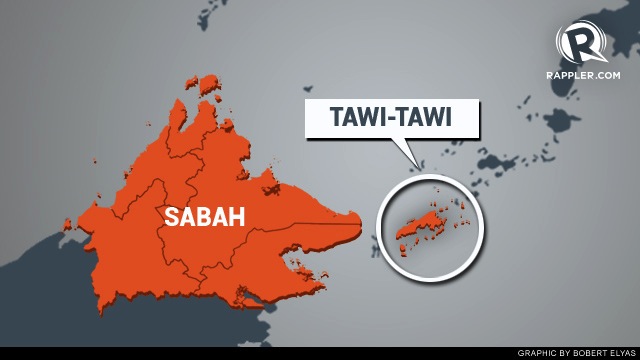
TAWI-TAWI, Philippines – They were part of a covert military
operation to seize Sabah from Malaysian control in the late 1960s.
This time around, they are part of an overt plan to claim it
again.
Two of the members of the Royal Sultanate Army – or the Royal
Sultanate Force (RSF), as they're commonly known here – who trooped
to Sabah on Feb 14, 2013 were among the recruits of the
Jabidah commando
unit under the secret plot Oplan Merdeka 4 decades
ago. (Read: Sabah, Merdeka and Aquino)
Oplan Merdeka (freedom in Bahasa Melayu) was
hatched by the Marcos military to send Muslim recruits to invade
Sabah in 1968.
The exposed plot soured relations between Manila
and Kuala Lumpur, prompting the latter to train and provide
sanctuary to rebels belonging to the Moro National Liberation
Front.
It is also here, in this picturesque Simunul town lulled by clear
waters and white sand, where the Jabidah unit's chief recruiter and
trainor, then Army Maj Eduardo Martelino, held initial training for
his recruits. He set up a training camp here called Sophia, named
after a beautiful Simunul lass he later married.
Two of Martelino's recruits, Musa Abdulla and Ernesto Sambas, were
among at least 13 Simunul residents who boarded two ships to Lahad
Datu, along with about 200 of their comrades, last February 14.
The two were able to escape from Corregidor Island in 1968 before
the military shot dead their fellow recruits in what is now known
as the Jabidah massacre, that lit the Muslim rebellion in
Mindanao.
Today, Musa and Sambas are said to have cut off communication with
their families in Simunul. Did they survive the Malaysian military
offensive in Lahad Datu? Or were they among the reported 60 casualties in
the Sabah standoff? No one here knows.
Although they share a common past, Abdullah and Sambas have
different stories to tell.
Musa is the known military strategist of the gunmen in Sabah.
On the other hand, Sambas is a frustrated soldier who had tried in
vain to return to service. He was the first Jabidah recruit from
Simunul to be commissioned by the military as an officer with the
rank of 2nd lieutenant, according to the book "Under the Crescent
Moon: Rebellion in Mindanao" by Marites Dañguilan
Vitug and Glenda M. Gloria that was first
published in 1999.
The strategist
While Raja Muda Agbimuddin Kiram, an heir of the Sultan of Sulu, is
the known leader of the armed Filipinos now on the run in Sabah, it
was really Musa who mapped out the plan behind the Sabah standoff,
Simunul residents told Rappler. (Read: Raja Muda escapes arrest)
Now in his 60s, Musa is the deputy chief of staff of the RSF, a
rank below Raja Muda, they added.
After the botched Merdeka plan,
Musa retired from the military. It's unclear what he did for a
living in the succeeding years. Somewhere in between, he became the
deputy chief of staff of the RSF.
Simunul Mayor Nazif Ahmad Abdurahman said Musa lived a retiree’s
life. He would farm every now and then and was often seen buying
fish from the port on early mornings. Musa’s wife, Aurelia, is the
principal of Simunul Elementary School.
Musa’s home, a tattered wooden abode with a run-down car parked in
a makeshift garage, is located by the side of the RSF camp in
Simunul. From his house, he
would have a good view of the entire camp, especially the meeting
area where RSF members held regular meetings before the
standoff.
Ibnohasim Akmad, an RSF member from Sulu, said Musa is their more
visible leader, not Raja Muda.
Akmad, who was left behind when the group went to Sabah, said that
during his one-month stay before the Sabah standoff, Raja Muda –
who lives in Barangay Tubig Indangan, a kilometer away from the
camp -- only visited their camp "sometimes."
It was Musa,
Akmad said, who taught them about “military
rules.”
“He just taught
us certain formation then we were briefed about rules and
regulations about the military, how to do it as military, how to
follow military laws,” Akmad said.
Akmad refused to provide details of their “trainings," but denied
these included firing guns.
He said goodbye
Musa’s wife, Aurelia, said he told her about their plan before the
group left for Sabah.
“The truth is, he said goodbye. Even if I didn’t want him to go, I
can’t do anything about it,” she said in Filipino over the
phone.
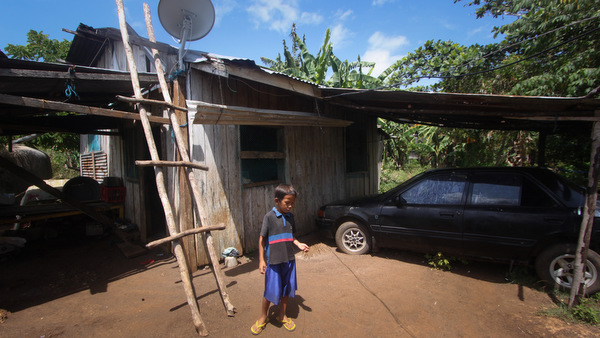 COMMANDER'S
HOME. Musa Abdulla, deputy chief of the Royal Sultanate Forces,
lives within the camp. Photo by Karlos Manlupig
Like most Tawi-Tawi residents, it was not the first time that Musa
had gone to Sabah. Aurelia said Musa had gone to Sabah twice this
year to visit his siblings in Lahad Datu.
At the height of the second Malaysian assault on Lahad Datu on
March 5, a police official told us: “Kapag si Musa ang nawala o
nahuli, wala na, dun na mabubuwag iyan, (If Musa dies or is
captured, that’s when the forces will be defeated)."
A few hours after, the Kiram family declared a
ceasefire – an appeal that Malaysia rejected.
Musa’s wife said she has not
talked to Musa since he left because Musa didn’t own a cell
phone.
Frustrated soldier
Sambas has a slightly different narrative.
When news broke about the Jabidah massacre on Corregidor Island in
1968, Sambas’ father, a former barangay chairman for 20 years,
quickly travelled from Tawi-Tawi to Manila to fetch his son from
Fort Bonifacio.They returned to their home in Barangay Manuk
Mangkaw on Simunul Island.
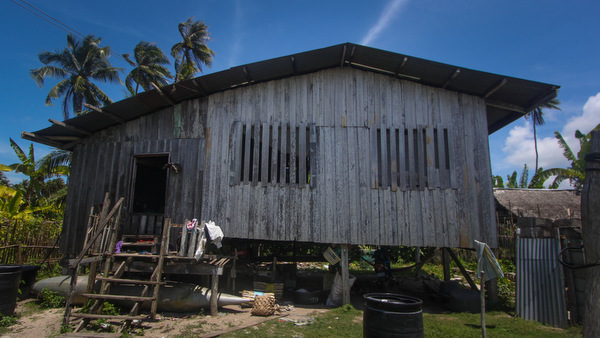 FAILED
DREAMS. Ernesto Sambas rarely left his home after grudgingly
leaving the military. Photo by Karlos Manlupig
“His father brought him home to show our neighbors that he is
alive,” Sambas’ wife, Rubia said in Sinama, the language of the
Sama.
After Sambas left Fort Bonifacio, he was never able to do what he
has always aspired for – to become a soldier again.
A framed certificate that shows Sambas had completed his initial
Jabidah military training course hangs on the wall of Sambas'
house. Aurelia said his husband served as 2nd lieutenant of the Jabidah commando unit.
"Under the Crescent Moon" tells Sambas' story as the first Jabidah
recruit to be commissioned officer by the Army. "[Sambas] remembers
that day in 1967 when he saw [then Maj Eduardo] Martelino's
recruits jogging on the rugged streets of Simunul. 'They looked
like they were having fun.' One morning, Martelino passed by
Sambas' house, looking for the latter's father who was then a
municipal official. Martelino ended up talking with Sambas who
signified his interest in joining the troops he saw."
"It didn't take much on Martelino's part to lure Sambas into
joining the Sabah mission. Sambas claimed they were told early on
about this plan even while they were still in the training camp in
Simunul. He was thrilled by the prospect of becoming a soldier and
joining an elite mission at that. In August 1967, Sambas joined
Martelino's men in their combat training at Camp Sophia, which
overlooked the sea."
Sambas lived his post-Jabidah life hoping that he could one day
return to the army.
Promises were made but none pulled through, including one by the
late Brig. Gen. Eduardo Batalla, then commander of the Philippine
Constabulary in Western Mindanao, whom Sambas’ wife said was his
contemporary in the military.
Battalla had supposedly said he
would help Sambas return to the military once he became a general.
Batalla had reason to make such a promise; he, too, was one of the
young officers assigned to train the Muslim recruits on Corregidor
Island, according to the book.
But Batalla was slain in
Zamboanga City in a 1989 botched operation against gang
leader Rizal Ali.
“He became frustrated and disappointed. He suffered from low
self-esteem,” Sambas' wife told us.
Sambas spent most of time at home and was never able to get a
decent job. None of his 3 kids were able to finish schooling.
Failed
dreams
At 64, Sambas still held on to his dream of going back to service,
and his wife continues to question why none of those who said they
would help him ever got back to them.
Unlike Musa, Sambas did not tell his wife that he was going to
Sabah. Aurelia said Sambas quietly and hurriedly packed his things
on the day of February 14.
“I asked him where he was going but we couldn’t talk to him. He
wasn’t answering,” she said.
She only learned about the Sabah standoff after watching TV news,
the main source of information for Simunul residents. The family
was able to contact Sambas during the first two days of their stay
in Sabah.
But they have not heard from him since.
Would Musa and Sambas repeat history and live to tell another Sabah
story?
http://www.rappler.com/nation/23484-jabidah-recruits-sabah