Reactor fear at Japan plant as toll tops
10,000
SENDAI, Japan : The operator of a disaster-struck
Japanese nuclear plant on Friday reported possible damage to a
reactor vessel - casting a new shadow over efforts to control a
steady radiation leak.
Two weeks after a giant quake struck and sent a
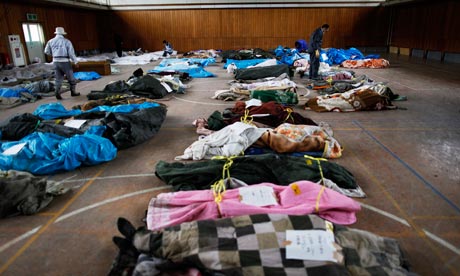
massive tsunami crashing into the Pacific coast, the death toll
from Japan's worst post-war disaster topped 10,000 and there was
scant hope for 17,500 others still missing.
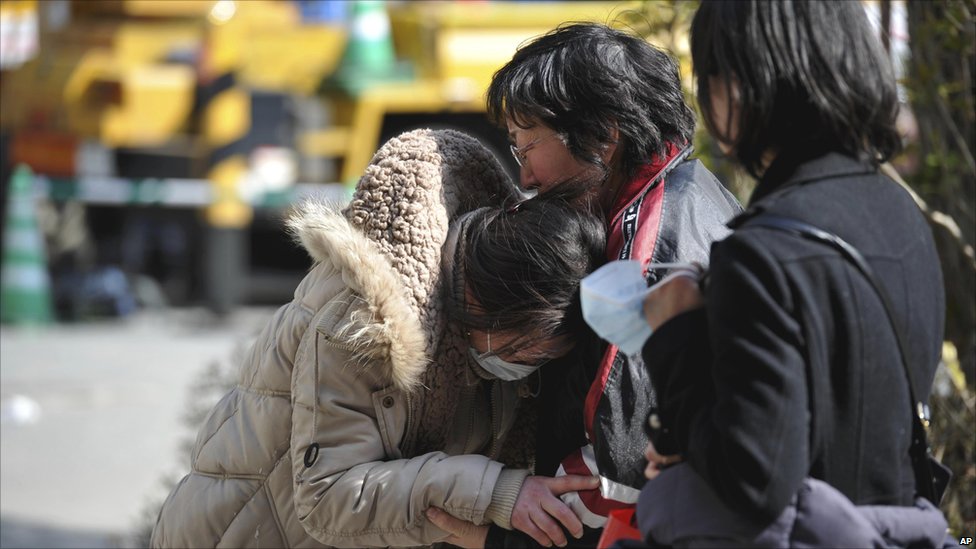
The tsunami obliterated entire towns. Some 250,000
homeless in almost 2,000 shelters are braving privations and a
winter chill, with a degree of discipline and dignity that has
impressed the world.
The focus of Japan's fears remained the Fukushima nuclear plant,
which was still emitting radioactive vapour that at one point this
week made the capital's drinking water unsafe for infants.
China, South Korea and the EU joined the United States, Russia and
several other nations in restricting food imports from Japan, which
itself has ordered a stop to vegetable and dairy shipments from the
region near the atomic plant.
A day after two workers at the 1970s-era facility were hospitalised
with radiation burns, its operator Tokyo Electric Power Co (TEPCO)
reported possible damage at reactor number three.
"It is possible that the pressure vessel containing the fuel rods
in the reactor is damaged," a TEPCO spokesman told
AFP.
The new safety scare could hamper urgent efforts to
restore power to the all-important cooling systems at the plant,
located 250 kilometres (155 miles) northeast of Tokyo.
"Radioactive substances have leaked to places far from the
reactor," said a spokesman for Japan's nuclear safety agency,
Hideyuki Nishiyama.
"As far as the data show, we believe there is a certain level of
containment ability but it's highly possible that the reactor is
damaged."
The reactor is a particular concern because it is the only one of
six at the plant to use a potentially volatile mix of uranium and
plutonium.
A hydrogen explosion badly damaged the unit's outer building on
March 14, and a partial meltdown is also suspected.
Higher radioactivity has also been detected in the ocean near the
Fukushima plant on Japan's Pacific coast, raising public fears
about the safety of fish and seaweed, which are traditional staples
in the island nation's diet.
"This terrifies me from the depth of my heart," Sunao Tsuboi, a
survivor of the US atom bomb attack on Hiroshima in 1945 who is in
his mid-80s, told AFP.
"Radiation damages genes and DNA. This is something that no doctor
can fix. There is no proper remedy for radiation
exposure."
Two Japanese travellers were briefly sent to
hospital in China with radiation levels well above normal levels
after they arrived in the eastern city of Wuxi on Wednesday on a
flight from Tokyo, China's safety watchdog said.
A doctor at a hospital in the nearby city of Suzhou told AFP the
pair were checked, "decontaminated" and released, and the safety
watchdog said they did not pose any threat to other
travellers.
Radiation was also detected on a Japanese merchant vessel that
berthed in the southeastern Chinese port city of Xiamen on Monday,
the Chinese watchdog said.
The list of contaminated foodstuffs grew Friday when the health
ministry said radiation above the legal limit had been detected in
Japanese mustard spinach grown in Tokyo.
At the Fukushima plant, workers kept spraying seawater onto
overheating reactors and fuel rod pools as a stop-gap measure to
prevent a larger meltdown, while trying to rebuild the original
cooling systems.
The pair hospitalised Thursday were installing cables in the
basement of the third reactor's turbine building when they stepped
into water containing iodine, caesium and cobalt 10,000 times the
normal level, TEPCO said.
The men, aged in their 20s and 30s, were wearing radiation suits
but had on ill-fitting shoes, and they had ignored a warning alarm
from their dosimeters, "assuming a problem with the device", a
TEPCO official said.
A total of 17 workers have been exposed to more than 100
millisieverts, the level at which the risk of developing cancer
rises, the company says.
TEPCO admitted on Friday it may take at least another month to
achieve a cold shutdown of all reactors - when temperatures inside
fall below boiling point and its cooling systems are back at
atmospheric pressure.
Japan's top government spokesman Yukio Edano asked people still
living within 20-30 kilometres of the plant to leave
voluntarily.
- AFP/al
My heart is crying for Japan.