(Africa) In
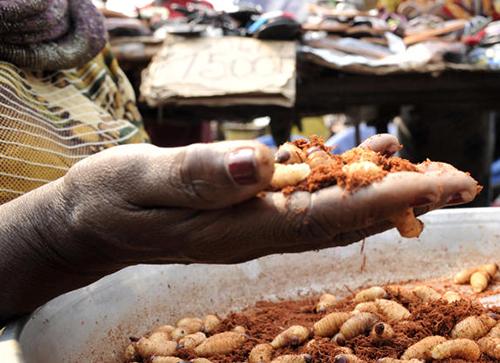
Kinshasa's Gambela market shoppers can find insects for every
occasion -- from unctuous white weevil larvae for fancy dinners to
crispy caterpillars and snacky termites that stick in your
teeth.
They may be an unbeatably cheap source of protein, but DR Congo's
many insect connoisseurs insist they also have real gastronomic
value. And the crowds pressing around the insect sellers at
the market show that the Congolese can't get enough of them --
crushed, boiled or fried.
"The caterpillars and the other insects we eat are very rich in
protein," said Maguy Manase, a seller at the market.
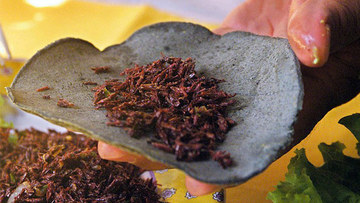
Caterpillars are sold living, dried or boiled up into a kind
of porridge. Pyramids of them are piled up on old wooden stalls or
on the ground in the huge market. Termites, however, are only sold
alive, ladled fresh into customers' bags. There are grasshoppers
too, when they are in season.
Prices vary wildly from one type of insect to the next. Elise
Yawakana has treated herself to six fat larvae at 1,000 Congolese
francs (around 80 euro cents or $1.10) each.
For the woman in her 60s, they were worth it for a "special menu or
a luxury meal". A plastic cup full of caterpillars on the
other hand will set you back only 1,500 francs (1.20 euro,
$1.60).
Ninety percent of the DR Congo's population live on less than $1.25
a day, according to the United Nations.
- 'I prefer insects to meat' -
Caterpillars are "better than fresh meat", declared Marie Nzumba,
who has been selling them for 15 years.
Conscious of insects' high nutritional value, the DR Congo
government has been encouraging families to include insects in
their children's diet.
The Boyambi health centre in the capital, run by the Salvation
Army, even offers daily courses on how to cook insects.
Nurse Emilie Kizayako Mpiedi encourages mothers to supplement the
diets of their breastfed babies after six months with a porridge
made from caterpillar flour.
With more than half of all children under five in the DR Congo
suffering from either chronic or acute malnutrition, according to
the World Food Programme, insects could be a key part of the
solution.
Caterpillars in particular are "within everyone's budget", but that
does not mean that they, or insects in general, are "the food of
the poor", the nurse said.
One in three people in the world already eat insects, a recent
report by the UN Food and Agriculture Organisation found,
encouraging the consumption of insects "to respond to problems of
food security".
"Edible insects contain high-quality proteins, vitamins and amino
acids," the report said, urging the development of insect
farms.
For the moment in the DR Congo, insects are harvested directly from
the wild, mostly from the jungles and forests of Bandundu and
Equator provinces in the west of the country.
And people eat them just because they like the taste, said
Bonaventure, a smiling driver, as he munched his way through a
plate of insects in a little Kinshasa cafe. "It's good. I prefer
insects to meat," he said.
Whatever the caterpillar recipe, whether the bugs are smothered in
"mwambe" (peanut sauce), served with vegetables or fried with
tomatoes, Bonaventure loves them all.
Lots of roadside food stalls and shacks serve chillied insects
to spice up "fufu", the stodgy Congolese staple of corn meal
and manioc.
And it's also great party food, said restaurateur Ginette
Ngandu, adding that her customers often place their caterpillar
orders in advance.