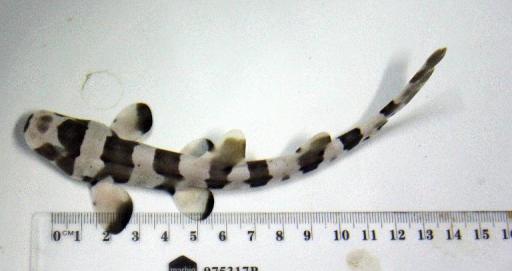
Australia has successfully hatched its first shark born via
artificial insemination with hopes that the development can
ultimately be used to help breed threatened species, an aquarium
said Wednesday.
Sea Life Melbourne Aquarium said the brown banded bamboo shark pup
was born on March 3, ending a process which began in September when
aquarists collected a semen sample from a shark in Mooloolaba in
northeastern Australia.
This was flown to the southern city of Melbourne and inseminated
into the mother the same day -- making the pup the first shark to
be born globally via a live semen sample transported from one
facility to another, Sea Life said.
Melbourne Aquarium vet Rob Jones said the birth of the shark --
which is expected to grow from its initial length of 16 centimetres
(6.3 inches) to an adult size of 1.2 to 1.5 metres -- was a
milestone in using assisted reproductive technologies.
"This is a big leap," he told AFP.
The hatching is part of a nine-year project into understanding the
reproductive behaviours of sharks, animals which are common in
Australia but are little understood.
The team hope their research will help with plans to manage
threatened species in the wild, in particular the critically
endangered grey nurse shark.
The egg, one of several laid by the shark in November but the only
viable one, was monitored weekly during its incubation period of
112 days.
"With each insemination attempt, we continue to learn about the
reproductive behaviours of Australian shark species," said
Melbourne Aquarium research consultant Jon Daly.
"Hopefully we can use this technology as a basis for breeding grey
nurse sharks in captivity and, in years to come, boost the species'
dwindling numbers in the wild."
Grey nurse sharks are considered critically endangered, with
estimates that there could be as few as 1,500 left on Australia's
east coast.
Sharks are a known danger for those swimming, diving and surfing
around the country and are currently subject to a controversial
cull in Western Australia state after a series of fatal attacks in
recent years.
The policy to catch and kill any protected great white, tiger or
bull shark bigger than three metres off popular west coast beaches
has been condemned by conservationists.