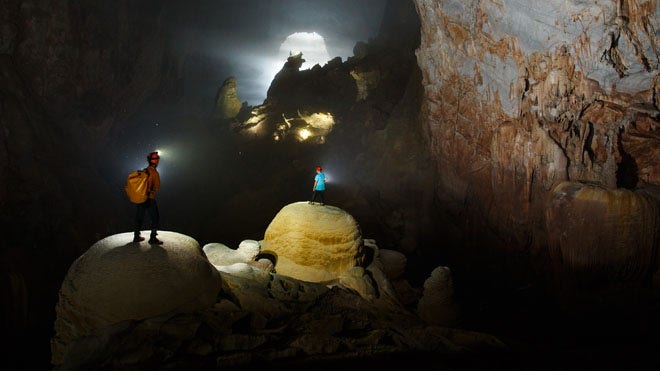
When a local man discovered the entrance to Vietnam’s Son Doong
cave in 1991, it appeared infinite. He feared the giant precipice
that descended nearly 300 feet below him. For 18 more years, the
cave remained unexplored. Then, in 2009, two British cavers dropped
into Son Doong and discovered the largest cave on Earth.
The Son Doong is over 5.5 miles long and could fit a 40-story
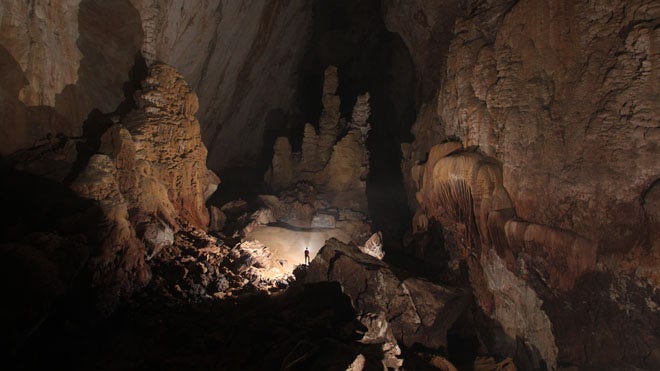
skyscraper within its walls. It contains giant stalactites,
waterfalls and a jungle that is known as the Garden of Edam with
native animals like flying foxes, monkeys and hornbills thriving
inside the cavern’s lush landscape.
Now, for the first time in history, the cave will be open to the
public. A tour company called Oxalis is running trial
tours of the cave and accepting sign-ups for real six-day tours to
take place next year.
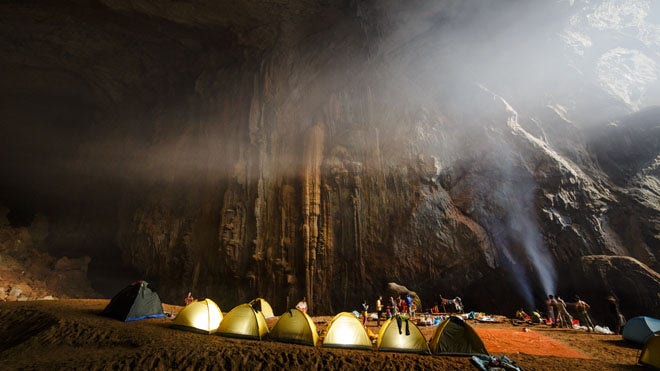
Tourists will trek the stunning cavern by day and sleep on the
cave’s sandy beaches at night. On their first night inside the
cave, visitors will camp near Hand of Dog, a giant stalagmite that
looks like a dog's paw. The cave contains two underground sinkholes
with cliffs as high as 800 feet and a “Great Wall of Vietnam” that
is over 15 stories high. Fields of algae from ancient pools blanket
sections of the cave's interior and rare pearls of calcite crystals
coat the cave walls.
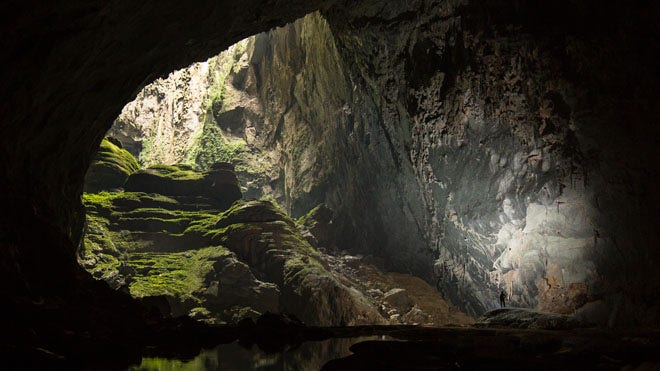
The roof of Son
Doong collapsed centuries ago. The sunlight and fresh air allowed a
lush jungle to take root inside the cave. Here, an Australian named
Ben Mitchell marvels at the landscape.
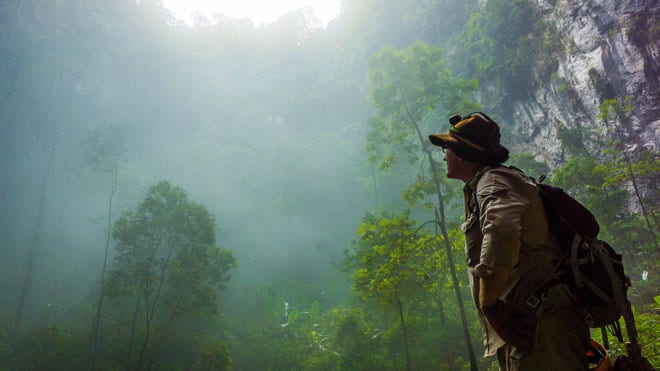
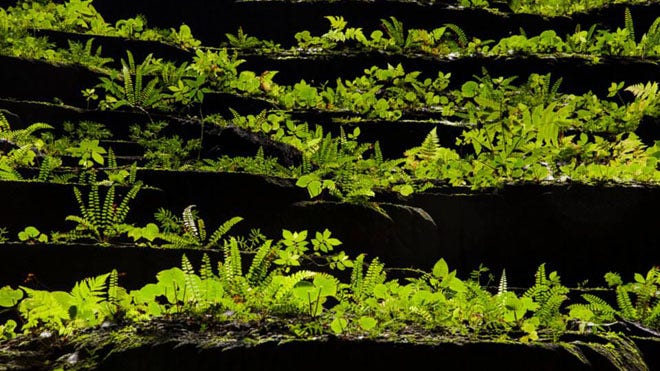
The giant cave
contains two "daylight windows," which allow light to enter many
parts of the cave. At the base of these windows are large jungles
which use all the available light to nourish trees that grow almost
10 stories tall.
Giant stalagmites
over 250 feet high and enormous rimstone pools are present
throughout the cave.
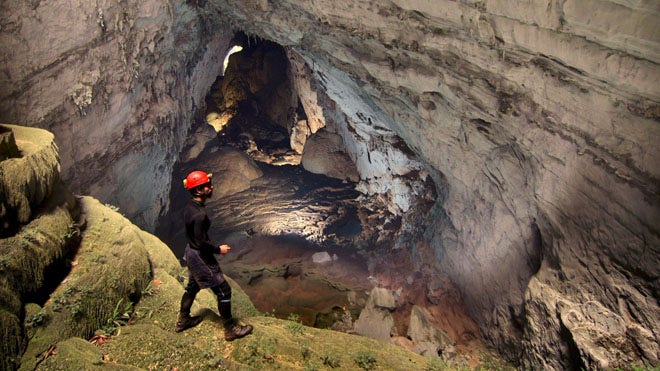
A half-mile block
of 40-story buildings could fit inside the largest part of the
cave, which may be the world's biggest subterranean
passage.
From September to
January is flooding season in the region, so there are no tours
while the cave weathers the rainy season.
On their first
night inside the cave, visitors camp near Hand of Dog, a massive
stalagmite that looks like a dog's paw.
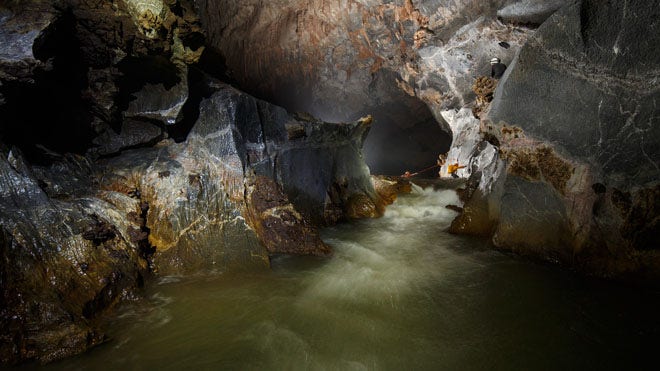
An entire river
runs inside the cave. Scientists have discovered never-before-seen
plant species around Son Doong's waterfalls.
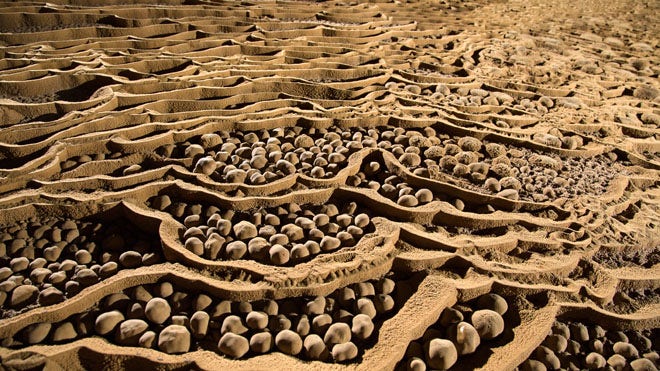
Rare cave pearls
fill dried-out terrace pools inside Son Doong. They formed drip by
drip over the centuries as calcite crystals left behind by water
layered themselves around grains of sand.
The man who
discovered Son Doong never fully entered the cave because he feared
its steep drop into what appeared to be an abyss.