They floated down from the sky Sunday — 2,000 mice, wafting on
tiny cardboard parachutes over Andersen Air Force Base in the U.S.
territory of Guam.
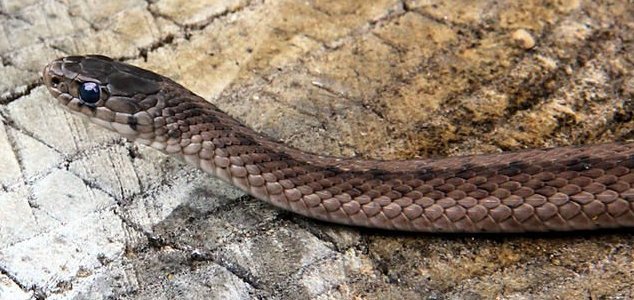
But the rodent commandos didn't know they were on a mission: to
help eradicate the brown tree snake, an invasive species that has
caused millions of dollars in wildlife and commercial losses since
it arrived a few decades ago.
That's because they were dead. And pumped full of
painkillers.
The unlikely invasion was the fourth and biggest rodent air
assault so far, part of an $8 million U.S. program approved in
February to eradicate the snakes and save the exotic native birds
that are their snack food.
"Every time there is a technique that is tested and shows
promise, we jump on that bandwagon and promote it and help out and
facilitate its implementation," Tino Aguon, acting chief of the
U.S. Agriculture Department's wildlife resources office for
Guam
It's not just birds the government is trying to protect. It's
also money.
Andersen, like other large industrial complexes on the Western
Pacific island, is regularly bedeviled by power failures caused
when the snakes wriggle their way into electric substations — an
average of 80 a year, costing as much as $4 million in annual
repair costs and lost productivity, the Interior Department
estimated in 2005.
Snake traps, snake-sniffing dogs and snake-hunting inspectors
have all helped control the population, but the snakes have proved
especially hardy and now infest the entire island. Guam is home to
an estimated 2 million of the reptiles, which in some areas reach a
density of 13,000 per square mile — more concentrated than even in
the Amazonian rainforests, the goverment says.
But brown tree snakes have an Achilles' heel: Tylenol.
For some reason, the snakes are almost uniquely sensitive to
acetaminophen, the active ingredient in the ubiquitous
over-the-counter painkiller. If you can get a tree snake to eat
just 80 milligrams, you can kill it. That's only about one-sixth of
a standard pill — pigs, dogs and other similarly sized animals
would have to eat about 500 of the baited mice to get a lethal
dose.
Brown tree snakes also love mice. It's easy to bait mice with
acetaminophen, but how do you then deliver the mice to the
snakes?
"The process is quite simple," Dan Vice, the Agriculture
Department's assistant supervisory wildlife biologist for Guam,
told KUAM.
Helicopters make low-altitude flights over the base's forested
areas, dropping their furry bundles on a timed sequence. Each mouse
is laced with the deadly microdose of acetaminophen and strung up
to two pieces of cardboard and green tissue paper.
"The cardboard is heavier than the tissue paper and opens up in
an inverted horseshoe," Vice said. "It then floats down and
ultimately hangs up in the forest canopy. Once it's hung in the
forest canopy, snakes have an opportunity to consume the bait."
Wildlife workers do have a way to chart how well the mice work.
In addition to the acetaminophen and the parachutes, some of the
poison pests also come equipped with tiny data-transmitting
radios.
