Jabuticaba is a Brazilian grape tree found in the states of Minas
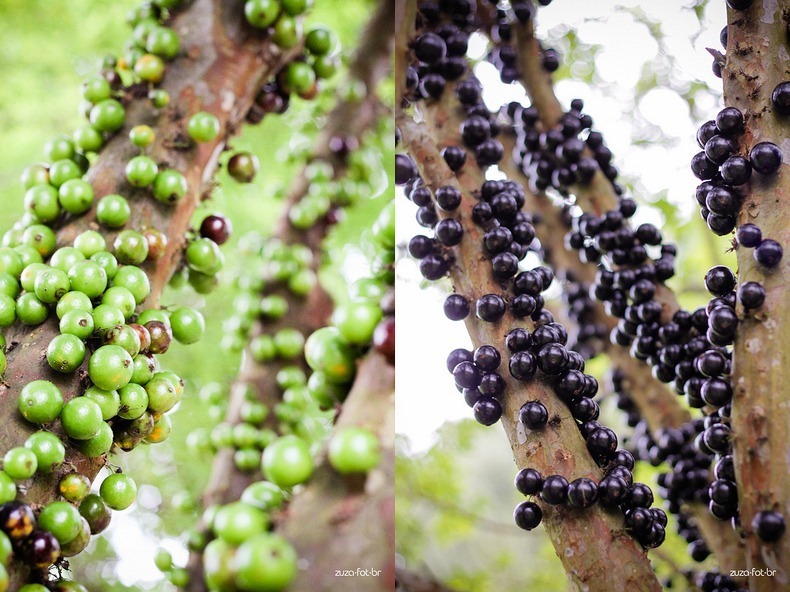
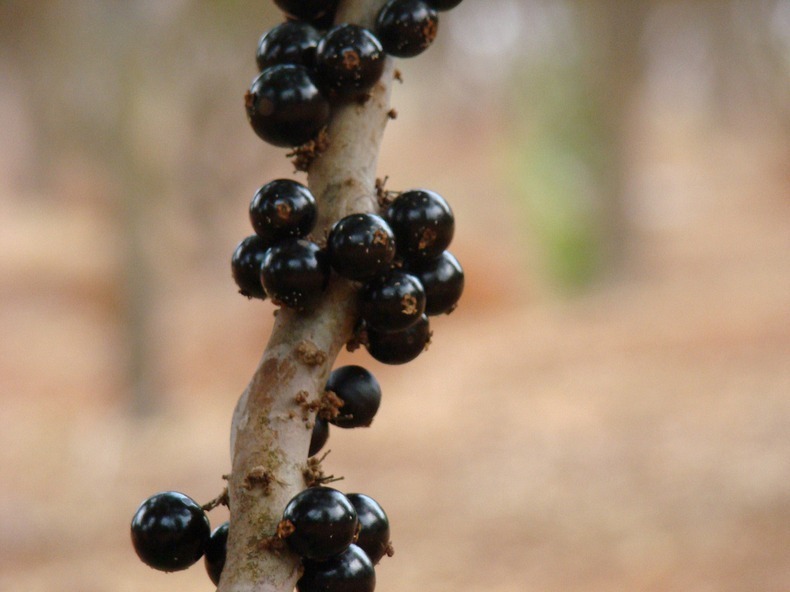
Gerias and Sao Paulo, in the south of Brazil. The fruit grows
directly from the trunk and branches of the tree, which gives the
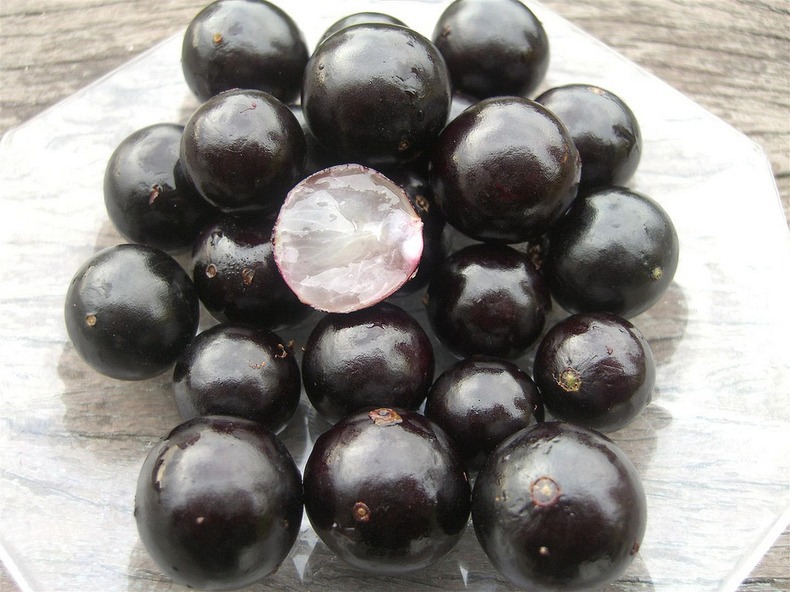
Jabuticaba tree a very unusual appearance. The fruit itself is a
small and round, about 3 to 4 cm in diameter, with one to four
large seeds, a thick, deep purple colored skin and a sweet, white
or rosy pink gelatinous flesh. Naturally the tree may flower and
fruit only once or twice a year, but when continuously irrigated it
flowers frequently, and fresh fruit can be available year round in
tropical regions. During Jabuticaba season in Minas Gerais,
thousands of street vendors sell fresh Jabuticaba in small net
bags, and the sidewalks and streets are stained the same deep
purple by discarded Jabuticaba skins.

Jabuticaba is largely eaten fresh, but because the fruit starts to
ferment just 3-4 days after harvest, they are often used to make
jams, tarts, strong wines, and liqueurs. Due to the extremely short
shelf-life, fresh Jabuticaba fruit is very rare in markets outside
of areas of cultivation. The fruit also has many medicinal uses.
Traditionally, an astringent decoction of the sun-dried skins has
been used as a treatment for hemoptysis, asthma, diarrhoea, and
gargled for chronic inflammation of the tonsils. It also has
several potent antioxidant and anti-inflammatory anti-cancer
compounds.
Although the Jabuticaba grows in most regions of Brazil, it’s found
mostly in Minas Gerias. It’s association with the state is so
strong that the Jabuticaba tree appears on the coat of arms of the
city of Contagem, and another city in Minas Gerais, Sabará, hosts a
Jabuticaba festival annually.