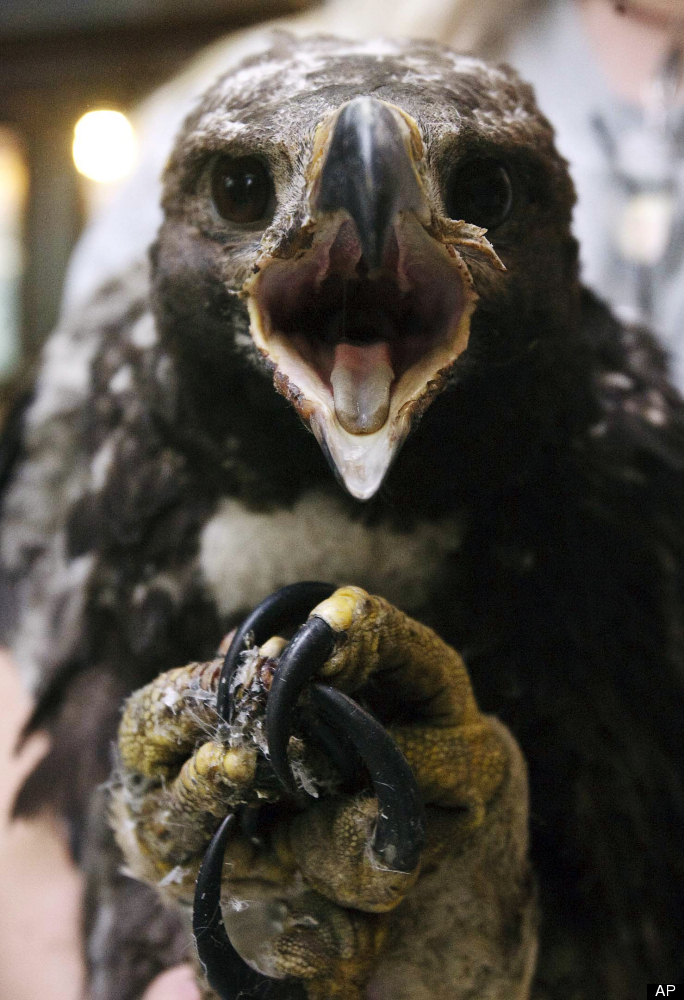
SALT LAKE CITY -- A baby golden eagle is recovering at a
wildlife rehabilitation facility after officials say it
miraculously survived a Utah wildfire last month.
But the veteran Utah Division of Wildlife Resources volunteer
found the burned bird alive on June 28 behind a charred tree, about
25 feet below the nest that was burned to a crisp in the 5,500-acre
Dump Fire near Saratoga Springs.
"I thought there was no chance he would be alive. I was stunned
when I saw him standing there," Keller said. "I thought maybe I
could rebuild the nest a little bit, but I took a good look at him
and realized that was not going to happen."
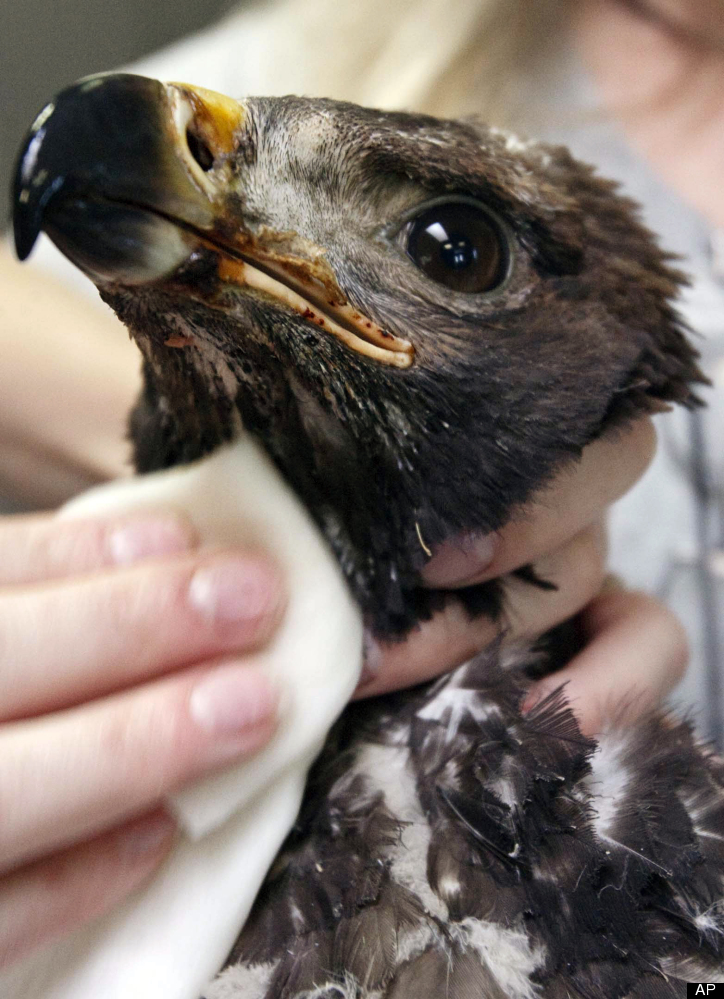
The 70-day-old eaglet had suffered burns on his talons, beak,
head and wings. His flight feathers were melted down to within an
inch or two of his wing and tail. He's very underweight at just
over five pounds.
Keller realized the eagle would not fly for at least a year and
that the parents eventually would stop providing food. Not a stick
from the nest was left after the fire sparked by target shooters
swept through
"I've seen nests burn before, but this is the first year I have
seen one burn with young in it," he told the Tribune. "They are
usually long gone and flying when fire season starts."
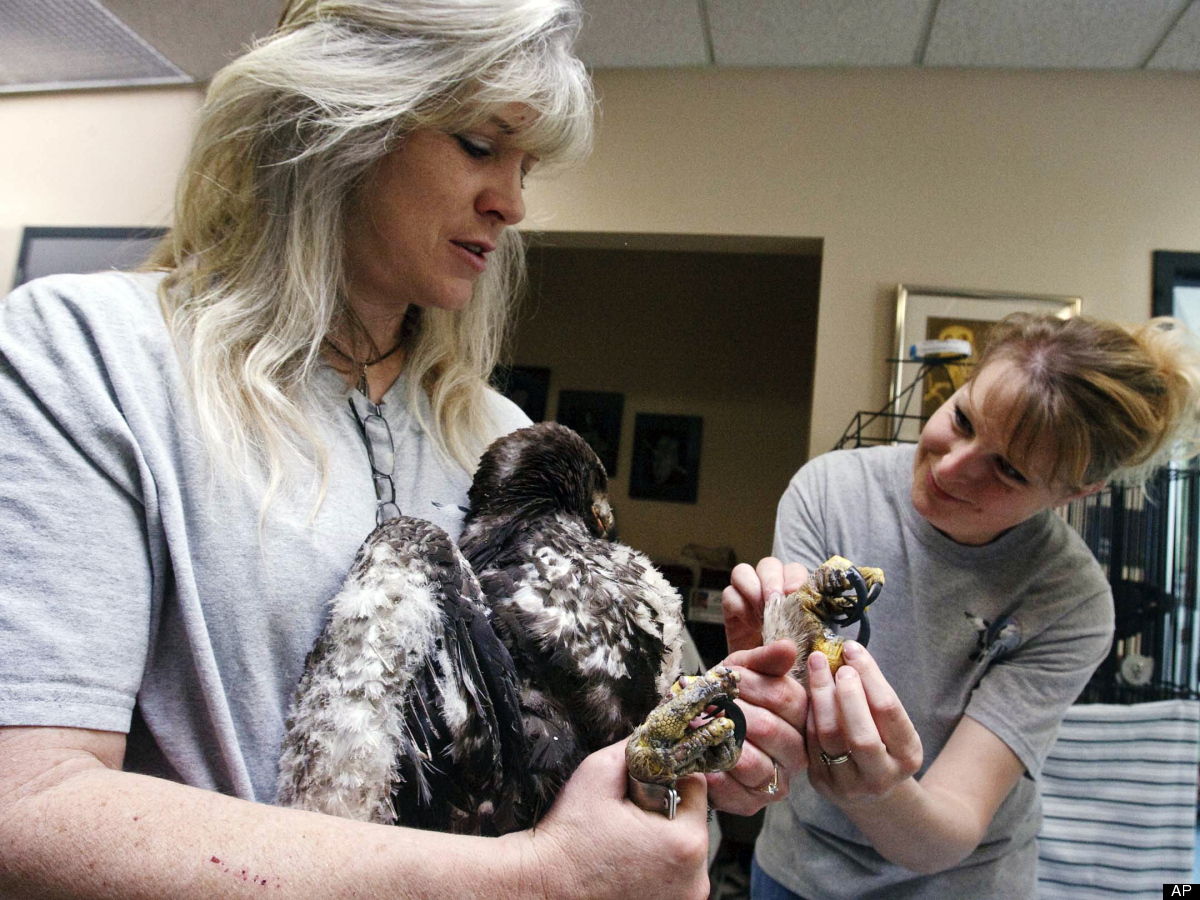
After permission was secured from state and federal wildlife
agencies, the Wildlife Rehabilitation Center of Northern Utah in
Ogden assumed care of the eaglet this week.
"I wasn't sure he was going to make it," said DaLyn Erickson,
executive director of the center. "He kind of had that look like he
may have given up."
But the eagle named Phoenix has since taken to eating beef heart
and venison. He's treated several times a day for his burns and
seems to be gaining strength.
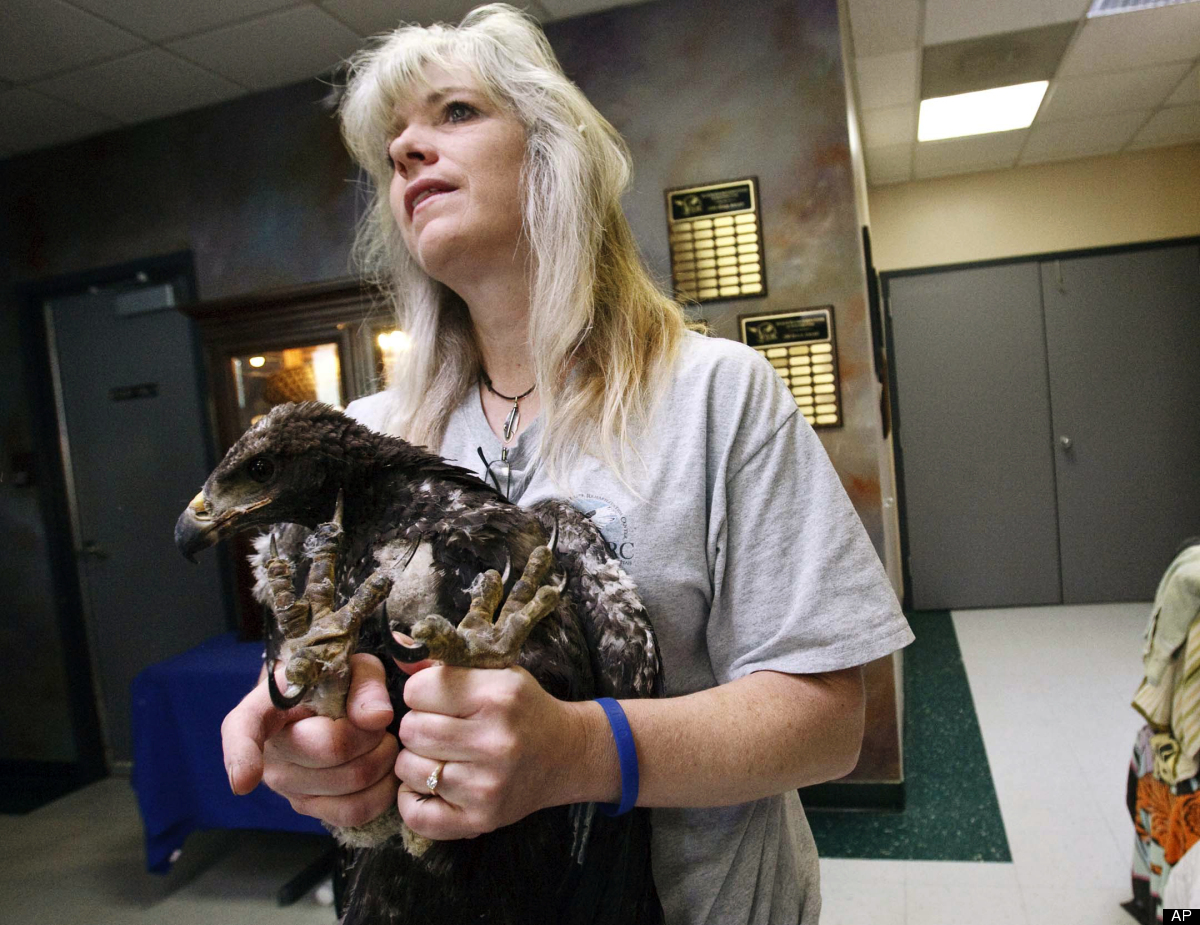
"He looks good now," said Amber Hansen, a member of the center's
board of directors. "But we think if he had been there (at the nest
site) another day, he probably would not have survived."
What seems to have saved his life during the fire was the
insulation offered by his down feathers and once-thick body,
according to the wildlife rehabilitation center.
Officials hope the bird can be released back into the wild next
year, but say it's too early to tell about its future. Volunteers
will work to keep him as wild as possible.
"It depends on how much follicle damage there is to his wings,"
Hansen said. "If they are not too burned, he should be able to molt
into new feathers next year and hopefully be able to fly."