Both research methodology differ, the weight for Times in
Peer Review is 40%.
The Times Higher-QS World University Rankings are a composite
measure in which six criteria are added together to produce an
overall table. One measure, peer review, accounts for 40 per cent
of the possible score, while two others account for 20 percentage
points each, with one worth 10 per cent and the other two worth 5
per cent each.
Peer review: 40%
Employer review: 20%
Staff / Student: 20%
Citations / Staff: 10%
International staff: 5%
International student: 5%
Source: http://www.timeshighereducation.co.uk/story.asp?storycode=400069
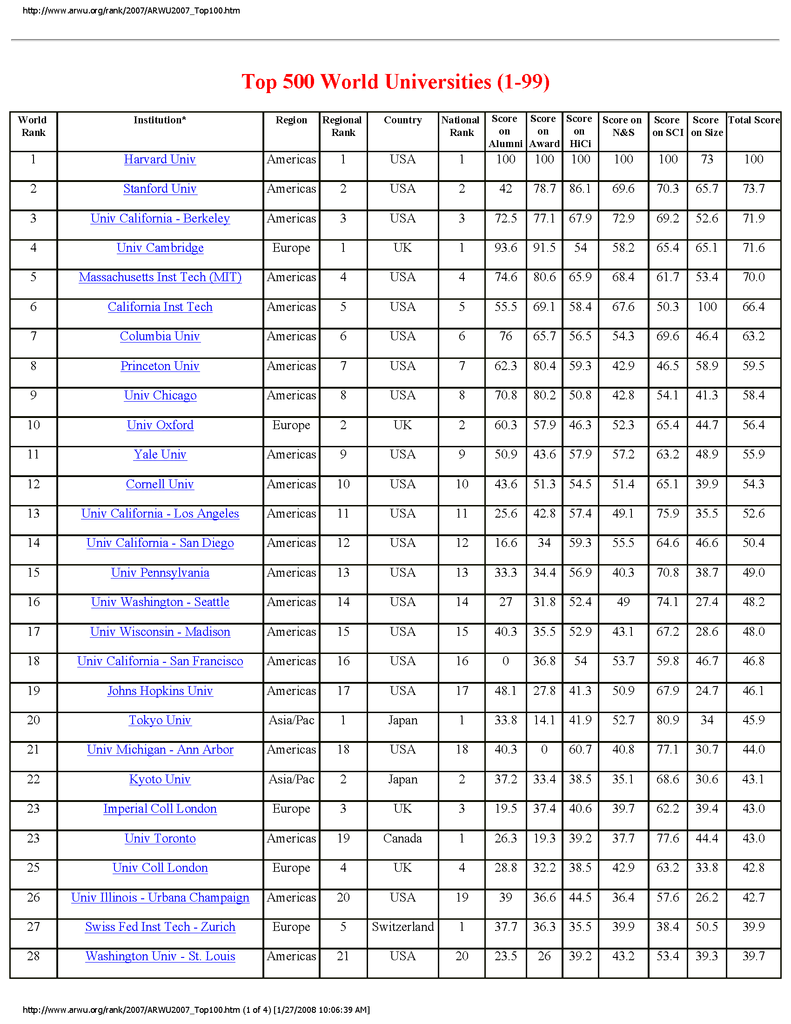
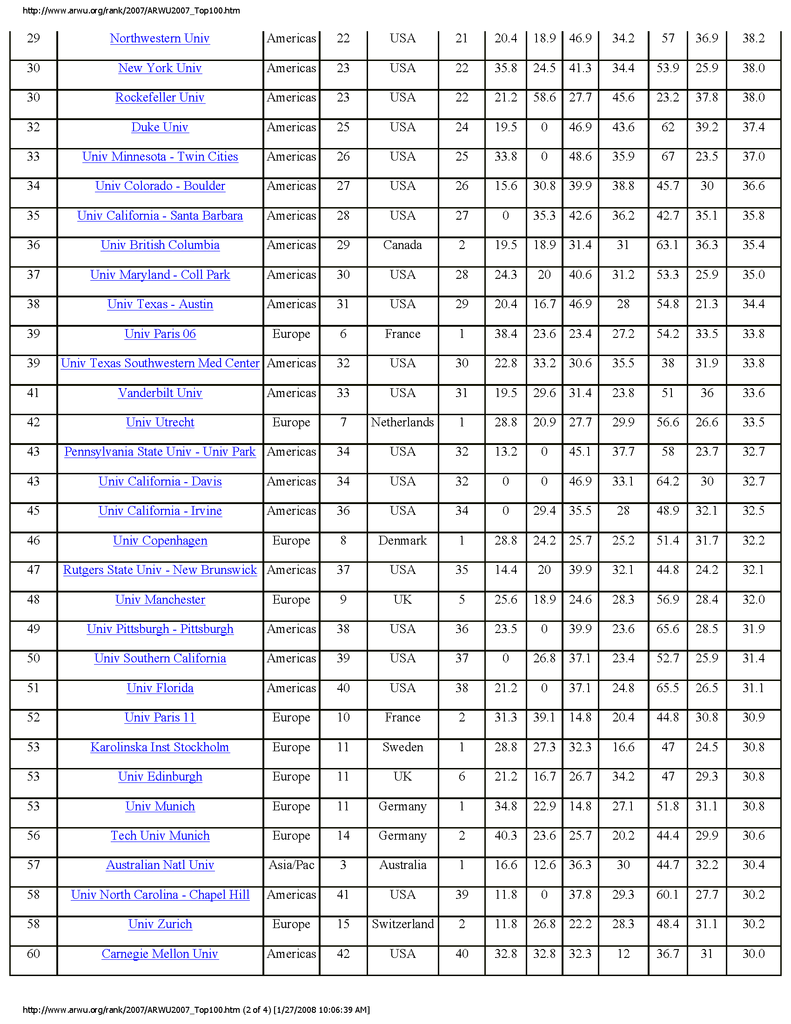
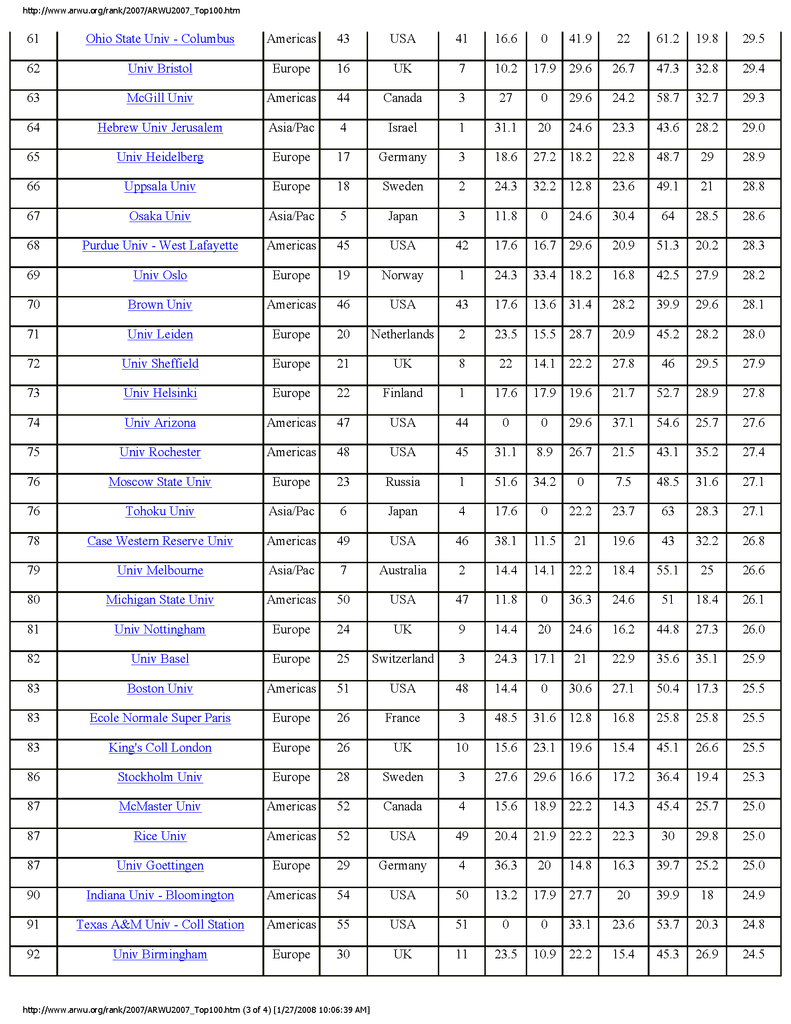
Whereas the research done by Institute of Higher Education of
Shanghai Jiao Tong University based it's scores on:
Quality of Education (Alumni of institution winning Nobel Prizes
and Fields Medals): 10%
Quality of Faculty: --
(Staff of institution winning Nobel Prizes and Fields Medals):
20%
(Highly cited researchers in 21 broad subject categories):
20%
Research output:--
(Articles published in Nature and Science): 20%
(Articles in Science Citation Index-expanded, Social Science
Citation Index): 20%
Size of Institution (Academic performance with respect to the
size of the institution): 10%
Source: http://www.arwu.org/rank/2007/ARWU2007Methodology.htm
Peer review and employer review are all very subjective, as
opposed to using Nobel Prize & Fields Medal winners which is
objective.