SG has been working with satellites for some times.
-
www.crisp.nus.edu.sg/
-
ST news here
SINGAPORE is ready to head to space with the country's first
satellite built from scratch here.
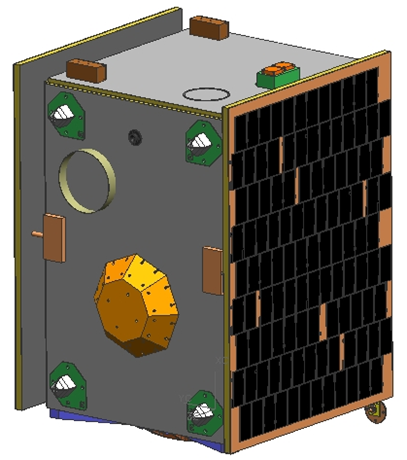
The Straits Times understands that the X-Sat, a micro-satellite
about the size of a refrigerator, will be launched in June or July
from India's Satish Dhawan Space Centre in Andhra Pradesh, 100km
north of Chennai.
With the launch of the 120kg satellite,
Singapore is believed to be the first Southeast Asian
country that will have its own locally built satellite in
space.
Scientists and engineers from the Nanyang Technological
University (NTU) and DSO National Laboratories - Singapore's
national defence research outfit - are putting the finishing
touches on the X-Sat.
Work began as early as nine years ago, with a reported plan to
launch it in 2007. That deadline came and went without any
launches, but no reasons were given for the delay.
The Defence Ministry's permanent secretary for defence
development, Dr Tan Kim Siew, revealed at a scholarship tea session
earlier this month, that the satellite 'will be launched later this
year'. Dr Tan is also chairman of the Defence Science and
Technology Agency and DSO.
Both DSO and NTU declined further comment, except to say that
the launch would be a 'scientific achievement for Singapore' and
that more information would be given after the launch.
Space experts said delays in satellite launches are common,
pointing out that satellites launched by the United States military
and Nasa, for instance, are usually at least two years late.
Aerospace consultancy Teal Group's senior analyst and space
studies director, Mr Marco Caceres, estimated that with the delay,
the cost of the X-Sat would have ballooned from $10 million
to about $40 million.
'More than half the cost will go to paying engineers and
scientists to upkeep the satellite and also install new electronics
or sensors on it,' he said.
The X-Sat will orbit the earth at a height of 800km and take
photographs to measure soil erosion and monitor environmental
changes. Dubbed Iris, the Korean-made camera can capture forest
fires and sea pollution.
The communications systems on the satellite will also be able to
relay information from sensors to a ground station at
NTU.
The X-Sat will spend three years in orbit, said the X-Sat team
in its mission progress report in 2005.
Previous satellite launches by Singapore involved construction
efforts from foreign companies. In 1998, telco SingTel launched the
3.2-tonne ST-1 satellite built by Anglo-French company Matra
Marconi Space and launched in France.
SingTel's second satellite, expected to be launched next year,
is built by Japan's Mitsubishi Electric Corporation.
The X-Sat will be one of at least five smaller units
riding on the Polar Satellite Launch Vehicle, said the
Indian Space Research Organisation, which owns the launch
vehicle.
Other countries with more established space programmes like
China, the US and Israel launch more sophisticated satellites
weighing between 500kg and 1,000kg every year. These include spy
and communications satellites by military agencies.
While the X-Sat is small, it is still a credible effort by
Singapore, said Mr Caceres. 'Not many countries in the world have
this capability to build their own imaging and communications
satellite... It will prove to be very useful in the future,' he
said.