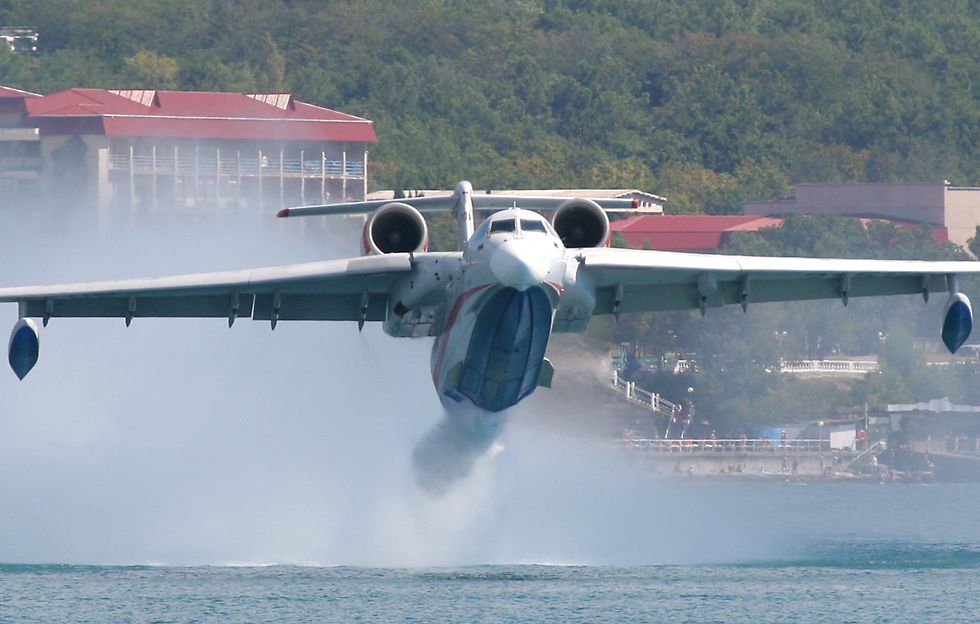
Good point. I agree that seaplanes are generally predicated on
the principle of extended area protection or power projection.
The former as in the case of the Japanese in WW2 is to protect
its LOCs across vast oceans whilst the latter eg submarine launched
seaplanes were meant to project power beyond traditional a/c range
(which as the 2004 DTIC study indicates was superseded by the
ability of carriers to project far greater power).
Carriers offer a slightly different dimension. Whilst carriers
are often seen as tools of power projection, these are equally
highly effective defensive weaspon. Examples are Coral Sea and
Midway in the defense of Australia in the former and Midway island
in the latter. The 1982 Falklands war is a hybrid example where
fleet defense superceded concept of island defence. These showed
that carriers are also defensive weapons (though it provides a
dimensional approach). In Midway, its land base was attacked first
(and part of accepted concept), however carrier based a/c provided
an alternative dimension of defense. Whilst land bases could be suppressed, carrier based a/c were more
difficult to suppress by virtue of its mobility. That same
dimension could be argued for Singapore (see carriers thread).
In 1941, Japan was more concerned over the Prince of Wales and
Repulse (navy) as opposed to theRAF air bases during the invasion
of Malaya for obvious reasons. This despite that RAF a/c sunk more
ships than the 2 battleships could (and only because they got rid
of the 2 battleships early).
V/STOL concept is different. It was developed for a European
concext to allow a/c to operate under severe Soviet interdiction of
airfields whilst maximising sortie rates due to proximity to target
as it could operate near the FLOT. This does not require a navy but
it was UK who merged the two concepts operating vstol carriers to
defend its claim to the falklands.