For the first time since July 1999 when medical supplies were
airdropped to treat Jerri Nielsen, an airdrop was conducted at Pole
on 20 December 2006. The flight left Christchurch just before noon,
and after a refueling stop in McMurdo, the flight arrived in the
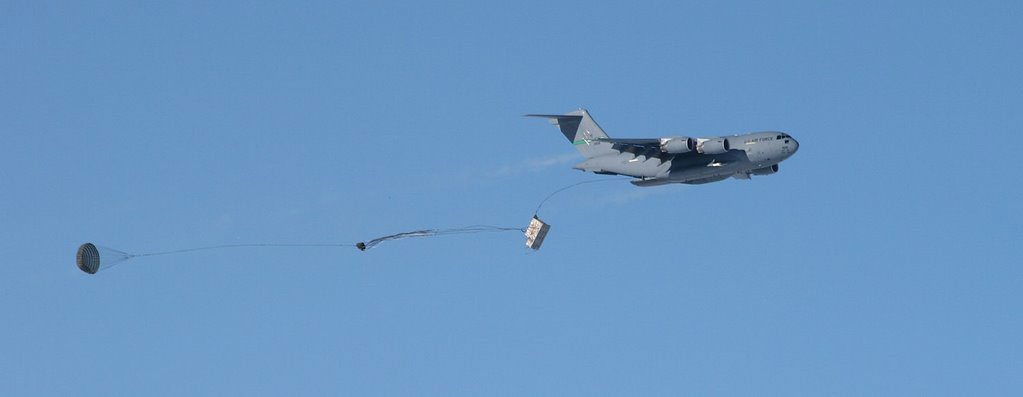
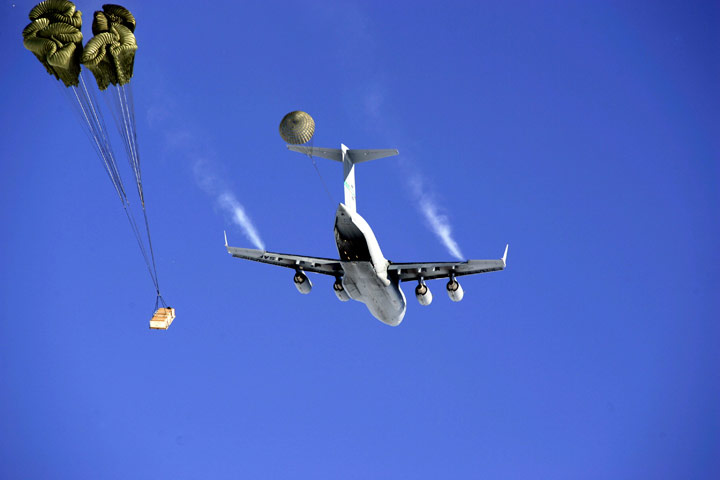
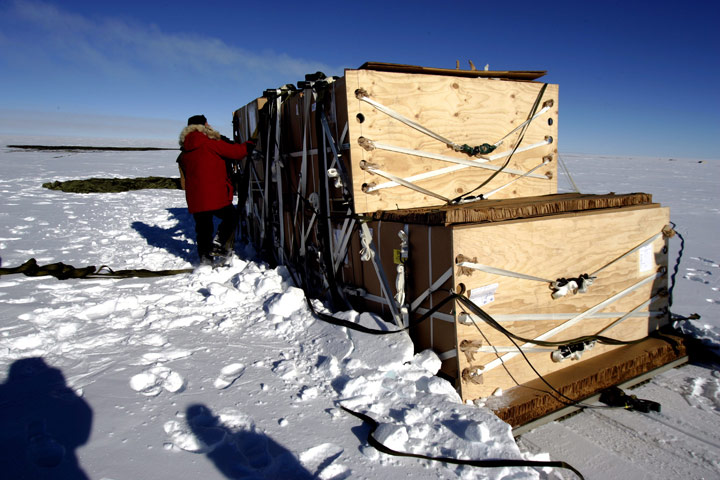
skies over Pole around 2030. The drop consisted of 4 air pallets
with triwalls of food, total weight was just under 70,000 pounds.
These were dropped in a single pass from a height of about 1000
feet. The operation was conducted by a 14-person crew, members of
the Air Force Reserve's 446th Airlift Wing based at McChord Air
Force Base in Washington state.
Here's a more detailed description of the operation prepared by Air
Force Lt Col Greg Pike. Pike was at Pole along with Sr Master
Sergeant Jim Masura to act as drop zone coordinators (Pike was
present for the last summer airdrop of construction material in
1991-92, and later flew the famous midwinter 1999 airdrop event.
Both of these drops used the now-retired C-141 aircraft):
"The main goal of this summer's C-17 airdrop is proof of concept.
Before, all airdrops in the C-141, LC130 and older aircraft at the
pole were computed by the navigator. He would figure out a sight
angle, he knew his ground speed and the ballistics of the cargo and
chute. When the drop zone (DZ) crossed his sight angle (navigators
had many techniques on sight angle, one was drawing a grease pencil
line across the front windscreen) he would start a stop watch for a
given number of seconds and would count down and call green light,
the co-pilot would then release the load for the drop. This is a
very low tech delivery method , not very accurate but very reliable
if you could see the DZ. The C-17 has done away with the navigator
and flight engineer and replaced them with computers. These are far
more accurate, and in normal conditions some what reliable. But as
all of you know the South Pole is not a normal place and the Air
Force and Boeing would like to know a drop will work near the pole
when the plane is flying in grid mode. The pilots have run the
profile in the simulator with mixed results and Boeing 'thinks it
should work just fine'. Boeing has installed a special data
collection computer on the C17; we will be using the data to help
with any future software upgrade for polar operation which might be
needed.
"The type of delivery method we will use on this drop is called a
heavy equipment drop. We will be dropping 4 ea-16 foot platforms
weighing between 16,625-17,765 pounds for a total weight of 68,500
pounds. This type of system can drop road graders, fuel bladders or
other large equipment that needs a softer landing. This system
employs a drogue chute, then an extraction package that will pull
the cargo out of the aircraft, then deploy the main chutes (1 to 8
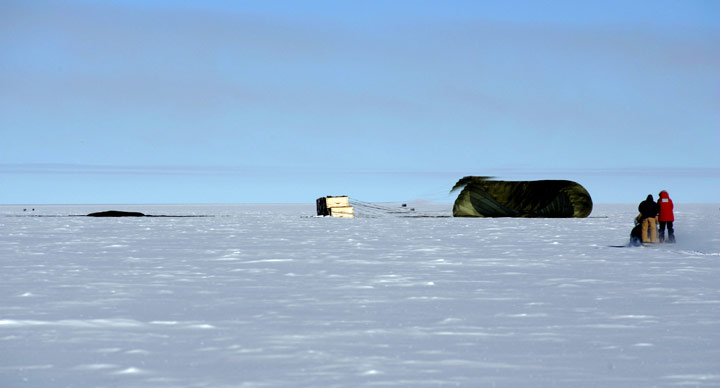
main chutes depending on the weight). After the load lands, the
main chutes will release so the cargo is not dragged by any wind.
The type of drop we use to deliver food, fuel barrels or supplies
that can hit the ground a little harder is called a container
delivery system (CDS). This load, when released, will simply roll
out the back and the chutes will deploy from a static line just
like a paratrooper.
"There are very few options for relief for the folks who winter
over. We want to make sure airdrop is a viable and safe option
before it's needed in an emergency."

Cargo being prepared in Christchurch, NZ.

Most of the cargo was foodstuff.
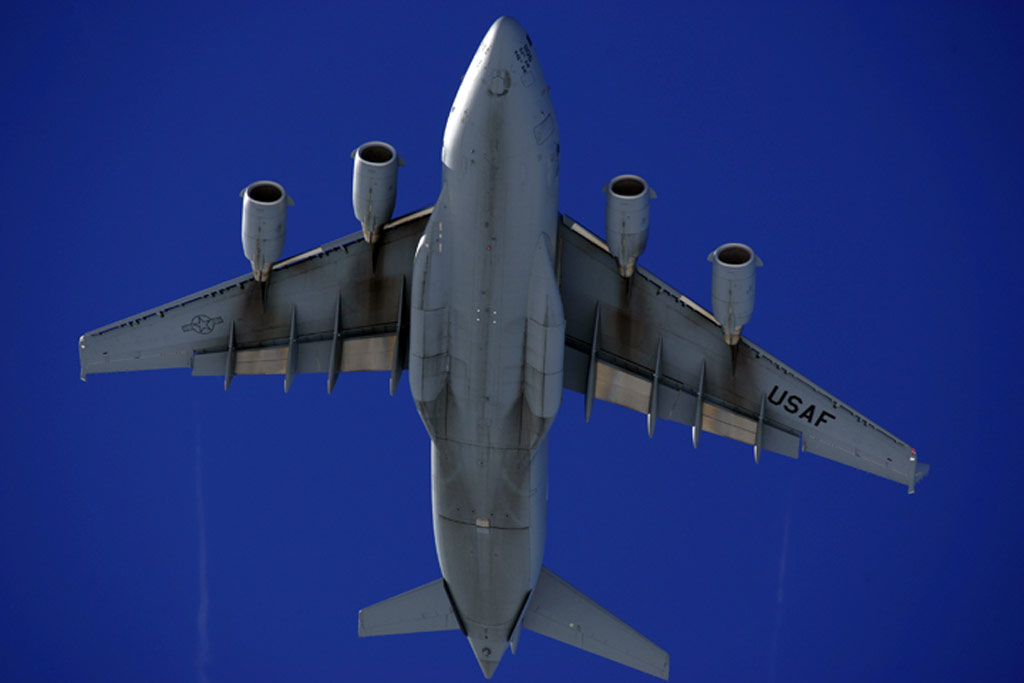
Final pass before the drop. The first airdrop during the 1955
season was conducted by the USAF using the C-124 Globemaster.

Here goes!