Flying into trouble - December 30, 2006
Australia is risking its credibility in the region if it pursues
its plan to buy 24 Super Hornet aircraft, writes Carlo Kopp.
LAST week's disclosure of negotiations to procure 24 Boeing F/A-18F
Super Hornets as interim replacements for Australia's existing
F-111 fleet is the latest instalment in the sorry saga of the
RAAF's decline as a credible regional air force.
Until last week, senior Defence figures repeatedly denied that
Super Hornets were being sought as gap fillers to overcome
continuing difficulties with the long running F/A-18A Hornet
Upgrade Program, increasing delays with the Joint Strike Fighter,
and Defence's campaign for premature retirement of the F-111
fleet.
The Super Hornet is the US Navy's follow-on fighter to the
"Classic Hornet", currently flown by four RAAF squadrons. While
slightly larger than Australia's Hornets, the Super Hornet's
agility, supersonic speed and acceleration performance, critical in
air combat, are no better than the earlier model, due to a
Congressional mandate during development. With unique engines,
radar, airframe and electronic warfare systems, the Super Hornet
shares little real commonality with its predecessor, driving up
support costs. All it offers is a better radar, improved avionics
and 36 per cent more internal fuel, at a price tag estimated at
$2.5 billion.
The bad news is that the Super Hornet is not competitive
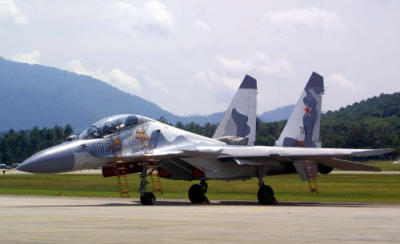
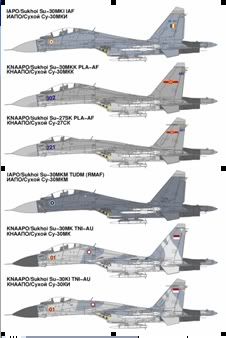
against the latest Russian Sukhoi Su-30MK fighters, operated or
being acquired by China, India, Malaysia, Thailand and Indonesia,
and it is also not competitive against the Boeing F-15 models being
acquired by Singapore, South Korea, and flown by
Japan.
The larger Sukhois are faster, much more agile, and have
greater range and firepower than the Super Hornet. The Russians are
now testing an advanced supersonic cruise engine in the Sukhoi
fighter, which will effectively double the combat speed of the
Russian fighters, putting them well out of reach of the lacklustre
Super Hornet.
The Super Hornet is not a credible air combat fighter in this
region, and no upgrade can ever make it so.
The stated intention to use the Super Hornet as an interim
replacement for Australia's F-111s is no less incredible.
Capable of carrying about half the F-111's payload of smart
bombs to about two-thirds the distance achievable by the F-111, in
raw firepower terms the Super Hornet delivers around one-third the
punch of the F-111.
To match the range and persistence of the F-111, the Super Hornet
must be supported by aerial refuelling tanker aircraft in numbers
that Defence has no intention of ever acquiring. In real terms,
replacing F-111s with Super Hornets reduces strike capability
three-fold.
Claims by Defence that the F-111s will become dangerous to fly
after 2010 are absurd, given the advanced testing used to verify
structural integrity of the fleet. Defence has repeatedly inflated
the cost of operating and upgrading the F-111 in evidence to
Parliament, and made factually incorrect claims on a wide range of
technical issues, while publicly admitting "we don't know what we
don't know". In short, the Defence leadership has no credibility
whatsoever in justifying the early retirement of the F-111s. Even a
fraction of the budget required to buy the Super Hornet would equip
the F-111s with new engines, new wings and new avionics, allowing
them to remain in use decades longer.
Compared to the mediocre Joint Strike Fighter that Defence
intends as the ultimate replacement for both the F/A-18A and F-111
fleets, the Super Hornet has inferior stealth and avionics. Neither
of these aircraft were designed to be credible in air combat
against the latest Russian Sukhois.
Nor were they designed to defeat the advanced Russian S-300
and S-400 surface-to-air missile systems, largely superior to the
US Patriot, and now appearing in this region.
In strategic terms, Defence is re-equipping the RAAF with a fleet
of aircraft that will be little more than a bad joke in the region
and doing so despite better alternatives, such as the superlative
F-22A, and despite repeated advice to the contrary.
Defence runs a real risk that as further difficulties emerge with
the Joint Strike Fighter, and its cost continues to creep up, a
future government will bale out, and with Super Hornets already in
service, opt to buy more to replace the legacy Hornets. This
further reduces capability against the non-credible Joint Strike
Fighter plan. A far better strategy for the future of the RAAF is
to scrap current planning, and start again.
The F-22A Raptor suffers none of the limitations of either the
Joint Strike Fighter or Super Hornet, and is in production and
operational in the US.
If Australia is to have any strategic credibility in the region, it
cannot pursue the path sought by the Defence leadership.
Dr Carlo Kopp is a defence analyst and research fellow in
regional military strategy at the Monash Asia Institute. He has
flown the Super Hornet.
Source:
http://www.theage.com.au/news/opinion/flying-into-trouble/2006/12/29/1166895477918.html?page=fullpage#contentSwap1