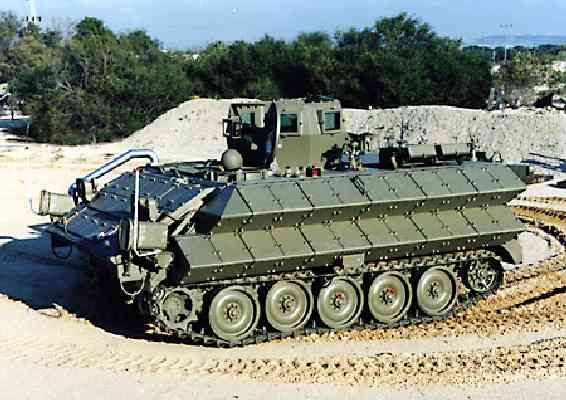
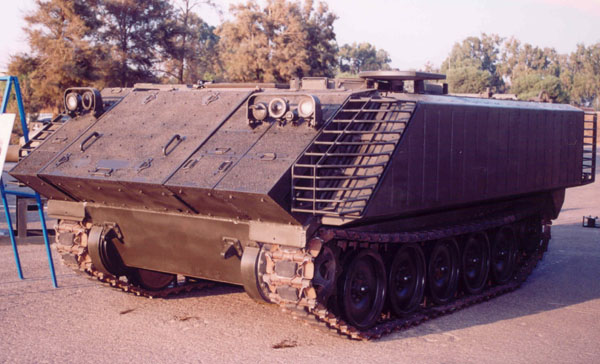
1.Why so diffcult to upgrade M113?
M133 upgrade hits a brake,Daniel Cotterill,November
25, 2006
http://www.theaustralian.news.com.au/story/0,20867,20776975-5002142,00.html
DEFENCE'S troubled project to upgrade 350 armoured personnel
carriers has encountered further difficulties. A fault in a new
braking system that can see discs and callipers grind has further
delayed their introduction into service -- now November next year
at the earliest.
The $500 million project has for the past 10 years been variously
dogged by mismanagement, political and bureaucratic vacillation,
and technical complications - all on what started out to be a
simple upgrade to extend the life of the Vietnam-era fleet by
several years.
The Defence Materiel Organisation is supervising the upgrade's
prime contractor Tenix Defence and brake supplier FFG to ensure the
brake problems are fixed, and that rectification does not create a
maintenance burden for the M113 fleet.
There have been calls for the project to be cancelled.
While advocating the upgrade go on if difficulties can be resolved,
Neil James, executive director of the Australia Defence
Association, says "the upgrade stemmed from flawed strategic
thinking and we should have procured a real infantry fighting
vehicle instead."
Defence is adamant that the mix of mobility, firepower and
protection offered by the upgraded M113s will see the fleet offer a
useful capability until their planned withdrawal in 2020, but not
everyone agrees. According to James, "it is ludicrous that the ADF
will be one of the few Western military forces that cannot field a
single infantry fighting vehicle, especially to integrate with our
new tanks and armed helicopters".
An infantry fighting vehicle (IFV) is a more lethal,
better-protected class of vehicle than an armoured personnel
carrier such as the M113. Infantry can also fight with and from an
IFV and, given the close-quarter battles our soldiers are
increasingly being called upon to face, a move to a more capable
and heavily armed vehicle is ultimately inevitable.
Better capability and protection come at a cost, however, and a
typical IFV weighs in around 25-30 tonnes compared to the 18 tonnes
of an upgraded M113.
By 2012 two of the expanded army's eight infantry battalions will
be mechanised. Unless the M113 upgrade is sorted out quickly they
may feature IFVs sooner rather than later -- a number were on
prominent display at the land warfare conference last month.
2.spore upgraded long time ago
Know ur Singapore M113 taxi
2. The company won the contract, believed to be worth over S$300
million, in 1993 and began delivering upgraded M113s to the
Singapore Armed Forces in 1994 for trials. The upgrade programme is
now complete. Singapore Technologies Kinetics is now marketing this
M113 upgrade programme to other countries.

Specifications
M113
Max speed forward on level hard ground: 74 km/h
Max forward speed on soft ground and 50% gradient: 8-10 km/h
Max speed in low range: 22 km/h
Acceleration from 0 to 32 km/h: 9 s
Creep speed range (continuous): 200 to 5,000 m/h
Drift on hard paved ground: 0.5 m in 100 m
Braking (32 to 0 km/h): 10 m
Average cross-country speed: 42 km/h
Turning radius (pivot to infinite): 7.5 m at 7 s/360º
Pivot steer radius/time: 4.5 m at 8s/360º ----i
like this feature.
3.Ask Aussie pass the biz to ST lah
M113 Upgrade
The M113 has been completely transformed from a conventional troop
carrier into a superior fighting vehicle, with outstanding mobility
and performance to match
4.Reasons for delay
1.Corruptions is the only answer!
2.pl give me your guess.