http://www.dsta.gov.sg/home/DisplayPage/ContentPage10.asp?id=747
watch the video fr 2001 August edition of Defence Watch-- The UAF
revisited.
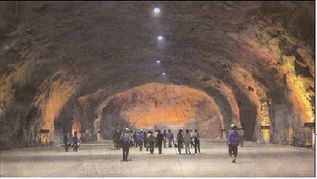
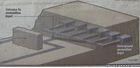
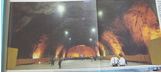
The zig-zag layout of the tunnels, for instance, would greatly
reduce the effects of an accidental explosion.Barricade wall is the
hugh granite wall in front of the entrance.
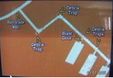
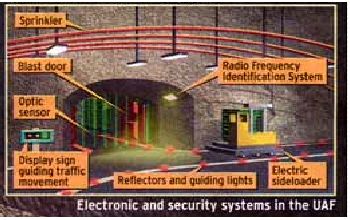
Barricade wall ,blast door on each chamber and debris traps.The
white
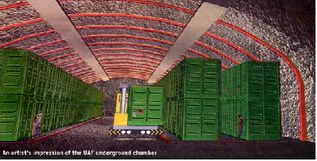
rectangles are ammo chambers.
2.Water to absorb explosion
Date: 29/06/2005 STimes
It's true, water can absorb power of big blast
By: David Boey
DEFENCE engineers here made an explosive breakthrough recently
that could
radically change the design of military bunkers and civilian bomb
shelters.
After experiments showed that water-filled containers could help
absorb the
destructive power of a bomb blast, engineers from the Defence
Science and
Technology Agency (DSTA) held a full-scale trial with their
counterparts in
Sweden, blowing up 10 tonnes of explosives.
Packed around the 10 one-tonne lots of explosives - each capable of
punching
a 3m-wide crater in the ground - were containers filled with two
tonnes of
water each.
On detonation, the containers were wrecked. But the energy from
the
explosion vapourised the water, reducing the effect of the blast by
60 per
cent.
Hailing the results as a major breakthrough, DSTA chief executive
Richard
Lim said yesterday that defence engineers worldwide had considered
using water
barriers to reduce the effect of an explosion.
But none had tested the idea on the scale of the experiment
conducted in
Sweden last month. He added that the experiments are important as
water
barriers can potentially reduce the amount of land needed as a
safety buffer
around ammunition bunkers.
Mr Lim updated the media on research developments at DSTA when he
unveiled a
60-page book to mark five years of DSTA's achievements.
The book will be distributed to organisations such as government
bodies,
tertiary institutions and public libraries.
DSTA was formed five years ago from several Ministry of Defence
departments
to serve as the national authority on weapons procurements and
military
technology.
Mr Lim added that another area his engineers are working on is to
help
national security planners assess the impact of a bomb blast,
similar to the
car bomb detonated outside the JW Marriott Hotel in Jakarta. The
August 2003
terror attack killed 12 people.
'One of the scenarios that we are looking into is the extent of
building
damage and casualties in the event of a car bomb exploding near or
at the
entrance of a hotel, similar to the attack at the Marriott,' he
said.
From its analysis, using computer modelling and other tools, DSTA
will
recommend measures to minimise casualties and damages, if not
prevent an
attack.