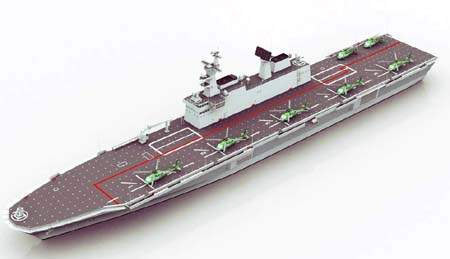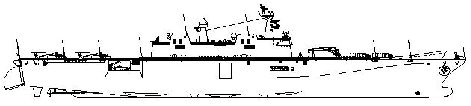
LPX is an 18,500 ton displacement ship carrying helicopters, VSTOL
aircraft, hovercraft, troops and vehicles.The LPX is a 18 000 ton
ship for logistic support of the Korean Navy. It will built by
Hanjin Heavy Industries & Construction Co. Ltd in Pusan
shipyard.It was completed and will be handed over to Korean Navy in
July 2005.
fr
http://www.jjma.com/Documents/Services/ShipDesign/intnat/skorea_lpx.htm
2.Sg own hovercraft
: 15/03/2005 STimes
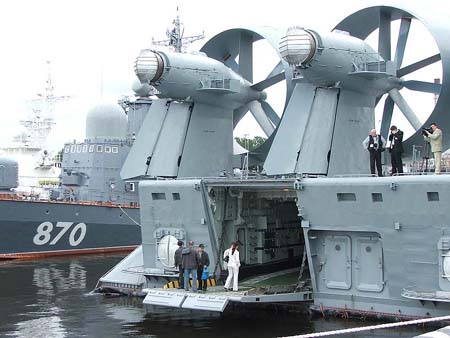
The ACV-1 is about 45m long and has a drive-through cargo
deck, which vehicles can enter from either the bow or the
stern.
IT IS haze-grey, travels on a cushion of air and is Singapore's
biggest
hovercraft yet.
This is a sneak peek at ACV-1, being prepared for its first sea
trials by
shipbuilder Singapore Technologies Marine (ST Marine).
The hovercraft - 'Air Cushion Vehicle 1' - is being fitted out at
ST
Marine's yard at Benoi Basin in Jurong.
When ready, it will travel at high speed on land or water on a
cushion of
air forced under its hull by powerful fans.
ST Marine spokesman Laura Chua declined to comment on ACV-1 or
its
capabilities.
A check with Jane's Fighting Ships, which lists almost all naval
hovercraft
the world over, and makers of civilian hovercraft showed no
hovercraft similar
to ACV-1.
This could mean the hovercraft is of local design or a new design
developed
with a foreign partner.
A Straits Times photograph of ACV-1, taken in late January when the
shipyard was open to the media for the launch of another vessel,
gives a good indication of its size.
It is about 45m long and has a drive-through cargo deck, which
vehicles can
enter from either the bow or the stern using a hydraulically
operated ramp.
Hovercraft can hit the beach regardless of tide and are not
affected by
underwater obstructions such as large rocks, which can damage
conventional
landing craft.
This gives hovercraft like ACV-1 the ability to land cargo on
virtually any
coast.
Such capabilities are likely to interest the Republic of Singapore
Navy,
especially after the tsunami relief operation in Meulaboh in
Sumatra when army combat engineers had to toil for hours to remove
debris before beaches could be used by its landing craft.
ST Marine's foray into the specialised field of hovercraft comes
after an
18-year break.
In 1987, when the company was known as Singapore Shipbuilding &
Engineering, it unveiled the Tiger 40, a prototype 16m-long
hovercraft with an aluminium hull, jointly developed with a British
company, Air Vehicles Ltd.
After a series of sea trials and a marketing drive that failed to
find a
launch customer, the project was dropped.
The prototype Tiger 40 was abandoned in a carpark at the Benoi
Basin yard.
See the photo later here.