2005 releases 8 JUNE
United Defense Successfully Demonstrates Course Correcting Fuze for
Cannon Artillery; GPS-Based Fuze Expected to Triple Cannon's
Accuracy
Contact:
Jeff Van Keuren
United Defense, Public Affairs
[email protected]
(763) 572-7615
MINNEAPOLIS, MN, June 8, 2005 - United Defense Industries, Inc.
(NYSE:UDI) demonstrated a cost-effective system to improve cannon
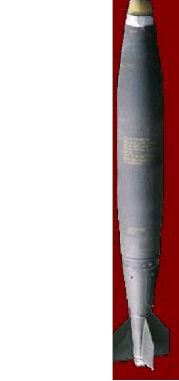
artillery accuracy with the successful firing of inert M795 155-mm
cannon projectiles equipped with a two-directional Course
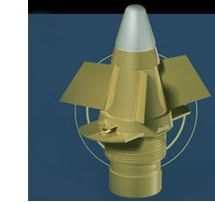
Correcting Fuze (CCF). United Defense has developed this new system
with teammates Bofors Defence, Rockwell Collins and BT Fuze
Products.
The CCF is a revolutionary, GPS-based innovation that dramatically
improves the effectiveness of existing cannon artillery ammunition
and provides near-precision accuracy that is critical in combat
environments. It can be employed on all types of U.S. 155-mm and
105-mm projectiles in the U.S. Field Artillery inventory, and is
ready for a fast track full scale development and early
fielding.
United Defense successfully fired M795 rounds equipped with the CCF
from a M109A6 Paladin to ranges of 14.5 kilometers at Yuma Proving
Ground. Preliminary analysis from the demonstration confirmed
United Defense's laboratory analysis and the projectiles equipped
with the CCF achieved a precision error of less than 50 meters -
three times more accurate than the control rounds.
"Urban conflict in Iraq has re-validated the need for accurate and
responsive cannon fired artillery," said Jim Unterseher, director
of Army Programs at United Defense. "This successful CCF
demonstration proves an affordable solution for dramatically
improving the accuracy of cannons has arrived and can be quickly
fielded. With CCF, we're doing for cannon artillery what JDAM did
for air delivered munitions - we're making existing iron
projectiles 'smart'."
The CCF makes projectiles more accurate by integrating G-hardened,
military GPS with proven flight control technology. Before a
CCF-equipped round is fired, the target's GPS coordinates are
programmed into the fuze. After the round is fired, the CCF guides
the projectile to the target by deploying three different types of
brakes (deployable fins) that adjust the projectile's range and
deflection. During the projectile's flight, satellites communicate
with the fuze to ensure the brakes deploy at the right time and
continually adjust the projectile's trajectory to guide the round
to its intended target.
United Defense's successful demonstration of the two-directional
CCF prototype in a gun-fired environment is an industry first and
it places the system at Technology Readiness Level 6.
"United Defense is pleased to be teamed with the premier munitions
and fuze experts at Bofors Defence and BT Fuze Products, and
munition GPS experts at Rockwell Collins to develop and produce the
CCF," said Keith Howe, vice president and general manager, United
Defense Armament Systems Division. "With more than five years
already invested by this team in the CCF program, we are positioned
to deliver this new capability to the Army in less than 12
months."
Building on the success of these latest CCF demonstrations, the
United Defense-led team will continue to enhance its preliminary
CCF design and research a broader range of applications for the
technology.
fr http://www.uniteddefense.com/pr/pr_20050608.htm
learn more and watch motion picture
http://www.uniteddefense.com/media/Course_Correcting_Fuze_press_kit/
2.I can bet one coffee ST will produce similiar in 2
years.