
Lady Gaga said Thursday she had been hospitalized in "severe
pain" and was pulling out of Brazil's Rock in Rio festival, which
she was due to headline this weekend. The US superstar, who
revealed Tuesday that she suffers from the chronic disease
fibromyalgia, had been due to open the festival on Friday in Rio de
Janeiro.
https://sg.news.yahoo.com/brazilians-gaga-rock-rio-festival-170458372.html

There are scenes in which Lady Gaga is seen crying from the
spasms running up and down her body, as attendants cover her with
ice packs and massage her in an effort to ease the misery. “I’m so
embarrassed,” she cries to the camera, burying her face in her
hands.
http://www.marketwatch.com/story/lady-gaga-netflix-documentary-focuses-in-on-the-idiosyncratic-artists-chronic-physical-pain-2017-09-09
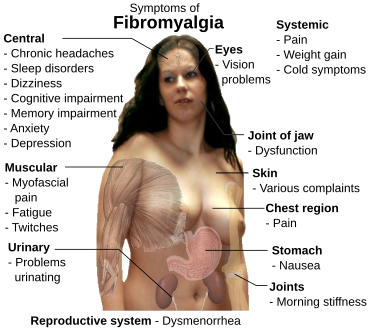
The defining symptoms of fibromyalgia are chronic widespread
pain, fatigue, sleep disturbance, and heightened pain in response
to tactile pressure (allodynia). Other symptoms may include
tingling of the skin (paresthesias), prolonged muscle spasms,
weakness in the limbs, nerve pain, muscle twitching, palpitations,
and functional bowel disturbances.
Many people experience cognitive dysfunction (known as
"fibrofog"), which may be characterized by impaired concentration,
problems with short and long-term memory, short-term memory
consolidation, impaired speed of performance, inability to
multi-task, cognitive overload, and diminished attention span.
Fibromyalgia is often associated with anxiety and depressive
symptoms.
Other symptoms often attributed to fibromyalgia that may be due
to a comorbid disorder include myofascial pain syndrome, also
referred to as chronic myofascial pain, diffuse non-dermatomal
paresthesias, functional bowel disturbances and irritable bowel
syndrome, genitourinary symptoms and interstitial cystitis,
dermatological disorders, headaches, myoclonic twitches, and
symptomatic hypoglycemia. Although fibromyalgia is classified based
on the presence of chronic widespread pain, pain may also be
localized in areas such as the shoulders, neck, low back, hips, or
other areas. Many sufferers also experience varying degrees of
myofascial pain and have high rates of comorbid temporomandibular
joint dysfunction (jaw pain). 20–30% of people with rheumatoid
arthritis and systemic lupus erythematosus may also have
fibromyalgia.
https://en.wikipedia.org/wiki/Fibromyalgia


