I just want to address Deepak C's comment, which contains much
misinformation and prejudice. I am a Singaporean living in the
States. Some facts which you don't know:
1. You have to be over the age of 65 to receive medicare. You
have to be destitute to receive Medicaid. As in you cannot own any
assets such as house or car. Even making minimum wage is too much
to qualify. If you own a house, you have to sell it and b/c
homeless, run through all the money and then you can apply for
medicaid.
2. Everyone else has to go with private insurance. If you work
for a large group such as microsoft, or the government or a
university, you can buy their group plan which is cost effective
because it is a large group. But if you get sick and lose your job
you lose your insurance. Then when you need it most you won't have
it. If you are an entrepreneur, work for a small company or a
contract worker, it is more than likely that you have nothing
because your employer cannot afford it. Your suggestion that
uninsured people in the US are gangbangers is ignorant and racist.
You can buy an individual plan which costs about US$400/month with
a $2500 deductible. Which means if you get sick, your plan will not
start paying until you have paid out $2500 yourself. Which means
you can count on spending at least US$4800 per year. If you do get
a serious illness you will spend US $7300 before the HIC will chip
in anything. More than likely they will refuse to pay, they will
say your treatment is unnecessary even if it is. You spend all your
time fighting them while every moment the cancer grows inside you.
That's if you are lucky. More likely is that they just drop you.
this is known as recission. There is no law to prevent them from
doing this. You will then be discharged from the hospital within an
hour and sent home to die. This is perfectly legal.
Many insurance plans are scams which you only discover when you
need to use it. The language is so obtuse it is impossible to
understand. There are no laws against this.
3. More than 30% of premiums to private insurers is taken up in
adminstrative costs and profits. Unsuprisingly doctors spend 30% of
their time filling out forms.
4. There is no direct or indirect regulation of prices. When you
go to the Doctor here and you have no insurance. You have to pay a
highly inflated price. Where an insurance company pays $80. You
will pay $240. They gouge the most vulnerable citizens. If you
cannot pay they will take your house and you will declare
bankruptcy. Over 1 million people this year are estimated to go
bankrupt due to medical costs. Doctors and hospitals are not
required to post prices. So going to the Doctor is like Russian
Roulette or like going to restaurant, eating and then paying
whatever the owner decides you should pay. You and your HIC can be
paying $4000 for an operation but the person next to you $2000,
depending on what kind of insurance or none.
5. County hospitals are a cesspool worse than any hospital in
India even. Only large cities have them and the waits in emergency
rooms can be up to 12 hours. It's very sad. This is also because,
it is the only place the 50 million uninsured can go, even then
they will only stabilize you. You won't get a bypass or chemo
there. They will stabilize you and send you home to die. Even if
the treatment is available.
6. Although the USA is a "wealthy country", the wealth is very
unevenly distributed. Most Americans live hand to mouth and are
unable to get ahead. Many are in incredible debt because education
is expensive and health care exorbitant. Per hour wages have been
stagnant for 10 years.
7. Singapore's per capita GDP is higher than the US's. Which
tells you Americans pay a much larger portion of their income for
health care and get less for it than Singaporeans.
8. you have to get pre-approved for every expense by your HIC
including ambulance fees. So if you are in a car accident, while
your guts are all over the road. You are expected to call your
insurer and beg them to allow you an ambulance.
9. More than 50 million in the US have no insurance whatsoever
and at least 100 million are underinsured, meaning their plans are
practically worthless.
So what I am trying to say is: Love that Medisave, Medishield,
Medifund and buy that NTUC preferred private insurance
thingy. I do. Because it could be so, so much worse.
How long have you been living in the US to know it so well like
you think you do? Have you ever applied for any of
the government sponsored medical services before? I hope
you are not telling us that you live in the US so that it can lend
credence to all your statements. I have a feeling that you are
someone's clone, you registered a nick specially to retort my post.
 I could be wrong.
1. Some of your statements are just pure BS. You need to be a
destitute before you qualify for Medicaid? There are income caps based on monthly
income and SSI. If you own a beachfront property and a porsche
(being asset rich and cash poor), surely you don't expect the
government to pay for your medical bills, or do you? Medicaid is available to the poor, unlike
what you claim it to be, apart from that they also receive
monthly Food Stamps. Does the Singapore government pay any
medical bills for the poor or give Food Stamps to the poor?
"Families supported by low-wage workers generally have
access to a range of government supplements aimed at preventing
extreme economic hardship. In families with two or more children,
the Earned Income Tax Credit provides a supplement of 40 percent of
the worker’s wage up to a maximum of $3,850, or about $320 per
month. All low-income households with low amounts of assets qualify
for Food Stamp benefits. For families of three with earnings of
$400 per month, the Food Stamp benefit is equal to about $310 per
month. All children and many adults in low-income families qualify
for Medicaid coverage. Housing benefits and child care subsidies
add to the supplementary package for low-wage workers in low-income
families. But not all low-income families have access to all
benefits (especially housing and child care), and many families do
not claim the benefits that are available. A major challenge is to
make existing government income support programs more accessible to
low-wage workers in low-income families."
http://www.dol.gov/oasam/programs/history/herman/reports/futurework/conference/low-wage.htm
2. My statement about Hispanics and Afro-Americans being
gangbangers is a statement of fact, not a derogatory statement, try
to distinguish the difference if you can. Facts which you can't disprove!
"Officials reported 46% of all gangs were Hispanic/Latino,
34% African American, 12% Causcasian, and 6% Asian. A third of all
gangs were reported as having significant numbers of more than one
ethnic group. "
http://www.uic.edu/orgs/kbc/Floors/Facts.html
No insurance in the world pays you 100% for whatever you are
insured against!!! It's their way of reducing adverse selection
and moral hazard!!! Do you think that Singapore's private/public
medical insurance is any different from USA?
http://en.wikipedia.org/wiki/Health_insurance
3. Is there any empirical evidence to suggest that 30% of
administrative cost is taken out by doctor's filling up forms or
are you trying to discredit a system which you have a disdain for.
FYI, doctors don't fill up forms, it's
normally filled up by the patients and handed over to the doctor's
administrative assistant for processing, just like how they do it
all over the world, it's called specialisation of labour.
4. I agree that US healthcare cost is on the high side, but
that's the price you pay for having a privatised healthcare system,
it tend to drive prices up because hospitals seek to provide
you with the best medical care (more advanced equipment
and specialist). Ultimately, would you prefer to have your surgery
done in SGH or John Hopkins?
5. I can't verify the waiting time in US, but I
have ever waited 9 hours for a bed in SGH, went around noon,
but they didn't have any available beds till 9-10pm that night.
My friend's mom gets admitted quite
frequently, most of the time she gets upgraded to A1 or B1 in TTSH
because there wasn't any available beds in C wards, but then they
will rush to discharge you even before the patient has fully
recovered. How many community (safety net and secondary
safety nets hospitals) are there to serve the 50 million Americans?
You made it sound like as if the ratio of
patients to hospitals are so insurmountable.


http://www.ahrq.gov/data/hcup/factbk8/factbk8a.htm
http://www.ahrq.gov/data/hcup/factbk8/fbk8fig19.htm
6. If the income of US is evenly distributed, then each citizen
would get around US$46,892 (the GDP per capita of US). Is that too
little for an average American? Education too expensive? Are you looking at
things from a American citizen's perspective or a foreign student's
perspective? If you look at the world from a
Singaporean's perspective, everything in countries of similar GDP
per capita is expensive. Why? It's because Singaporean's wages has
been severely retarded by the government, the cost of doing
business in Singapore has been severely inflated by other capitals,
therefore wages has to be compromised to make the cost of doing
business in Singapore affordable.
Tuition and Fees: Tuition and fees are
based upon rates established by the State Legislature and/or the
University of Houston Board of Regents and are determined by
residence status and the number of hours taken.
For 2008, a Texas resident enrolled for 15 graduate credit
hours paid approximately $5,100 in tuition and fees; a student
enrolled in six graduate hours paid approximately $2,900. For out
of state (i.e., non-Texas resident) students, these figures are
about $9,700 and $4,900, respectively. Rates for international
students are the same as non-resident students. Costs of tuition
and fees for nine week, or twelve-week summer sessions are the same
as Fall and Spring; six-week sessions are slightly lower. Check the
university's website for the latest tuition and fee rates at
www.uh.edu/sfs.
http://www.sw.uh.edu/admissions/beforeyouapply.php
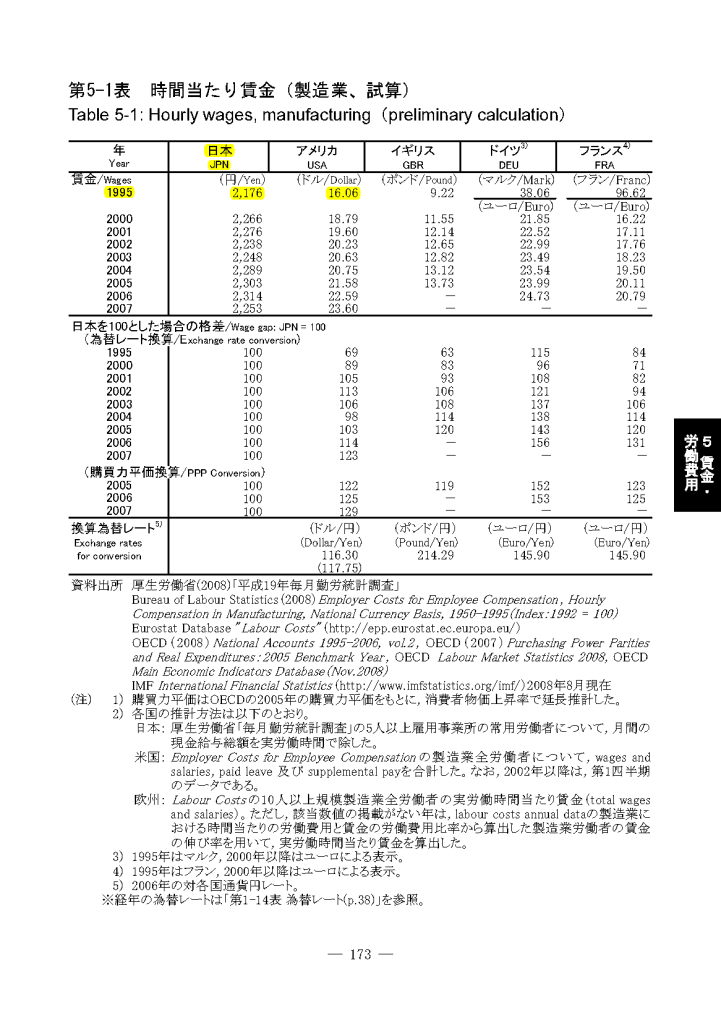
7. How much is per hour manufacturing wages in the US? Is US$23.60 considered too little for you?
Say a person works a 5 day week, 9 hours a day, his salary will be
US$4,551. How much does a Singaporean (GDP per capita of US$37,000
[approx.]) working in a manufacturing industry in Singapore gets?
Food for thought, where did all the
money in Singapore go to? Get your facts right, a large chunk of
Americans using safety net hospitals don't even pay for healthcare
and according to you it's 50 million. So why are you contradicting
yourself now?
8. Do you have cases to cite (that it actually occured and
not a construct of your fantasies) or is it all
conjectures?
9. So being under-insured is worthless, then why bother with
being insured in the first place?
You "claimed" that you lived in the USA, but you bought NTUC
insurance. Most of the folks (quitters) I know, who managed to
get a foothold in the more democratic countries don't even look
back at Singapore when they get themselves settled in those
countries. So, are you one of those under-achievers who can't
compete and make it out in the real world, so you choose to come
back to Singapore to live in a more protected environment?
Love that Medisave, Medishield and Medifund? Buy NTUC insurance?
Are you one of those cyber agents? There is a difference between
USA's Medicare, Medicaid compared to Singapore's Medisave,
Medishield and Medifund. The US Medicare and Medicaid is funded by
the government and not by individual citizens, it's more like a
benefit provided by the US government to her citizens.
Singapore's Medisave and Medishield are funds derived from her
citizens itself. If you don't have Medisave or Medishield, where
can you go to seek treatment? Medishield doesn't cover you for ALL
the medical eventualities, it only provides you to claim a certain
amount, you still have to come up with some cash for the medical
procedures. Even specialist visits in government hospitals, you are
expected to come up with cash to pay for consultation and
medication, unlike the safety net hospitals in USA. As of end of
last year, there are approximately 600,000 Singaporeans not
convered by Medishield (ie about 16.7% not covered by Medishield),
this is about the same percentage as the 50 million of the 300
million population in USA. But then again, there are safety net
hospitals for Americans to turn to, where can the 600,000
Singaporeans turn to? Medisave is compulsory savings,
Medishield a public insurance program, not a perquisite of
citizenship in Singapore, unlike the Medicare and Medicaid in USA,
which is provided to her citizens by government funding. If
the US government wanted to institute Medisave/Medishield, all
the US Senate has to do is come up with a bill, to make
it compulsory for citizens to set aside a certain percentage
of their income, for future medical expenses.


